
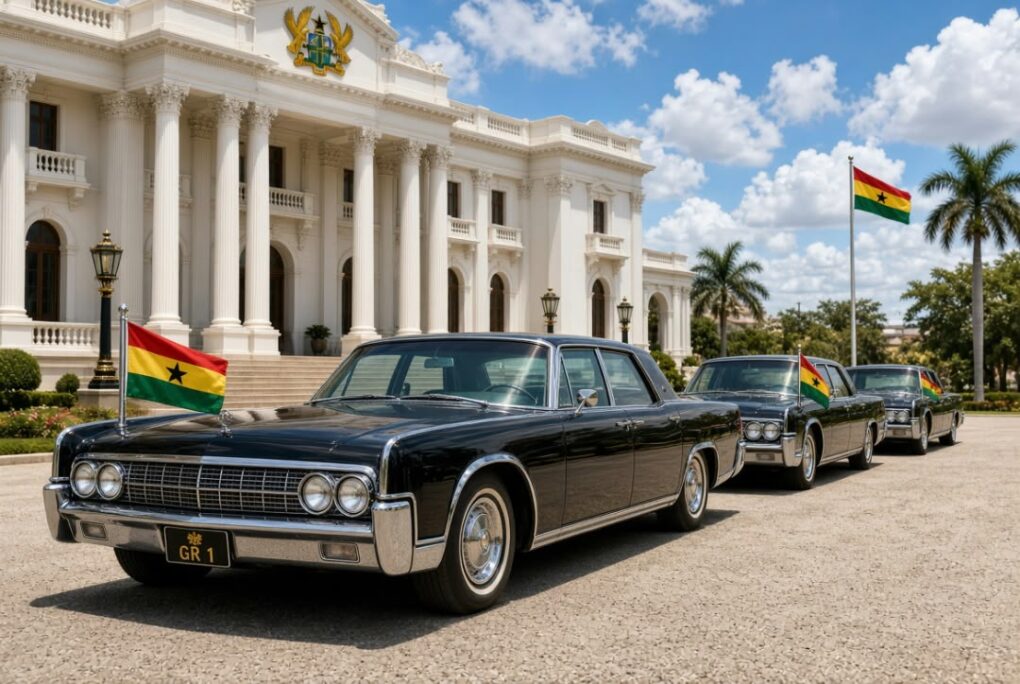
When Ghana became the first sub-Saharan African country to gain independence from colonial rule in 1957, the vehicles used by Dr. Kwame Nkrumah were more than luxury cars.
They represented the emergence of a new African nation and became symbols of Ghana’s independence and sovereignty.
Nearly seven decades later, some of the vehicles associated with Ghana’s first President are reportedly deteriorating in storage facilities, garages and museum compounds, raising concerns about the preservation of the country’s historical heritage.
For Ghana’s growing cultural tourism and heritage tourism industry, the vehicles could become valuable attractions if properly restored, preserved and displayed to the public.
Kwame Nkrumah and Ghana’s Independence
Dr. Kwame Nkrumah played a central role in Ghana’s independence in 1957. He served as Prime Minister from 1952 before becoming Ghana’s first President.
Nkrumah remains one of the most influential figures in Ghanaian history and a major personality in the Pan-African movement. His political vision focused on African unity, independence and economic development.
The official vehicles associated with his administration were used for independence celebrations, state ceremonies, diplomatic engagements and other important national events.
As a result, the cars are not simply old automobiles. They represent an important period in Ghana’s political history and national heritage.

8 Vehicles Linked to Kwame Nkrumah’s Era
Several vehicles have been associated with Kwame Nkrumah’s presidency and the early years of independent Ghana. However, available documentation differs from one vehicle to another, and some details require further verification through official archives and museum records.
1. 1957 Cadillac Series 62
A 1957 Cadillac Series 62 in ocean blue and black is frequently identified as one of the presidential vehicles associated with Kwame Nkrumah.
Reports indicate that the vehicle was used during the period from Ghana’s independence in 1957 until Nkrumah was overthrown in 1966.
Another Cadillac reportedly manufactured by General Motors and reinforced for security purposes in Bulgaria has also been linked to Nkrumah’s time as Prime Minister.
That vehicle was reportedly missing for several decades before being rediscovered around Nkawkaw in about 2021 and returned to the National Museum of Ghana.
2. Rolls-Royce Phantom III
Reports have linked a Rolls-Royce Phantom III to Ghana’s early presidential fleet.
However, publicly available records do not provide sufficient independent documentation to establish all details concerning the vehicle’s exact specification, year or use.
3. Rolls-Royce Phantom V Limousine
A Rolls-Royce Phantom V limousine has also been associated with Nkrumah’s official vehicles.
Some reports indicate that a Rolls-Royce connected to the former president remains under the custody of Ghana’s State Protocol.
Further archival research would be useful to establish the vehicle’s complete history and configuration.
4. Cadillac Fleetwood Series 75
The Cadillac Fleetwood Series 75 is another vehicle frequently mentioned in connection with Ghana’s early presidential fleet.
Its large body and imposing design made it suitable for ceremonial occasions, state functions and official parades.
Such vehicles reflected the formal nature of state ceremonies during Ghana’s early years as an independent country.
5. ZIS and ZIL Limousines
Soviet-built ZIS and ZIL limousines have also been mentioned in accounts of Nkrumah’s era.
Their reported connection to Ghana reflects the country’s diplomatic and political relationships with Eastern Bloc countries during the Cold War.
However, details about the exact vehicles and their official use remain limited in publicly available records.
6. GAZ-13 Chaika
The GAZ-13 Chaika, another Soviet luxury limousine, is occasionally associated with Ghana’s early post-independence period.
The vehicle represents the broader international relationships Ghana developed during Nkrumah’s administration.
More historical documentation would be required to establish precisely how and when specific Chaika vehicles were used in Ghana.
7. Mercedes-Benz Vehicles

Mercedes-Benz vehicles are also linked to Nkrumah’s later years.
Following the 1966 coup, Nkrumah went into exile in Conakry, Guinea. Reports indicate that Guinean President Ahmed Sékou Touré provided him with a Mercedes-Benz for transportation.
Accounts also state that Nkrumah never successfully learned to drive himself.
Other Mercedes-Benz vehicles from the period have reportedly appeared in footage of storage facilities in recent years.
8. Humber Sedans
Humber sedans were also part of the wider collection of official vehicles used by Ghana’s early government.
The British-made vehicles were consistent with the types of automobiles commonly found in government motor pools across West Africa during the colonial and early post-independence periods.
Concerns Over the Condition of Nkrumah’s Historic Cars
The condition of some vehicles associated with Ghana’s former leaders has generated public concern.
Recent footage reportedly showed Mercedes-Benz and Rolls-Royce vehicles believed to be connected to Nkrumah and other former heads of state stored in garages.
The vehicles appeared dusty and worn, prompting calls for government intervention and improved preservation.
A Cadillac associated with Nkrumah has also been photographed at the National Museum, with visible signs of rust and deterioration.
These observations come largely from public reports and citizen accounts rather than comprehensive independent museum assessments. Nevertheless, they have renewed discussions about how Ghana should preserve its historic vehicles and other national artifacts.
Nkrumah’s Cars Could Boost Ghana Heritage Tourism
Restoring the vehicles associated with Ghana’s first President could create a unique heritage tourism attraction.
Historic presidential cars provide visitors with a physical connection to important moments in a country’s history. Around the world, historic aircraft, ships, automobiles and government vehicles are preserved in museums because they help bring history to life.
A dedicated Kwame Nkrumah presidential vehicle exhibition could attract both Ghanaian and international tourists interested in Ghana’s independence history.
Such an attraction could also support local businesses through museum admissions, guided tours, hospitality services, transportation and other tourism-related activities.
Government Investment Could Help Preserve the Vehicles
Restoring cars that are several decades old requires specialist knowledge and appropriate equipment.
One possible approach would be for the Ghanaian government to establish a dedicated historic vehicle preservation programme to document, restore and maintain important presidential vehicles.
Where specialist expertise is unavailable locally, individual vehicles could potentially be sent to internationally recognised restoration facilities before being returned to Ghana for permanent exhibition.
The restoration process would also create opportunities for Ghanaian automotive technicians, historians, conservators and museum professionals to develop specialist skills in heritage preservation.
A Dedicated Museum Could Protect Ghana’s Presidential Cars
A secure and climate-controlled facility would offer greater protection than an open car park or poorly monitored storage garage.
Ghana already has an example of a dedicated display structure at the Kwame Nkrumah Memorial Park in Accra, where one of the former president’s vehicles has been housed.
Expanding this concept into a comprehensive Kwame Nkrumah Heritage Museum could bring together presidential vehicles, photographs, documents, personal belongings and historical exhibits.
Professional tour guides and educational programmes could further transform the collection into an important cultural tourism destination.
Linking Nkrumah’s Historic Sites Across Ghana and Guinea
The preservation of Nkrumah’s vehicles could form part of a much larger heritage tourism project.
Nkrumah’s birthplace and childhood home at Nkroful in Ghana’s Western Region has been the subject of community-led preservation efforts.
In Guinea, his former residence in Conakry, known as Nkrumah Villa or Villa Syli, is also associated with his years in exile. Reports have indicated efforts involving Ghana and Guinea to preserve and potentially develop the property as a heritage site.
Together with the Kwame Nkrumah Mausoleum and Memorial Park in Accra, these locations could form a cross-border historical tourism trail connecting important chapters of Nkrumah’s life.
Preserving Africa’s Historic Vehicles
Ghana’s situation is part of a broader African heritage preservation challenge.
Historic vehicles and artifacts associated with African political leaders, traditional rulers and important national figures can deteriorate when they are not properly catalogued, restored and stored.
For example, a vehicle reportedly associated with Asantehene Otumfuo Agyeman Prempeh I has also been cited in discussions about the preservation of historic automobiles in Ghana.
A coordinated approach to documenting and conserving such artifacts could strengthen African heritage tourism and complement the continent’s well-known wildlife, beaches and natural attractions.
Preserving Kwame Nkrumah’s Legacy for Future Generations
The vehicles associated with Kwame Nkrumah are more than vintage automobiles. They form part of the material history of Ghana’s independence and the early years of African self-government.
Their preservation would provide researchers, students, tourists and future generations with an opportunity to experience an important part of Ghana’s history through tangible artifacts.
With professional restoration, dedicated funding and a suitable museum environment, Nkrumah’s presidential cars could become a significant Ghana tourism and cultural heritage attraction.
Preserving these vehicles would also ensure that the story of Ghana’s independence is not confined to books and photographs but can be experienced through the very automobiles that once carried the country’s first leader during one of the most important periods in Ghanaian history.
Source: newsthemegh.com