
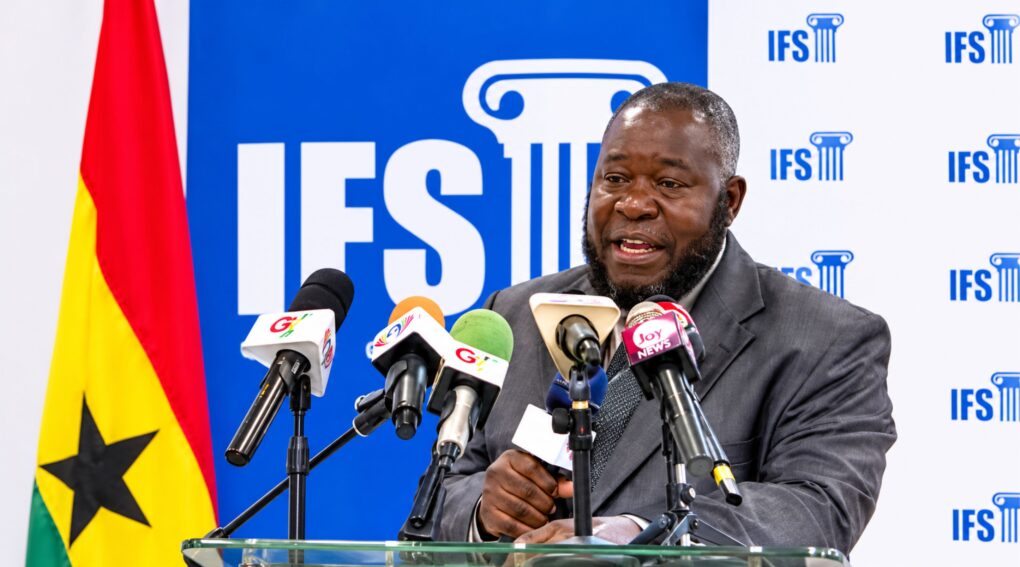
Ghana is losing an estimated $6.56 billion in potential annual revenue from the mining industry because of limited government participation in mineral extraction, according to a report by the Institute for Fiscal Studies (IFS).
The institute warned that Ghana could significantly increase its mining revenue if the government adopted a more active role in the sector, similar to Botswana’s model of direct investment and partnerships with private mining companies.
The Executive Director of the IFS, Dr Said Boakye, disclosed this during a policy briefing on weak domestic revenue mobilisation in Accra, where he urged the government to use the upcoming 2027 Budget to address revenue losses and improve the country’s ability to generate income from its natural resources.
According to Dr Boakye, Ghana’s inability to maximise financial returns from its mineral resources represents a major weakness in the country’s revenue mobilisation strategy.
Ghana Could Earn $8.16 Billion From Mining Like Botswana
Dr Boakye explained that Ghana could have generated approximately $8.16 billion from the mining sector in 2025 if its revenue performance had matched Botswana’s average government revenue share of 60.9%.
He compared the two countries, noting that Botswana generated approximately $13.4 billion in value added from mining in 2025, while Ghana recorded only $1.6 billion in government revenue from the sector.
The $1.6 billion represented approximately 11.9% of the value generated by Ghana’s mining industry.
The IFS Executive Director attributed Botswana’s stronger mining revenue performance to the government’s direct involvement in mineral extraction through strategic partnerships with private mining companies.
He explained that these arrangements allow Botswana to benefit from corporate income taxes, dividend payments and royalties while giving the government greater access to information about mining operations, production costs and company profitability.
Dr Boakye argued that Ghana’s concession-based mining system gives private companies significant responsibility for mineral extraction, while limiting the government’s access to operational information and opportunities to maximise returns.
He therefore recommended that Ghana consider adopting alternative mining investment arrangements that would allow the state to secure a greater share of revenue generated from gold and other mineral resources.
Ghana’s Government Revenue Falls Below African Average
The IFS also raised concerns about Ghana’s relatively weak domestic revenue mobilisation compared with other sub-Saharan African countries.
According to the institute, Ghana’s total revenue and grants-to-GDP ratio stood at 15.7% in 2022, compared with an average of 20.1% among 25 sub-Saharan African countries assessed in its report.
The institute estimated that Ghana could have mobilised GH¢288.26 billion in total revenue and grants in 2025 if its revenue-to-GDP ratio had matched the regional average.
However, the country’s actual revenue and grants collection amounted to GH¢224.88 billion, leaving a potential revenue gap of approximately GH¢63.38 billion.
The report further ranked Ghana 18th among the 25 countries examined, highlighting the country’s comparatively weak performance in domestic revenue generation.
Dr Boakye warned that the revenue shortfall was limiting the government’s ability to finance infrastructure development, public services and other national development projects without excessive borrowing.
Tax Evasion and Revenue Leakages Cost Ghana Billions
The IFS Executive Director identified tax evasion, underreporting of business income, tax avoidance and alleged collusion involving revenue administrators as major factors undermining Ghana’s revenue collection efforts.
He referred to revelations made by Ghana Revenue Authority (GRA) Commissioner-General Anthony Sarpong in April 2026, indicating that the country had lost more than GH¢11 billion in potential revenue at its ports.
The losses were linked to incorrect declarations involving the country of origin, classification and valuation of imported goods.
Dr Boakye said such revenue leakages weaken the country’s public finances and reduce the resources available for national development.
He called for stronger monitoring systems, improved tax administration and intensified efforts to tackle corruption within institutions responsible for collecting tax and non-tax revenue.
IFS Warns Against Excessive Tax Exemptions
The institute also identified excessive tax exemptions and fiscal incentives granted to businesses as contributing factors to Ghana’s weak revenue performance.
Among the incentives highlighted were provisions under the Free Zones regime and the automotive industry development policy, which offer businesses tax holidays, import duty exemptions and other financial concessions.
Dr Boakye disclosed that the Ghana Investment Promotion Centre (GIPC) maintains an inventory of 31 income tax, customs and financial incentive packages available to businesses across different sectors.
He argued that although tax incentives can attract foreign direct investment and encourage business expansion, exemptions that do not generate sufficient economic benefits ultimately deprive the government of much-needed revenue.
The IFS therefore recommended a comprehensive review of existing tax incentive programmes to determine whether the economic benefits justify the revenue being forfeited.
Dr Boakye urged the government to discontinue exemptions that do not make economic sense and instead improve the country’s macroeconomic and political environment to attract both domestic and foreign investment.
Low Revenue Mobilisation Increases Ghana’s Debt Burden
The IFS warned that weak domestic revenue mobilisation has significant consequences for Ghana’s public debt and fiscal stability.
Dr Boakye explained that when government revenue is insufficient to finance development projects and essential public expenditure, authorities are forced to rely heavily on domestic and external borrowing.
This situation, he noted, contributes to rising public debt, increased debt servicing costs and recurring fiscal challenges.
He stressed that improving revenue generation would help reduce Ghana’s dependence on borrowing, strengthen fiscal discipline and create more financial space for infrastructure development and social investment.
IFS Proposes Reforms to Increase Ghana’s Mining Revenue
To address the country’s revenue challenges, the Institute for Fiscal Studies has proposed several policy measures aimed at improving government earnings from natural resources and strengthening domestic revenue mobilisation.
The key recommendations include:
- Greater government participation in mining: The government should increase its direct investment and establish strategic partnerships with private mining companies to secure better financial returns.
- Introduction of production-sharing agreements: Ghana should consider replacing or complementing the existing concession-based mining arrangements with production-sharing agreements that give the state a larger share of mineral wealth.
- Strengthening anti-corruption measures: Authorities should intensify efforts to eliminate corruption, tax evasion and collusion within tax and non-tax revenue collection agencies.
- Review of tax exemptions: The government should reassess existing tax holidays, customs exemptions and other fiscal incentives, discontinuing those that do not provide sufficient economic benefits.
- Improved tax administration: Stronger revenue monitoring, accurate import valuation and better enforcement of tax regulations should be introduced to reduce revenue leakages.
- Creating an attractive investment environment: The government should focus on improving macroeconomic stability and the political environment to attract sustainable domestic and foreign investment.
The IFS believes that implementing these reforms could significantly improve Ghana’s revenue mobilisation, reduce dependence on public borrowing and ensure that the country receives greater economic benefits from its mineral resources.
The institute has therefore urged the government to make revenue mobilisation a major priority in the 2027 Budget, particularly by addressing structural weaknesses in the mining industry and strengthening the country’s tax collection system.
Source: newsthemegh.com