

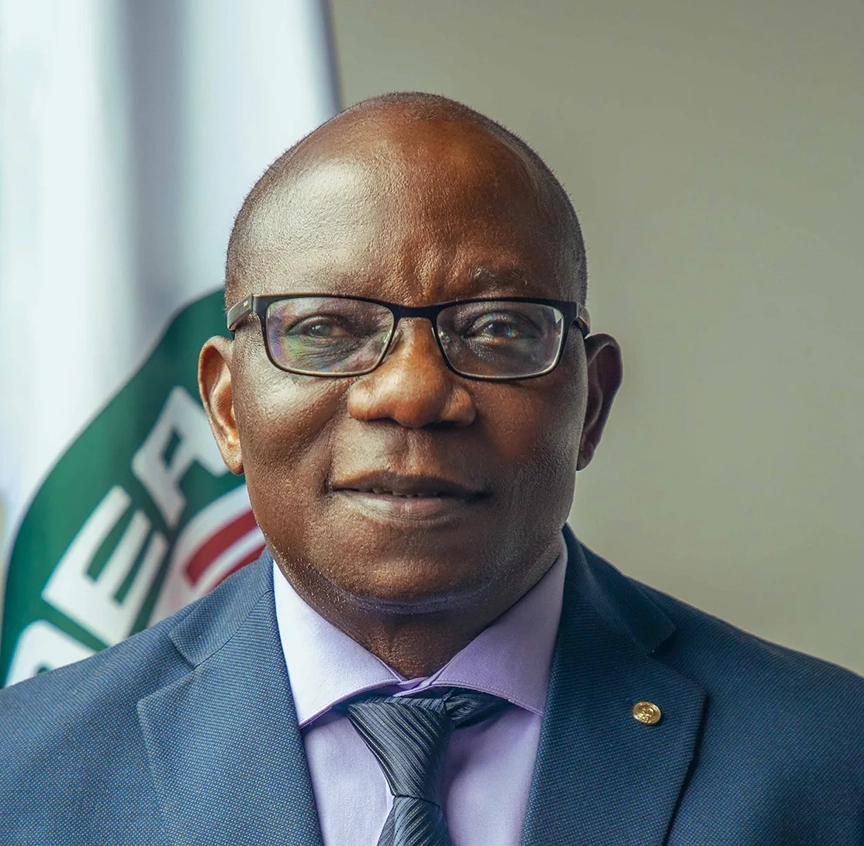
The Economic Community of West African States (ECOWAS) is at a pivotal point in West African history, according to Dr. Abdel-Fatau Musah, the regional organization’s commissioner for political affairs, peace, and security.
He clarified that ECOWAS’s position at a crossroads meant that the region was going through major upheavals and changes that could have an impact on its future.
According to Mr. Musah, this was especially pertinent in light of the current regional geopolitical changes and ECOWAS deliberations.
“The hurdles ahead are daunting, but with the commitment of every West African, particularly citizen agency, to reimagine ‘the ECOWAS by the People, of the People, and for the People,’ with a strong sense of solidarity and self-reliance, the Community shall traverse this trying period and emerge as a stronger and more resilient regional organisation,” he added.
At the West Africa Network for Peacebuilding (WANEP) High-Level Policy Dialogue in Accra, which had as its theme “Understanding Geopolitical and Strategic Changes in West Africa: Emerging Challenges and the Future of West Africa,” Dr. Musah stated these claims in his keynote address.
The Conflict Research Network (CORN) West Africa and the African Peacebuilding Network (APN) of the Social Science Research Council collaborated to organize the event.
In light of pertinent articles of the 1993 ECOWAS Revised Treaty and the shifting geopolitical and strategic landscape in the region, it was intended to give stakeholders a forum to critically examine the creative frameworks and mechanisms that could be used to address the new issues facing West Africa in the medium to long term.
The discussion’s participants discussed ways to resolve the issues raised by the Alliance of Sahel States (AES) nations and reintegrate Mali, Burkina Faso, and Niger into ECOWAS.
The meeting’s specific goals included finding creative structures and processes that can handle the new problems in West Africa in the medium to long term, given the region’s shifting geopolitical and strategic landscape.
Dr. Musah stated that he was aware that this High-Level Dialogue had been held at a pivotal, historic, and important point in ECOWAS’ development.
It was to carry on the argument between the school of thought that was already praising the Community as a feasible endeavor and the school of thought that argues that the Community should grow from its failures and build on its indisputable achievements by realigning its institutional and normative frameworks to better suit the demands of our day.
“This is most welcome as we, as policymakers, rely on your deep thinking and research outputs to polish our efforts at promoting regionalism and democratization, sustainable development, and peace and security,” he said.
Dr. Musah listed the difficulties ECOWAS faces, including the problem of terrorism, the AES countries’ split, and military actions in the subregion. He said the regional bloc would persist in advocating for a democratic transition despite these obstacles.
He said, “To achieve this goal, we must begin by asking critical questions at this forum. For example: Are political parties in member states fit for purposes as the basic units and incubators of governance? Are short-term limits for Presidents and government conducive to continuity and good economic and social governance in the absence of autonomous and resilient civil bureaucracy and minimum cross-party national vision?”
“How do we ensure the independence of the judiciary to prevent it from being one of the weakest links in accountable governance?”
A Special Summit on the Future of Regional Integration in West Africa and the Future of Multilateralism will be held by ECOWAS, Dr. Musah revealed, in an attempt to address the many issues the regional organization faces.
Source: newsthemegh.com