

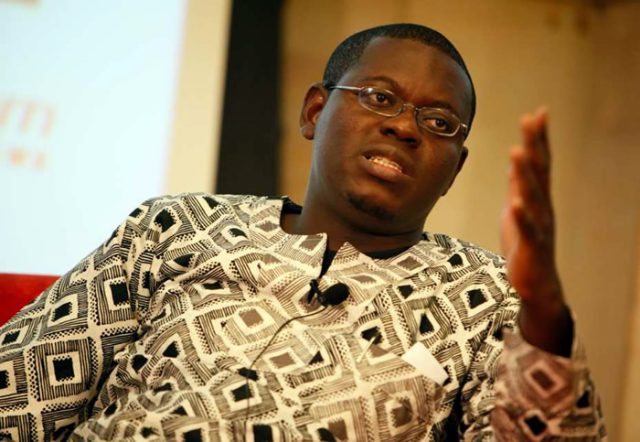
The vice president of the policy think tank IMANI Africa, Bright Simons, has criticized the World Bank Group (WBG) and the International Monetary Fund (IMF) for their lack of sustainability mechanisms and advocated for changes to their programs.
He maintained that the current structure of World Bank development projects and IMF loan-supported programs lacked the accountability and transition necessary to guarantee long-lasting structural changes for improved results.
During the just concluded spring meetings of the IMF and WBG in Washington, DC, USA, the policy analyst made this statement in an exclusive interview with the Ghana News Agency.
It is well known that developing nations like Ghana frequently turn to the IMF for loan-supported initiatives aimed at reestablishing macroeconomic stability and debt sustainability, opening the door for inclusive growth and economic resilience.
Conversely, the World Bank’s programs emphasized infrastructure development, human capital development, poverty alleviation, and the creation of jobs and sustainable economic growth.
The short-term nature of IMF loan-supported programs, along with unclear plans for transitioning to other development agencies and proper government continuation, Mr. Simons pointed out, were the reasons why Ghana and other nations kept returning to the Bretton Woods institutions for remedies to their economic crises.
“The World Bank accountability mechanism is to the government, the same government that they are supervising. They need to incorporate civil society into the process so that when you do that long-term structural transition, there is more accountability,” he said.
He claimed that the IMF and World Bank procedures unintentionally strengthened this kind of power concentration and that “government officials wield significant authority and frequently deploy it to serve political interests, including those of their business associates.”
Mr. Simons cited a number of instances of inadequate accountability in Ghana, such as costly drone programs for surveillance of illegal mining (galamsay) and drainage monitoring that vanished without sufficient tracking.
“A new minister came and said you can’t find them. Nobody can find where they are,” he said, adding that similar programmes continued to receive funding despite those failures.
He demanded changes to the Bretton Woods institutions’ program structure in order to promote civil society engagement and establish the checks and balances required for efficient enforcement and national voice empowerment.
He urged intentional investments in civil society capacity and policy literacy to close the gap between paper reforms and real execution and increase the efficacy of international development initiatives.
Source: newsthemegh.com