
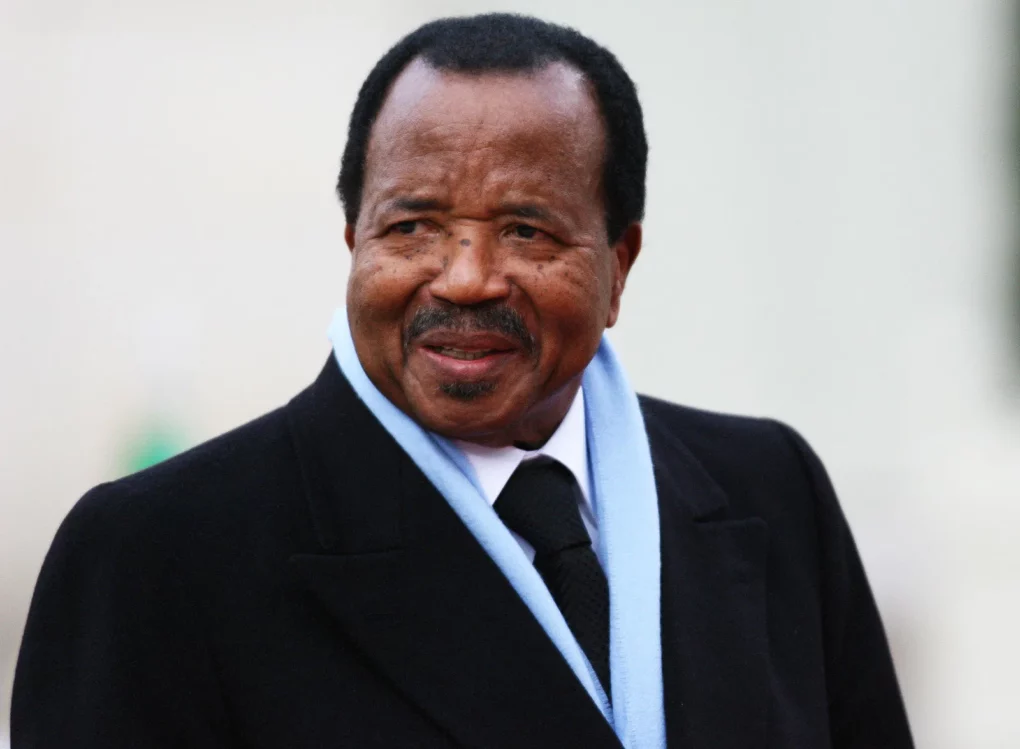
Cameroon’s President Paul Biya has returned to the country after spending more than two months abroad, ending an extended absence that had triggered renewed questions about his leadership and ability to govern after 44 years in power.
At 93, Biya is the world’s oldest serving head of state. He left Yaoundé on June 7 for what his office described as a “short private stay in Europe.” Reports from the Cameroonian media indicated that he spent the period in Geneva, Switzerland, with family members and close associates.
The prolonged stay abroad generated widespread political debate, particularly over Biya’s health and the future of his government. Authorities rejected reports that his health had significantly deteriorated and maintained that the president continued to perform his official duties.
However, opposition groups criticised the extended absence, describing it as evidence of an “institutional vacuum” and accusing the government of operating on “autopilot.” Concerns were also heightened by delays surrounding the formation of a new government and the appointment of a vice-president.
Paul Biya’s 44-Year Rule in Cameroon
Biya became Cameroon’s president in 1982 after the sudden resignation of Ahmadou Ahidjo, making him only the country’s second president since independence from France in 1960.
Over more than four decades in office, Biya has maintained tight control over the government and key state institutions. His administration has faced repeated criticism over political repression, corruption, poverty, economic inequality and restrictions on opposition groups.
His political dominance has continued through multiple elections. Following the introduction of a multiparty political system in 1990, Biya has secured six consecutive presidential terms.
His 2018 and 2025 re-election victories were heavily contested, while his public appearances have become increasingly limited. In recent years, he has largely appeared through recorded television messages, official foreign visits and occasional family events.
Health Concerns and Overseas Stays
Biya’s frequent trips abroad for medical treatment and private holidays have also attracted criticism from opposition figures and activists, particularly over the cost of his travels and entourage.
In 2018, the Organized Crime and Corruption Reporting Project (OCCRP) estimated that Biya had spent about 4.5 years on private trips outside Cameroon, with the trips reportedly costing approximately $65 million.
His latest extended absence therefore reignited public discussion about presidential health, governance and the future of Cameroon’s political leadership.
Opposition and Political Repression
Political opponents have accused Biya of weakening opposition parties and maintaining power through a strategy of political control and repression.
Following protests in 2018, hundreds of demonstrators were arrested, including presidential challenger Maurice Kamto. Opposition figures have repeatedly alleged that political dissent is met with heavy-handed security measures.
Former Biya aide Titus Edzoa, who resigned and challenged him in the 1997 presidential election, was later arrested on corruption charges and spent 17 years in prison.
Political scientist Stephane Akoa has described Biya’s governing approach as a practical application of “divide and rule,” arguing that the president has maintained his political influence by controlling key appointments and managing competing factions within the government.
Cameroon’s Security Crisis
Despite Biya’s long tenure, Cameroon continues to face serious security challenges.
The Far North has experienced attacks linked to jihadist groups since 2009, while the country’s English-speaking regions have been affected by an armed separatist conflict since late 2016.
The separatist crisis erupted after security forces violently suppressed peaceful protests by members of Cameroon’s Anglophone minority. The prolonged conflict has contributed to insecurity, displacement and humanitarian challenges in the affected regions.
The return of Paul Biya is therefore likely to intensify discussions about Cameroon’s political future, presidential succession, governance and the country’s ongoing security and economic challenges.
Source: newsthemegh.com