
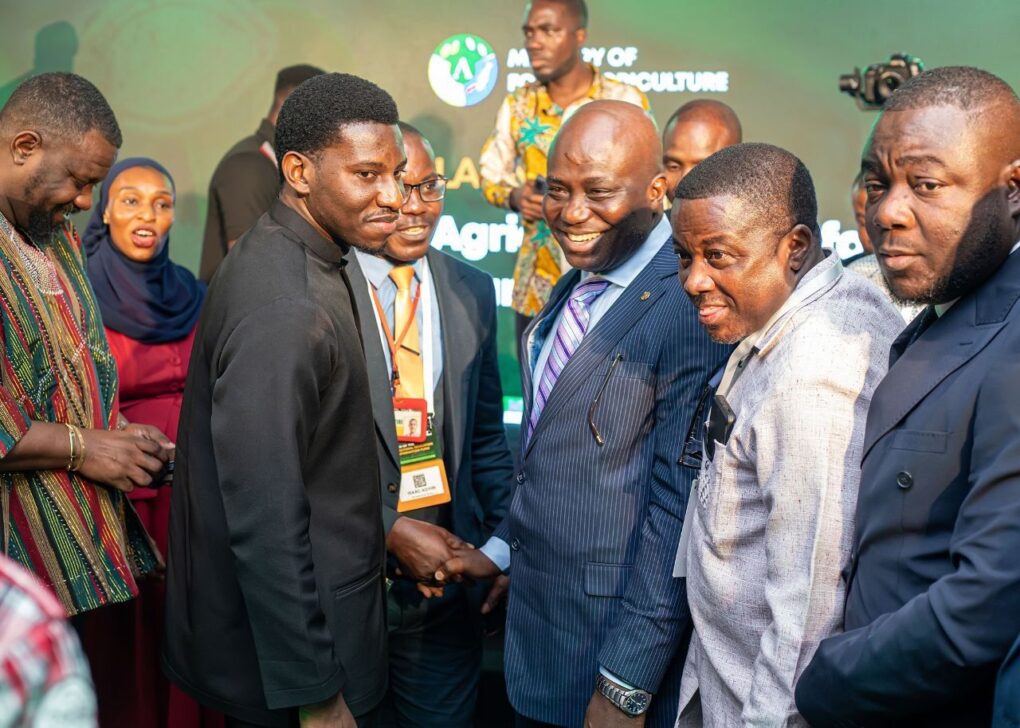
The Ghanaian government, through the Ministry of Food and Agriculture (MoFA), has launched the Ghana Agricultural Fund for Education and Transformation (GAFET), an initiative designed to strengthen agricultural education, develop skilled professionals and support the long-term transformation of Ghana’s agriculture sector.
GAFET is targeting a GH¢100 million endowment by December 2028 to address critical funding challenges and close the skills gap affecting agricultural development in Ghana.
The agricultural education fund begins with GH¢3.5 million raised from five Ghanaian-led agribusinesses: AgriSolve, GrowForMe, New Age Agric Solutions, Tradeline Consult and Farmerline. The fund aims to increase its capital to GH¢10 million by December 2026 before reaching the GH¢100 million target by 2028.
GAFET to Support Agricultural Education Across Ghana
GAFET will operate as a perpetual endowment fund, with its capital preserved and invested while annual investment returns are used to finance approved educational and agricultural development priorities.
The fund will support 21 agricultural education institutions, comprising five standalone agricultural colleges and 16 universities and technical universities.
Minister for Food and Agriculture, Eric Opoku, described GAFET as the human-capital component of the government’s Feed Ghana programme, stressing that agricultural transformation requires investment in people as well as infrastructure and production.
He said Ghana must develop the skills and institutions needed to achieve sustainable food production and agricultural growth.
“Before we can sustainably feed Ghana, we must equip Ghana. No country has transformed its agriculture without first investing in the people and institutions that make agricultural transformation possible,” he said.
The minister also called for increased participation from commercial banks, pension funds, insurance companies, agribusinesses and development partners in financing agricultural education and skills development.
According to him, government should provide leadership while the wider society contributes to solving national development challenges.

GH¢12 Million Annual Funding Gap
The launch of GAFET comes amid concerns over inadequate investment in agricultural education and human capital development.
Although agriculture contributes more than one-fifth of Ghana’s economy, only about 2% of tertiary students are enrolled in agricultural programmes. Agricultural education institutions also face an estimated annual funding shortfall of GH¢12 million.
Lead Coordinator for GAFET, Steven Nhyira Odarteifio, said the initiative would help address the structural weaknesses affecting the development of Ghana’s future agricultural workforce.
He explained that the fund would promote a shift from short-term and project-based financing to a more sustainable funding model capable of supporting agricultural institutions over the long term.
GAFET resources are expected to finance scholarships, teaching and learning infrastructure, agricultural research, practical training and industry-linked programmes.
Odarteifio said stronger collaboration between educational institutions and the private sector would help connect agricultural education with productivity, innovation and employment opportunities.
“We are not simply raising money; we are building an ecosystem that connects education, industry and national development,” he said.
GAFET Governance Structure
The fund is expected to transition into a full endowment structure during the fourth quarter of 2026.
Its governance framework will include a governing board, fund administrator, a Securities and Exchange Commission-licensed fund manager and a custodian bank.
The initiative is also expected to eventually become a statutory institution established through an Act of Parliament.
Secretariat Technical Lead, Seyram Kofori-Ndinya, said strong governance and transparency would be essential to protecting GAFET’s capital and maintaining public confidence.
The proposed framework includes a custodian account, an investment policy focused on capital preservation, independent annual audits, impact reports to the board at least twice annually and publication of annual summaries.
Government Agriculture Spending Focuses on Inputs
The GAFET launch comes as the government continues to allocate substantial resources to agricultural production, particularly fertiliser, seeds, machinery, irrigation and food security programmes.
Under the 2026 Mid-Year Fiscal Policy Review, the government allocated GH¢1.2 billion to the Ministry of Food and Agriculture for programmes including the National Food Buffer Stock Company, fertiliser and certified seed distribution, Feed Ghana and irrigation infrastructure.
An additional GH¢551 million was deposited into a Bank of Ghana escrow account to support a Letter of Credit covering 1,840 agricultural machinery units under the Farmers’ Service Centres initiative.
During the first half of 2026, government agricultural interventions included the procurement of maize and Agyapa rice seeds, organic and inorganic fertiliser, as well as the engagement of 500 District Feed Ghana Brigade Officers to support farmer registration and extension services.
The National Food Buffer Stock Company also purchased more than 20,000 metric tonnes of grains between January and June, with total purchases projected to reach approximately 32,000 metric tonnes by the end of 2026.
GAFET Targets Ghana’s Future Agricultural Workforce
Ghana’s agricultural sector recorded 6.8% growth in 2025, more than double the 2.7% growth recorded in 2024. However, agricultural growth slowed to 4.0% in the first quarter of 2026, partly due to a contraction in cocoa production amid declining international prices.
The five founding partners of GAFET have backed the initiative, with stakeholders warning that an ageing agricultural workforce and limited succession pipeline could pose challenges to the future growth of Ghana’s agribusiness sector.
The GH¢100 million agricultural education endowment is therefore expected to provide a long-term source of funding for agricultural scholarships, research, skills development, innovation and practical training, helping Ghana build the human capital needed to achieve sustainable agricultural transformation and food security.

Source: newsthemegh.com