

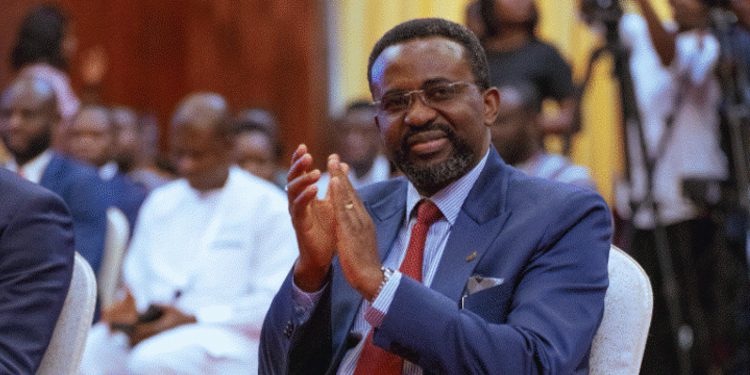
Dr. Johnson Pandit Asiama, the governor of the Bank of Ghana, has stated that Ghana is in a good position to withdraw from the US$3 billion Extended Credit Facility (ECF) program of the International Monetary Fund (IMF) when it concludes in May 2026.
The Governor claims that Ghana has begun to outperform the goals of the IMF program on almost every metric, indicating a robust economic recovery from the difficulties of the previous several years.
According to the Ghana News Agency (GNA), he made this statement during the Governor Talks Series on the subject of “From crisis to confidence: Ghana’s journey to macroeconomic stabilization,” which was held on the fringes of the 2025 IMF/World Bank Group Annual Meetings in Washington, D.C., USA.
Dr. Asiama, who had earlier in the year raised doubts about the program’s continuation, stated, “We (Ghana) are happy to announce that we will be able to exit the (IMF) fund program come next year.”
He ascribed this to the economic difficulties, which include the aftermath of the 2022 domestic debt exchange program (DDEP), a fiscal policy that is extremely expansionary, withdrawal from global financial markets, several sovereign downgrades, high liquidity, high inflation, and a rapidly declining exchange rate.
However, he said that after moving forward with the program and structural changes, the administration had since reversed the trend and achieved “remarkable stabilisation” over the previous eight months.
He maintained that Ghana was surpassing program targets, citing upgrades from multiple rating agencies, reserves building of 4.5 months, and a drop in inflation from about 24% when he assumed office to 9.4% now.
Governor Asiama declared, “Ghana is back; we are running ahead of program targets for the year on almost everything – inflation, reserves build-up, and economic growth.” Even as we ease downward, he reassured, “we will not compromise.”
However, he issued a warning that the nation still faced difficulties, primarily as a result of its vulnerability to external threats brought on by fluctuating commodity prices, necessitating consistent solid macroeconomic policies and sufficient reserves as safeguards against future setbacks.
There are still concerns, he said, “We want to build more reserves because as you know, we are still a commodity exporting country. The risks remain,” calling for concerted stabilisation efforts on several fronts, including supplementary actions from the fiscal authorities.
He clarified that controlling food prices and exercising fiscal restraint were essential elements of the disinflation plan “We needed the complementary efforts from the fiscal authorities. So, we had to engage the fiscal authorities at the same time.”
In May 2023, the IMF Executive Board authorised a three-year ECF arrangement for SDR 2.242 billion (about US$3 billion). The three-year ECF arrangement aims to restore macroeconomic stability, ensure debt sustainability, and promote inclusive, long-lasting growth.
The governor thanked the IMF for its assistance during Ghana’s stabilisation process, stating that the collaboration was essential to the program’s accomplishment.
The World Bank has urged the nation to be deliberate and brave in separating from its recurring dependence in order to achieve its needs for lasting macroeconomic stability, even as it acknowledges the effectiveness of IMF loan-supported programs.
“Ghana must break from past governance failures marked by fiscal indiscipline, inefficiency, and repeated IMF programs,” the World Bank stated in its most recent Policy Notes on the nation, which were published in September.
Source: newsthemegh.com