
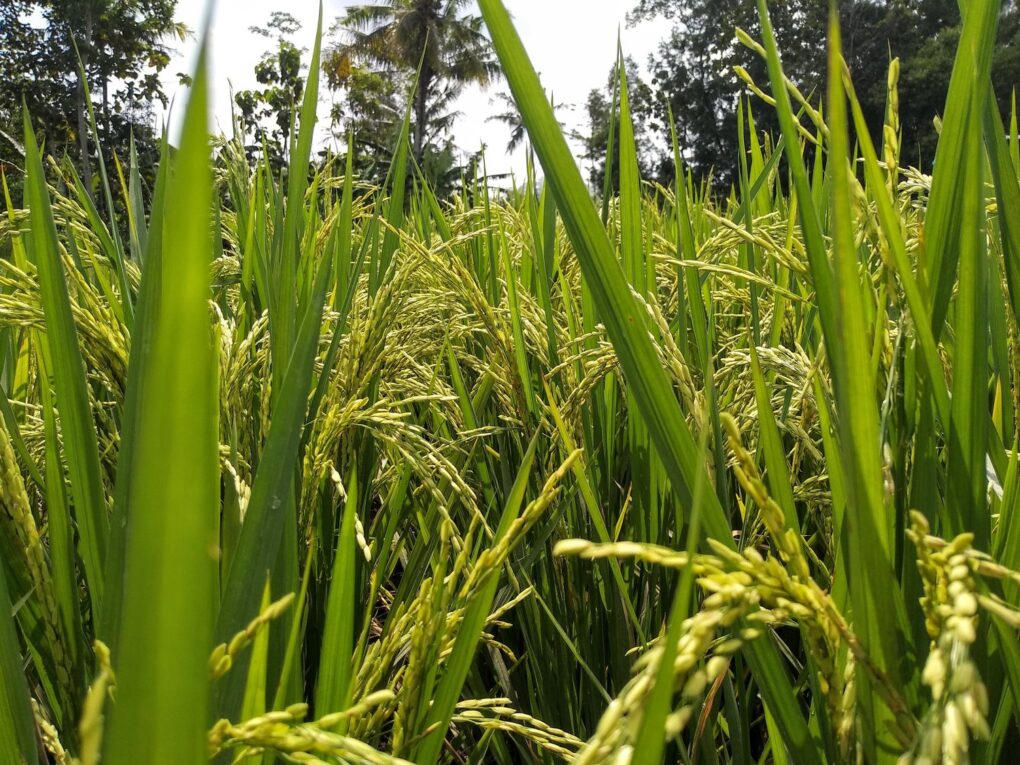
Ghana is targeting rice self-sufficiency by 2028, with national rice production expected to increase to approximately 3.31 million metric tonnes as the government intensifies efforts to boost local agriculture and reduce the country’s dependence on imported rice.
The Minister for Food and Agriculture, Eric Opoku, announced the target on Wednesday, October 7, 2026, during a media engagement at the Ministry of Food and Agriculture. He was speaking on the US$18.8 million Regional West Africa Resilient Rice Value Chains Development (REWARD) Project, which is aimed at strengthening Ghana’s rice industry.
Funded by the African Development Bank (AfDB) through a grant, the REWARD project is expected to significantly improve rice production, productivity and processing across the country.
REWARD Project to Support Rice Farmers
Under the project, the government and its development partners will focus on expanding rice cultivation and improving the capacity of local farmers. Key interventions include:
- Developing 3,200 hectares of land for rice production.
- Increasing average rice yields from 3.5 tonnes to 4.5 tonnes per hectare.
- Improving farmers’ access to quality rice seeds and agricultural mechanisation.
- Supporting modern rice processing and storage facilities.
- Providing assistance to more than 20,000 smallholder rice farmers.
The interventions are expected to strengthen Ghana’s rice value chain, create opportunities for farmers and improve the overall competitiveness of locally produced rice.
Government Links Rice Import Quotas to Local Production
The Agriculture Minister also disclosed that the government is working to link rice import quotas to investments in domestic rice production.
The policy is expected to encourage rice importers to establish stronger partnerships with Ghanaian farmers and invest in local rice cultivation, processing and value addition.
The move forms part of broader government efforts to promote local agricultural production, reduce the country’s reliance on food imports and create a more sustainable rice industry.
Japan Supports Rice Seed Production
In a related development, Japan has provided a ¥394 million grant, estimated at about US$2.49 million, to strengthen rice seed production in Ghana.
The support will provide equipment and technical assistance aimed at improving the production and availability of high-quality rice seeds for farmers.
Access to improved seeds is expected to contribute to higher farm yields, better rice quality and increased productivity across Ghana’s rice-growing communities.
Ghana Intensifies Efforts to Improve Food Security
The government’s rice production strategy comes as Ghana continues to pursue policies aimed at strengthening food and nutrition security and reducing dependence on imported food products.
Achieving rice self-sufficiency by 2028 could reduce pressure on Ghana’s import bill while creating new opportunities for farmers, agribusinesses, processors and other players within the agricultural sector.
With increased investment in rice farming, agricultural mechanisation, irrigation, improved seeds, storage and processing, the government expects Ghana’s rice value chain to become more productive and competitive.
The combined interventions are expected to empower smallholder farmers, increase local rice production and contribute to Ghana’s long-term food security and agricultural development.
Ghana’s rice self-sufficiency agenda is therefore focused on building a stronger rice value chain, empowering farmers and creating a more resilient agricultural sector.
Source: newsthemegh.com