

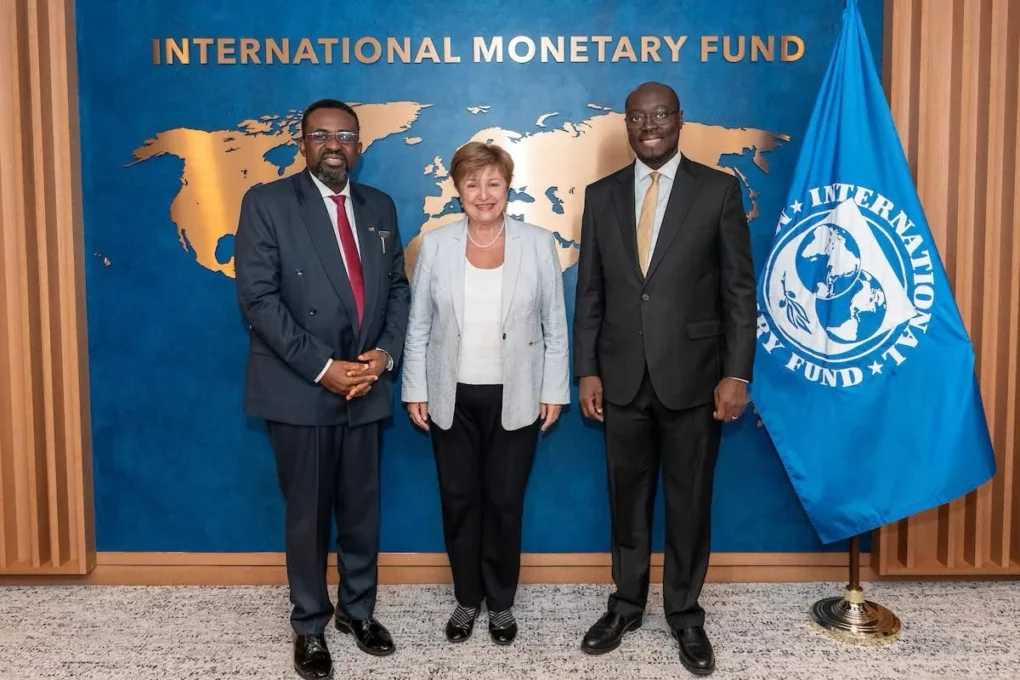
On September 29, 2025, a staff team from the International Monetary Fund (IMF) is anticipated in Accra for Ghana’s fifth program review.
Ghana’s performance under the IMF program after finishing the fourth review earlier this year will be evaluated through this exercise.
The final assessment is planned for April 2026, and this will be the penultimate one before Ghana wraps up the program in May 2026.
Given that some market analysts are concerned Ghana would find it difficult to sustain budgetary restraint once the program concludes, the fifth review is thought to be especially significant.
Therefore, development partners are calling for the establishment of “shock absorbers” in order to avoid economic instability beyond May 2026.
However, the government maintains that there is no need for concern, emphasizing that it has already taken action to guarantee markets of spending restraint after the program.
It is anticipated that approximately $360 million will be distributed in October 2025 if Ghana passes this fifth evaluation.
Since joining the IMF program, Ghana has received about $2.3 billion to date.
According to information obtained by Joy Business, the assessment would concentrate on Ghana’s economic data through June 2025.
Important topics of conversation include:
– Inflation performance.
– Sustainability of reserve build-up.
– Audit of arrears.
– Weak private sector banks require recapitalisation.
– State-owned banks needing recapitalisation, similar to NIB.
-Fiscal policy shortfalls in the face of an appreciated currency, with adjustments needed to meet the 1.5% of GDP primary surplus target.
– Arrears build-up in NHIL, GETFund, Road Fund, and other areas.
– Social spending shortfalls.
The IMF Executive Board authorised a 36-month Extended Credit Facility (ECF) agreement for Ghana on May 17, 2023, for SDR 2.242 billion, or almost US$3 billion.
Due to this decision, SDR 451.4 million (about US$600 million) could be disbursed immediately. The remaining funds would be distributed in installments every six months after program evaluations.
The program aims to:
– Restore public finances to a sustainable path through revenue mobilisation and improved spending efficiency, while protecting the vulnerable. For example, allocations to the LEAP cash transfer programme and the school feeding programme have doubled under recent budgets.
– Support fiscal adjustment and resilience with structural reforms in tax policy, revenue administration, public financial management, energy, and cocoa.
– Curb inflation, with the Bank of Ghana raising interest rates and ending monetary financing of the budget, while maintaining a flexible exchange rate to rebuild reserves.
– Preserve financial stability.
– Encourage private investment, growth, and job creation through broader reforms.
Source: newsthemegh.com