

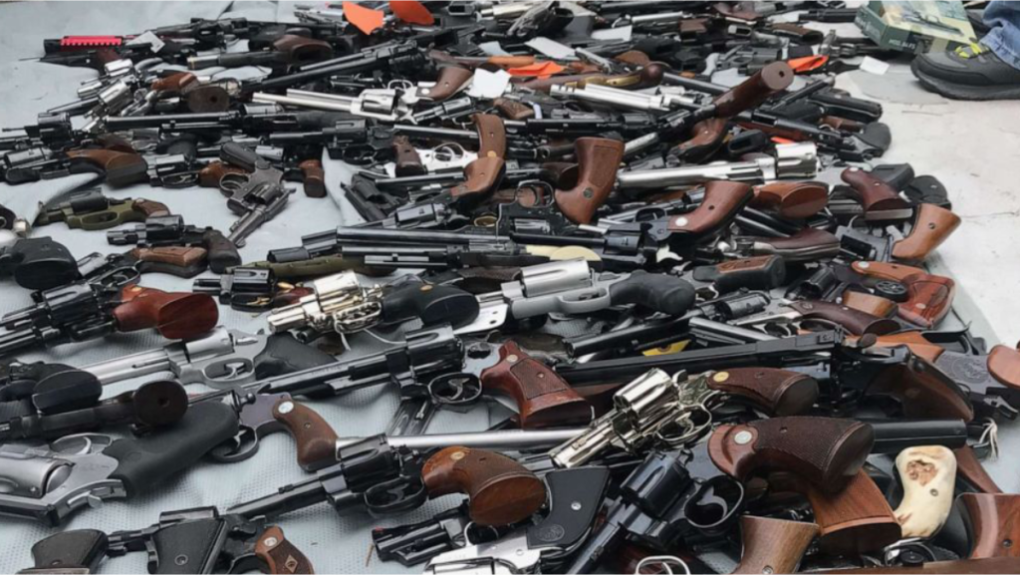
The Kotoka International Airport (KIA) seized more than 2,000 rounds of ammunition and 20 firearms in 2023, revealing serious flaws in Ghana’s aviation security procedures. This is a concerning finding for the country’s security.
This concerning figure emphasizes how urgently comprehensive regulatory measures are needed to protect aviation travel in the nation.
Along with a startling 1,879 rounds and 16 guns discovered in Terminal 2, the intercepted weapons also include 198 rounds of ammunition and four weapons discovered at the international passenger screening checkpoint.
The Auditor-General’s most recent report on public accounts detailed these findings, painting a clear picture of growing security risks in the absence of a national strategy controlling the transportation of firearms at airports.
All of the people involved were allowed to board their flights despite the seriousness of these seizures, which caused security experts to express severe concerns.
The lack of a strong national policy governing the carrying of weapons by air travelers is the reason for this lapse, the Auditor-General noted, and it presents serious hazards to both passengers and airport employees.
Experts caution that even when declared, the unregulated movement of weapons poses a risk to aircraft safety.
The situation was described as a “potential security risk” in the Auditor-General’s report, which emphasized that the absence of clear regulatory mechanisms raises the possibility of unauthorized weapons being carried onboard planes, thus jeopardizing overall safety.
The Auditor-General has advised that the Ghana Airports Company Limited (GACL) create and implement thorough rules outlining stringent guidelines for screening and handling passengers carrying weapons in order to solve these significant compliance gaps.
The growing figures highlight how essential this advice is: during the last two years, Ghana has seen a 40% spike in airport weapons seizures, indicating that immediate action is required.
GACL acknowledged the growing problem of weapon transport through KIA in response to the audit findings. As early as 2022, they expressed their concerns to the National Civil Aviation Security Committee (NCASC), emphasizing the urgent necessity for legislative action.
The Ghana Civil Aviation Authority (GCAA) was present at a later meeting where it was determined that a lack of suitable rules and sanctions was the main reason behind the spike in weapon transportation.
Over a year after these talks, no comprehensive policy has been implemented.
In August 2023, GACL pushed GCAA to accelerate the creation of a Weapon Declaration Policy, escalating the conflict.
They had contacted the Minister of National Security by November 2023 to request involvement in the transfer of weapons that had not been declared.
GACL has taken proactive internal steps to improve security as it awaits a formal regulatory framework.
Additional training has been provided to Aviation Security (AVSEC) screeners to enhance their ability to detect weapons at airport checkpoints.
Although officials warn that the problem is unlikely to be completely resolved in the absence of an enforceable national policy with punitive measures, they say that these internal improvements have greatly contributed to this year’s high detection numbers.
The demand for swift action is shared by stakeholders in the security and aviation industries.
The need for a nationally binding framework that specifies the circumstances in which passengers may transport weapons, along with declaration protocols and severe sanctions for infractions, is emphasized in the Auditor-General’s report.
Kotoka International Airport, a crucial hub for corporate, commercial, and diplomatic travel, is at risk from the uncontrolled circulation of weapons until such a regulation is put into place.
The safety of Ghana’s airspace and its passengers is at peril, and there has never been a more pressing need for prompt and efficient answers.
Source: newsthemegh.com