
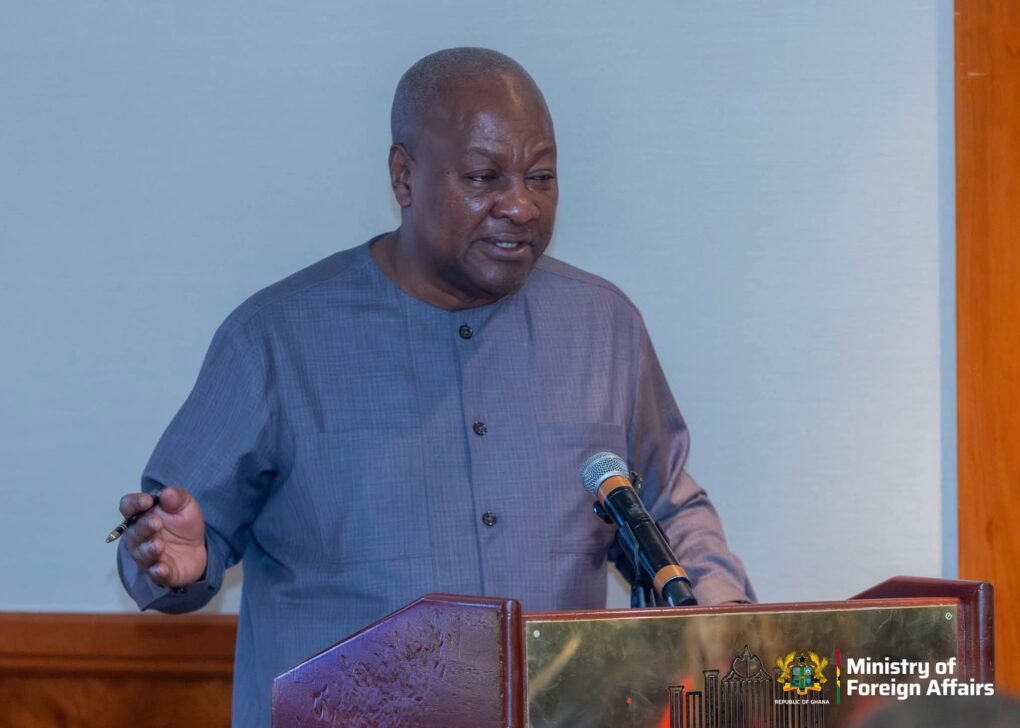
President John Dramani Mahama has welcomed the United Kingdom’s acknowledgement of its role in the transatlantic slave trade but insists that a formal apology and structured international dialogue on reparatory justice are necessary to address historical injustices.
In a statement issued by the Presidency on Sunday, November 1, 2026, Mahama described the UK Prime Minister Andy Burnham’s remarks as an important step towards confronting Britain’s history of slavery and colonialism.
Speaking in his capacity as the African Union Champion on Reparations and Chair of the Global Advisory Panel on Reparatory Justice, the President said the development could strengthen international efforts to secure justice and recognition for victims and descendants of slavery.
Mahama called for a structured dialogue involving the African Union, CARICOM, the African diaspora and countries historically involved in the transatlantic slave trade.
He proposed a five-point reparatory justice framework covering a formal apology, efforts to eliminate systemic racism and Afrophobia, investments in education, healthcare, science and youth empowerment, the return of stolen African cultural artefacts, and development partnerships to address economic inequalities.
The President also highlighted Ghana’s historical significance, pointing to slave trading sites such as Cape Coast Castle, Elmina Castle and Christiansborg Castle as reminders of the millions of Africans who suffered under the transatlantic slave trade.
Although acknowledging that an apology cannot reverse the suffering caused by slavery, Mahama said it would represent an important step towards reconciliation, healing and preventing similar atrocities in the future.
He commended Prime Minister Burnham and UK Foreign Secretary Ed Miliband for recognising the historical injustices, urging world leaders to demonstrate the political courage needed to advance reparatory justice.
Mahama stressed that differences in opinion should not prevent countries from working together towards a common goal of historical accountability, racial equality and economic justice.
Source: newsthemegh.com