
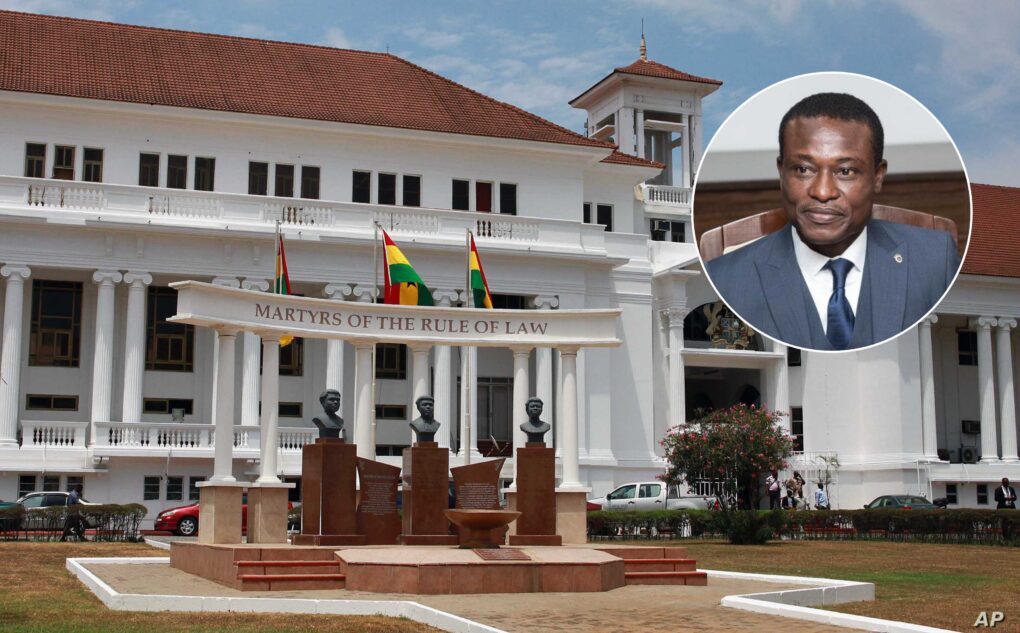
The Office of the Special Prosecutor (OSP) Act, 2017 (Act 959) has been deemed constitutional by the Supreme Court.
The Supreme Court ruled today, Wednesday, July 29, 2026, that Sections 3 and 4 of Act 959 are not void as filed by a citizen since they do not conflict with or violate the 1992 Constitution.
Noah Ephraem Tetteh Adamtey, a private attorney, filed the lawsuit on December 12, 2025, questioning whether Parliament went beyond its constitutional role by giving the OSP autonomous investigative and prosecutorial powers.
Citing Articles 88(3) and 88(4) of the 1992 Constitution, Adamtey’s case contends that the Attorney-General alone has prosecution authority.
The Office of the Special Prosecutor Act, 2017 (Act 959), which grants the OSP independent prosecution authority, was challenged in the case, J1/3/2026.
Adamtey’s contention that the OSP’s autonomous prosecution powers were illegal was backed by the Attorney-General’s office.
However, the Supreme Court has ruled that the A-G alone is responsible for all prosecutions, and that anyone else who prosecutes on behalf of the Republic does so only with the A-G’s permission.
It also decided that the OSP has a legal authorisation from the A-G to start and carry out prosecutions, and that this authorisation is valid until it is modified.
The Supreme Court decided that the A-G still has the authority to enter a nolle prosequi in cases presented by the OSP.
Additionally, it decided that nothing in the ruling challenges the authority of any prosecutor approved by the A-G and that all prosecutions, convictions, and freezing orders made under Section 71 of the Act are still legitimate.
Source: newsthemegh.com