

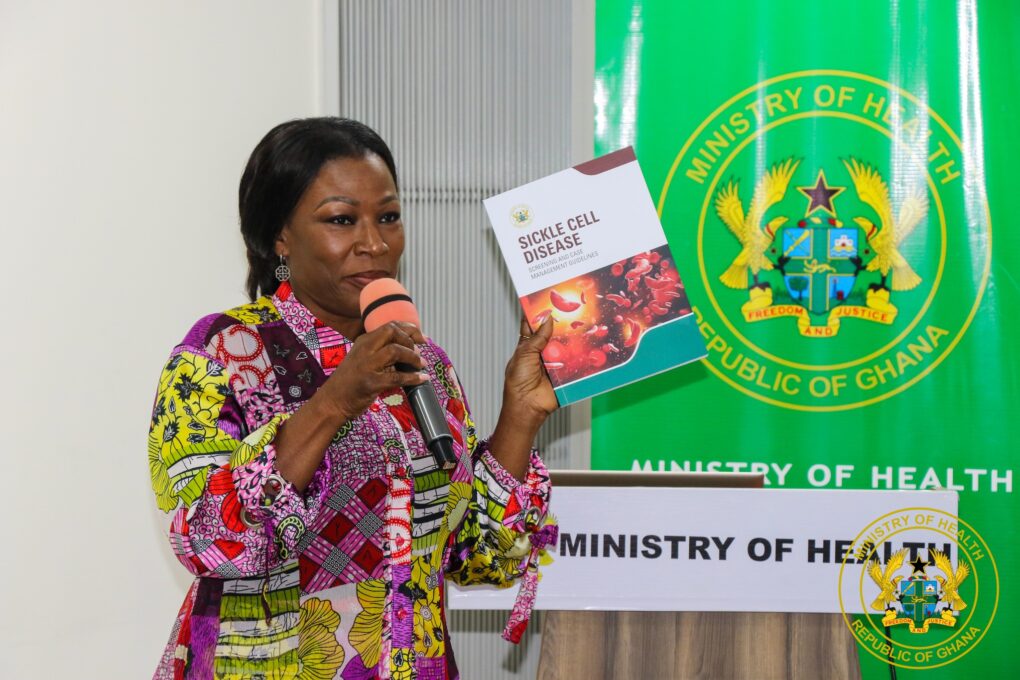
A significant step towards improving sickle cell disease prevention, early diagnosis, and management in Ghana has been taken with the release of the National Sickle Cell Disease Screening and Case Management Guidelines by the Ministry of Health.
With the goal of lowering the burden of sickle cell disease through comprehensive and coordinated healthcare services, public education, research, and prevention, the Guidelines, which were created through extensive public consultations and stakeholder collaboration, offer a coordinated national framework for the successful implementation of interventions.
Prof. Dr. Grace Ayensu-Danquah, Ghana’s Deputy Minister for Health, officially unveiled the Guidelines, calling them a significant step in the country’s fight against non-communicable diseases.

She pointed out that sickle cell disease affects roughly 18,000 infants annually, or 2% of all newborns. Many cases are detected late, frequently during traumatic crises, leading to avoidable complications and deaths.
The Deputy Minister clarified that the Guidelines offer a standardised, evidence-based framework for screening, diagnosis, treatment, referral, and long-term follow-up across all levels of care. They were created under the Non-Communicable Disease Policy and Strategy (2022) and the Sickle Cell Disease Strategy (2024–2028).
In order to guarantee successful implementation and better health outcomes for Ghanaians with sickle cell disease, she urged health professionals, legislators, civil society organisations, and development partners to collaborate. She also praised the experts and partners involved in the process.
Source: newsthemegh.com