

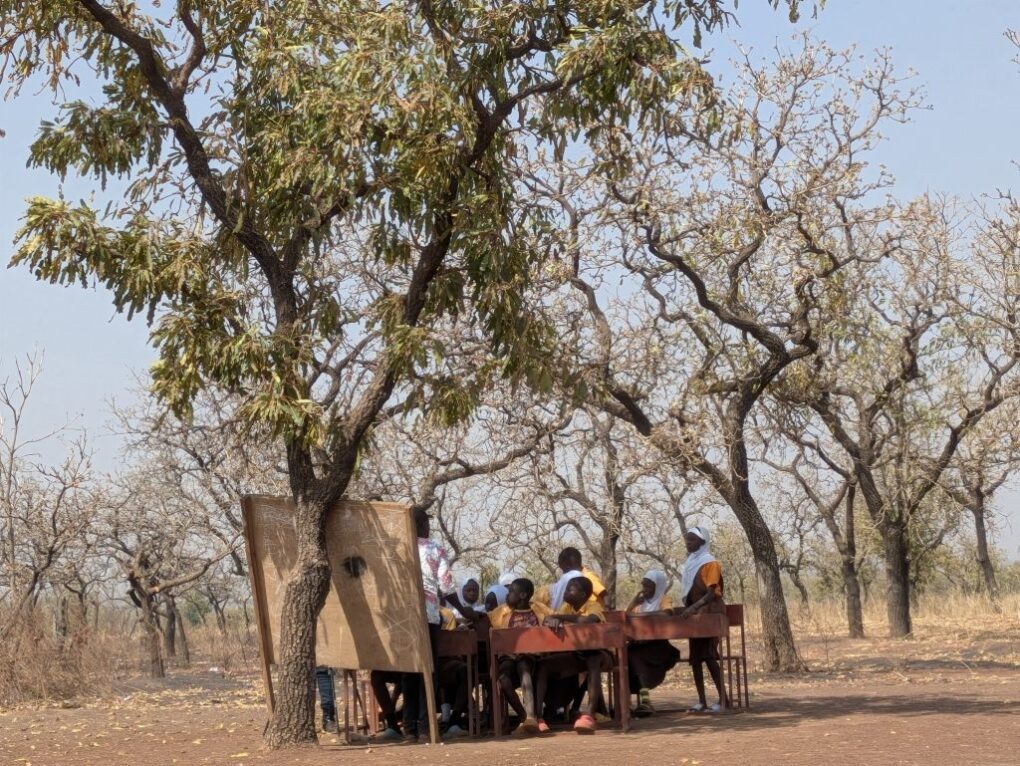
Mr Haruna Iddrisu, Minister of Education, said that over 5,000 schools across the country were still functioning under trees, citing the issue as proof of Ghana’s growing educational disparity between the northern and southern regions.
He stated that persisting inequality in access to quality education remains a key national concern, but that the government is implementing focused reforms to address the issue, with a heavy emphasis on basic learning.
Mr Iddrisu made the announcement at the 2nd National Social Inclusion in Basic Education and Public Basic Education Convening, which took place in Tamale and brought together education stakeholders to discuss ways for improving access to excellent education, particularly in underserved and rural regions.
The Minister emphasised that early mastery of core skills greatly enhances long-term educational achievements and that bolstering reading and numeracy at the basic level remained important to the government’s education policy.
“If we get it right from the beginning, our children will succeed in the future,” he declared.
In order to prepare students for a competitive global economy, he pointed out that the education sector was also emphasising the acquisition of critical 21st-century skills, such as digital literacy, financial literacy, ethical values, and emerging competencies like electronics, artificial intelligence, coding, and robotics.
Speaking on how the general public views educational results, Mr. Iddrisu noted that whereas parents readily applaud academic achievement, political leadership was frequently blamed for failures.
He did, however, emphasise that parents ultimately wanted proper infrastructure and learning settings to help their children flourish.
Meanwhile, Prof. Alhassan Amin, Director-General of the Ghana Broadcasting Corporation (GBC), praised the School for Life for its ongoing efforts to increase access to excellent basic education in underprivileged communities.
He noted that the organization’s work emphasises the value of inclusive and community-driven approaches to education delivery, particularly for marginalised people.
“Our strategic approach is based on the belief that an educated and empowered citizenry is critical to national development,” Prof. Amin said.
Hajia Wedad Sayibu, the director of School for Life, acknowledged the difficulties that the education sector faces, such as poor infrastructure, underfunding, and a teacher shortage, which she claimed disproportionately affect underprivileged and rural populations.
She did, however, commend the government for recent actions, including as the uncapping of the Ghana Education Trust Fund (GETFund) and initiatives to assist educators in remote areas.
According to Hajia Sayibu, the goal of the gathering was to encourage group effort, responsibility, and advocacy in order to close the education gap between rural and urban areas and guarantee that every kid has fair access to high-quality education.
“Equity in education must be a shared responsibility if we are to leave no child behind,” she emphasised.
Source: newsthemegh.com