

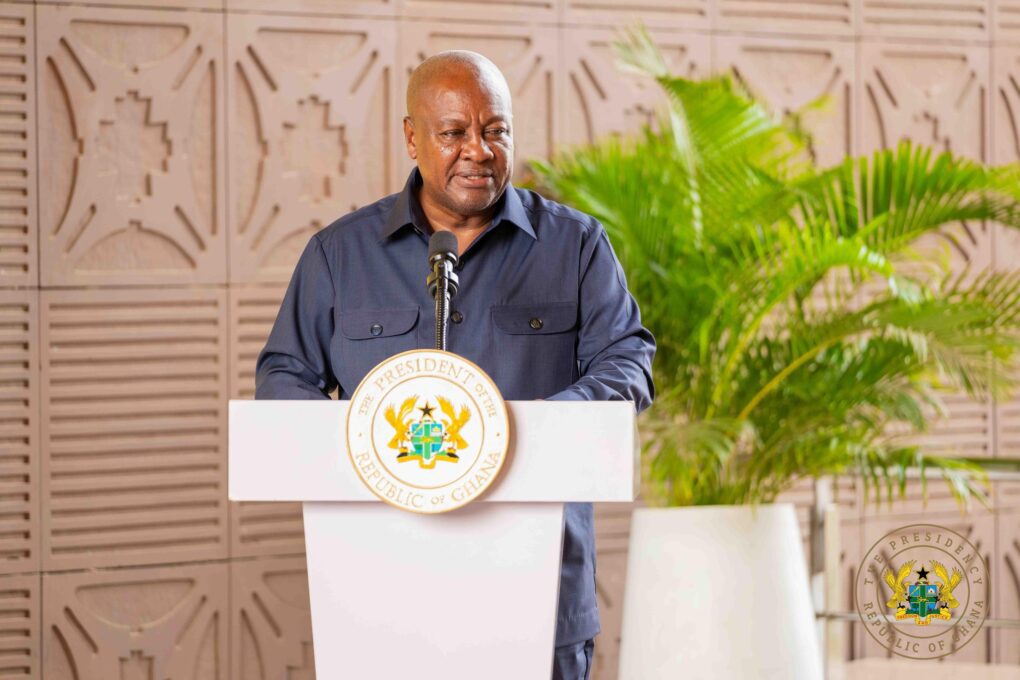
President John Dramani Mahama has issued an immediate ban on international travel by boards of state-owned firms and public institutions for training, conferences, retreats, and study tours sponsored by taxpayers, citing growing concern about the rising cost of such excursions.
The instruction, issued by the Jubilee House on March 5 and signed by Secretary to the President Callistus Mahama, follows what the presidency described as a worrying pattern of board members’ abroad travel that had put a major strain on the public budget.
The directive applies to all state-owned firms and public institutions, putting an abrupt end to a practice that the administration claimed had increased in both frequency and cost.
“It has come to the attention of the President that some Boards of State-Owned Enterprises and other public institutions have increasingly undertaken international travel for training programmes, retreats, conferences, and study tours,” the directive stated.
The government acknowledged the value of exposure to global best practices and ongoing professional growth, but it voiced major concerns about the total cost of such travel, which frequently involved many board members and lengthy itineraries.
At a time when strict measures were being put in place to preserve fiscal restraint, the presidency observed that spending on airfares, lodging, per diems, and related logistics had become a subject of concern.
The complete prohibition goes into force right away. It is forbidden for boards to travel abroad for conferences, retreats, training, or study trips that are either directly or indirectly supported by public funds.
The rule does, however, provide for extraordinary situations in which an international engagement is judged to be absolutely necessary and cannot be reasonably carried out locally or virtually.
Before making any commitments, a formal request for the President’s express consent must be made through the sector minister to the Chief of Staff in the Office of the President.
The purpose and anticipated results of the trip, its strategic relevance to the institution’s mandate, the number of participants suggested, the estimated total cost, and a clear explanation of why the goals cannot be accomplished through local or virtual arrangements must all be included in any request for exceptional approval.
Additionally, as cost-effective options for capacity development, the directive strongly encourages ministries and their linked institutions to prioritise local training programs, in-country retreats, and collaborations with respectable local institutions, universities, and professional associations.
Instead of travelling abroad with full board delegations when specific expertise is needed, institutions have been recommended to look into virtual platforms, technical exchanges, and short-term expert engagements within Ghana.
Ministers have been directed to make sure that any training or capacity-building projects are thoroughly evaluated for value, necessity, and cost-effectiveness, and that boards concentrate their efforts primarily on their statutory oversight and governance obligations.
The directive, according to the presidency, is part of a larger government initiative to tighten spending controls, cut back on unnecessary public spending, and reallocate limited national resources to social interventions, infrastructure development, and priority programs that directly benefit Ghanaians.
All ministers have been asked to ensure strict adherence to the directive by bringing it to the immediate attention of boards, CEOs, and management teams of state-owned businesses and public institutions under their control. The president expressed gratitude to all ministries for their cooperation in carrying out the instruction.
On behalf of the President, formal guarantees were given at the end of the statement.
Source: newsthemegh.com