

GNA | Edited by Alice Tettey /Kenneth Odeng Adade
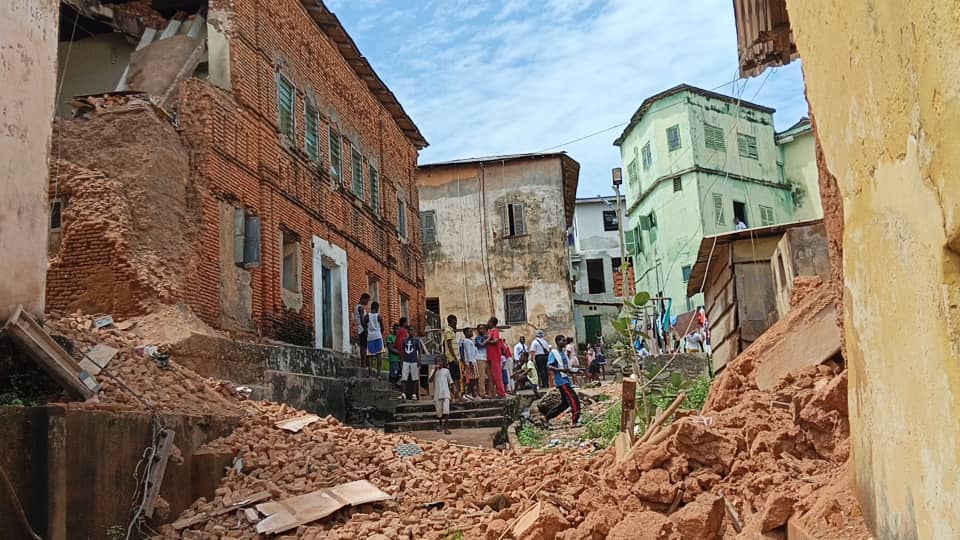
The National Disaster Management Organisation (NADMO), had announced plans to demolish 50 old and dilapidated buildings in the Cape Coast Metropolis that had become death traps.
It said many of the mud-built structures, some more than 100 years old, had developed visible cracks and in several cases, roofs had been badly stripped off due to years of neglect.
NADMO described as mind-boggling to find families still living in these dangerously fragile buildings, seemingly unaware of or indifferent to the grave risks.
Consequently, it had given a two-week ultimatum for all residents occupying structures marked for demolition to vacate the buildings.
“Failure to comply with this order will leave us with no option but to demolish the structures and recover the cost of demolition from the owners,” Mr Emmanuel Kwasi Dawood, the Regional Director of NADMO disclosed at presser on Monday.
He said the urgency of the demolition exercise had been exacerbated by the recent rains across the region that had resulted in 58 disasters in the last seven days, claiming 18 lives and displacing 377 people.
The disasters include, building collapses, drowning, fallen trees, landslides and mudslides in 13 of the region’s 23 districts.
Mr Dawood said the Cape Coast Metropolis recorded the highest number of incidents, including five building collapses and three deaths.
Upper Denkyira East and Upper Denkyira West recording two and three people respectively, drowning.
Gomoa Central recorded a building collapse and one person drowning, Mfantseman had two building collapses and one person swept away by the floods, while Twifo Atti-Morkwa and Agona West each had one person drowning.
Mr Dawood attributed the spate of disasters to the heavy rains exacerbated by environmental degradation and poor urban planning, including the proliferation of dilapidated structures, indiscriminate settlement in flood-prone areas, blocked drains and unsafe excavation.
These factors, he said, had increased vulnerability to flooding, building collapses, mudslides and other hazards.
Mr Dawood therefore urged the public to change attitudes that increased disaster risk, including building in waterways and filling drainages with gabbage.
He called on households and communities to heed early warnings, relocate from high-risk zones, maintain drains, avoid illegal excavation and report unsafe structures to local authorities.
He also appealed to MMDAs, traditional leaders, security agencies, civil society and development partners to intensify collaboration with NADMO to strengthen preparedness, early response and recovery efforts across the Central Region.
Source: gna.org.gh