

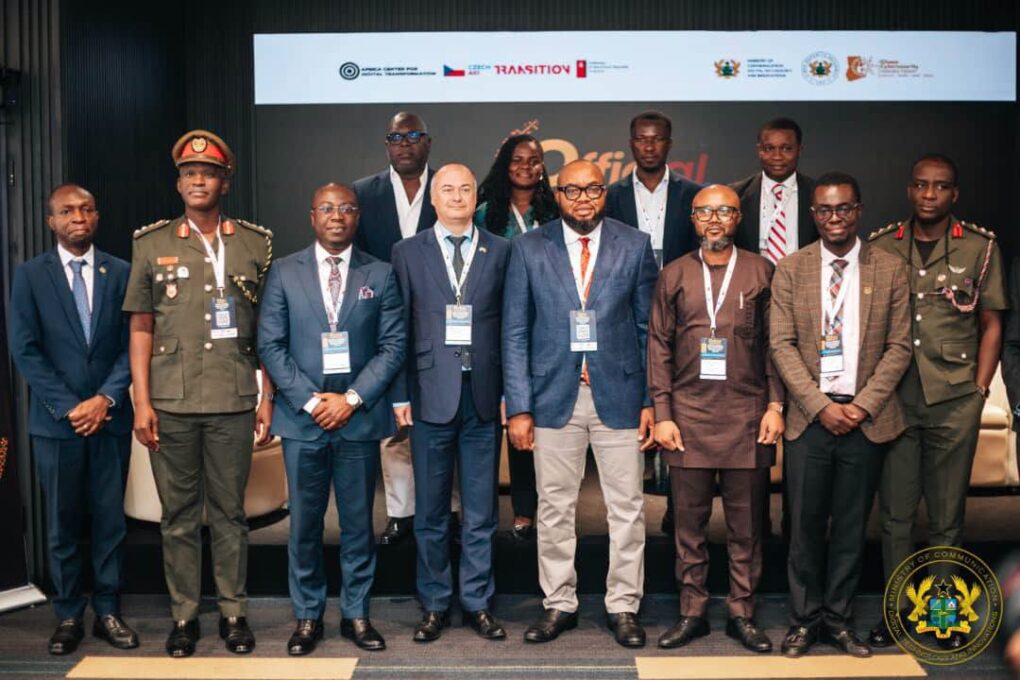
The Deputy Minister for Communication, Digital Technology and Innovations, Hon. Mohammed Adam Sukparu, has officially launched the National Community Media Cyber Capacity Building Project (NCMCCBP) on behalf of the Sector Minister, Hon. Samuel Nartey George, calling for stronger collaboration to promote a secure, resilient, and digitally inclusive Ghana.
The project was launched on Monday, August 3, 2026, at the National Communications Authority (NCA) Towers in Accra. The initiative is designed to empower community media practitioners with practical cybersecurity knowledge, enabling them to educate the public on cyber hygiene, online safety, digital fraud prevention, mobile money scams, and responsible internet use.
Cybersecurity Awareness to Protect Ghanaians
The National Community Media Cyber Capacity Building Project brings together government agencies, security institutions, development partners, journalists, and civil society organizations to improve Ghana’s cyber resilience through public education, collaboration, and knowledge sharing.
Speaking on behalf of the Communications Minister, Hon. Sukparu emphasized that cybersecurity remains a key pillar of Ghana’s digital transformation agenda. He noted that as digital technologies continue to expand, building public trust through strong cybersecurity measures is essential.
According to him, cybersecurity has evolved beyond technology and now plays a vital role in economic development, governance, national security, and digital innovation.
He highlighted the increasing threat of mobile money fraud, identity theft, online impersonation, misinformation, cybercrime, and child online safety issues, stressing the need for stronger cooperation between government, security agencies, media organizations, and local communities.
The Deputy Minister also praised community radio stations for their ability to reach rural and underserved communities in local languages, urging journalists to treat cybersecurity reporting as a public service that helps citizens stay safe online.
He reaffirmed government’s commitment to a nationwide approach involving Ministries, Departments and Agencies (MDAs), the Cyber Security Authority (CSA), law enforcement agencies, academia, technology companies, civil society, development partners, and the media to strengthen Ghana’s digital security ecosystem.
CSA Calls for Stronger Partnership Against Cybercrime
The Director-General of the Cyber Security Authority, Mr. Divine Selase Agbeti, said the growing sophistication of cybercrime demands closer collaboration among government institutions, law enforcement agencies, journalists, and other stakeholders.
He warned that cybercrime now includes a wide range of threats such as mobile money fraud, online investment scams, romance scams, identity theft, business email compromise, online extortion, and digital impersonation, many of which are carried out by organized international criminal networks.
Mr. Agbeti revealed that the Cyber Security Authority, working closely with the Ghana Police Service, national security agencies, and international partners, has intensified efforts to investigate, arrest, and prosecute cybercriminals.
He described the media as a crucial ally in the fight against cybercrime, noting that trained journalists can simplify complex cybersecurity information and provide practical online safety advice to the public.
“Our vision is simple: every Ghanaian should have the knowledge to stay safe online,” he said, encouraging participants to use the training to help protect citizens from becoming victims of internet fraud and cybercrime.
Czech Republic Reaffirms Support for Ghana’s Cybersecurity Development
The Ambassador of the Czech Republic to Ghana, His Excellency Pavel Bílek, reaffirmed his country’s commitment to supporting Ghana’s cybersecurity development, describing Ghana as one of the Czech Republic’s key cybersecurity partners in Africa.
He noted that cooperation between the two countries has expanded over the years through professional training, technical assistance, cybersecurity equipment, and knowledge exchange programs.
According to the Ambassador, the partnership has strengthened the ability of Ghanaian investigators to collect, process, and analyze digital evidence, improving criminal investigations and supporting successful court prosecutions.
He stressed that effective cybersecurity requires more than advanced technology, adding that expertise, continuous training, modern tools, and long-term international partnerships are equally important.
Ambassador Bílek welcomed the National Community Media Cyber Capacity Building Project, describing it as a significant initiative that combines cybersecurity awareness, media development, and responsible journalism.
He concluded that combating cybercrime is a shared responsibility, emphasizing that while law enforcement agencies play a critical role, citizens must also be equipped with the knowledge to recognize online threats and protect themselves from digital fraud.
Source: newsthemegh.com