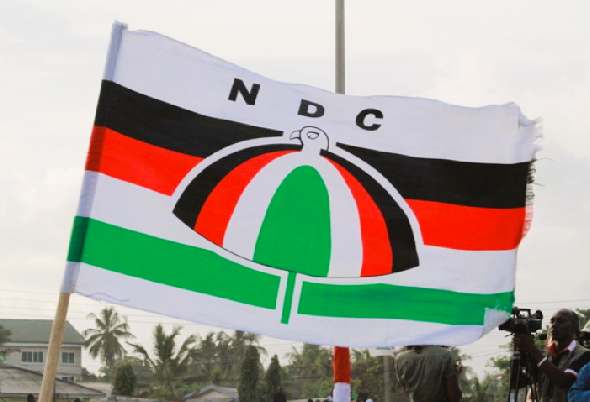
The governing National Democratic Congress (NDC) is facing renewed public scrutiny following fresh allegations of foreign bribery linked to major government contracts awarded during the first administration of President John Dramani Mahama.
The latest development follows the conviction in the United States of former Goldman Sachs executive and former Tema Oil Refinery (TOR) Managing Director Kwaku Asante Berko over a bribery scheme connected to a major power project in Ghana.
The case has reignited discussions about corruption, government accountability, public procurement and transparency in Ghana, particularly concerning power agreements signed during the country’s prolonged energy crisis, popularly known as Dumsor.
Kwaku Asante Berko Convicted in US Bribery Case
Berko, a dual US-Ghanaian citizen, was convicted in Brooklyn, New York, on August 6, 2026, following a nine-day trial before US District Judge Diane Gujarati.
He was found guilty of conspiracy to violate the Foreign Corrupt Practices Act (FCPA), violating the FCPA and conspiracy to commit money laundering.
US prosecutors alleged that Berko and others participated in a scheme involving more than US$4 million in bribes to Ghanaian government officials to facilitate a power plant contract for Turkish energy company Aksa Enerji Uretim A.S.
According to the US Securities and Exchange Commission (SEC), Berko allegedly helped facilitate up to US$4.5 million in illicit payments connected to the power project. The funds were reportedly transferred through an intermediary before being distributed to Ghanaian public officials.
The SEC also alleged that Berko personally made approximately US$66,000 in payments to members of Ghana’s Parliament and other government officials in connection with efforts to advance the transaction.
Berko has been remanded in custody pending sentencing, which is scheduled for November 10, 2026. He faces a potential maximum sentence of up to 30 years in prison.
Aksa Enerji Power Deal Under Scrutiny
The bribery case relates to agreements for the construction and financing of power plants by Aksa Enerji between December 2014 and July 2015, when Ghana was experiencing severe electricity shortages.
At the time, Berko was an executive director in Goldman Sachs’ investment banking division and was involved in the transaction between Aksa Enerji and the Government of Ghana.
The allegations have renewed debate over the cost of Power Purchasing Agreements (PPAs) signed by the government during the energy crisis.
Former World Bank Country Director for Ghana Pierre Frank Laporte previously criticised some of the country’s power agreements, arguing that certain PPAs were expensive and contained take-or-pay provisions.
Under such agreements, the government can be required to make payments for contracted electricity capacity even when the power is not fully utilised.
Attorney-General Pursues Bribery Investigations
Ghana’s Attorney-General and Minister for Justice, Dr Dominic Ayine, is reportedly working with US authorities to investigate and prosecute individuals allegedly connected to the bribery scheme.
Deputy Attorney-General Justice Srem Sai disclosed the development in a social media post on August 8, 2026, following Berko’s conviction.
The latest move could potentially lead to further investigations into individuals who may have been involved in the alleged Ghana power sector bribery scandal.
Airbus Bribery Scandal Also Raises Questions
The Berko conviction has also brought renewed attention to the earlier Airbus bribery scandal involving Ghana.
Airbus, one of Europe’s largest aircraft manufacturers, was investigated by authorities in the United States, United Kingdom and France over allegations of corrupt practices in several countries, including Ghana.
The investigations resulted in Airbus agreeing to pay approximately US$3.9 billion in penalties under agreements with authorities in the three countries. The settlement remains one of the largest corporate corruption-related penalties imposed globally.
The investigations examined allegations that Airbus used intermediaries and other methods to secure lucrative aircraft contracts in various countries.
Allegations Linked to Ghana Aircraft Purchase
In Ghana’s case, court documents alleged that more than €3 million was paid through a third party in connection with the purchase of three military aircraft.
The documents referred to a senior Ghanaian official as “Government Official 1”, who was in office between 2009 and 2016, and another individual as “Consultant 4.”
Subsequent investigations identified the government official as former President John Dramani Mahama and the consultant as his brother, Adam Foster Mahama.
The matter was referred to Ghana’s Office of the Special Prosecutor (OSP) by former President Nana Addo Dankwa Akufo-Addo in February 2020 for investigation.
Former Special Prosecutor Martin Amidu was initially involved in the investigation. His successor, Kissi Agyebeng, later concluded the Ghana investigation and cleared President Mahama of wrongdoing.
Despite the domestic findings, the Airbus case continues to feature prominently in public discussions about political accountability, corruption investigations and transparency in government contracts.
Renewed Debate Over Accountability in Ghana
The latest foreign bribery allegations have intensified calls for greater transparency in the awarding and financing of major public contracts.
The conviction of Kwaku Asante Berko has particularly renewed questions about the circumstances surrounding Ghana’s power sector contracts, the cost of electricity agreements and the role of public officials in major infrastructure transactions.
As Ghana’s authorities continue working with international investigators, attention is expected to remain focused on whether additional individuals will face investigation or prosecution in connection with the alleged bribery schemes.
The developments have once again placed corruption, foreign bribery, government accountability and public-sector transparency in Ghana at the centre of national debate.
Source: newsthemegh.com