
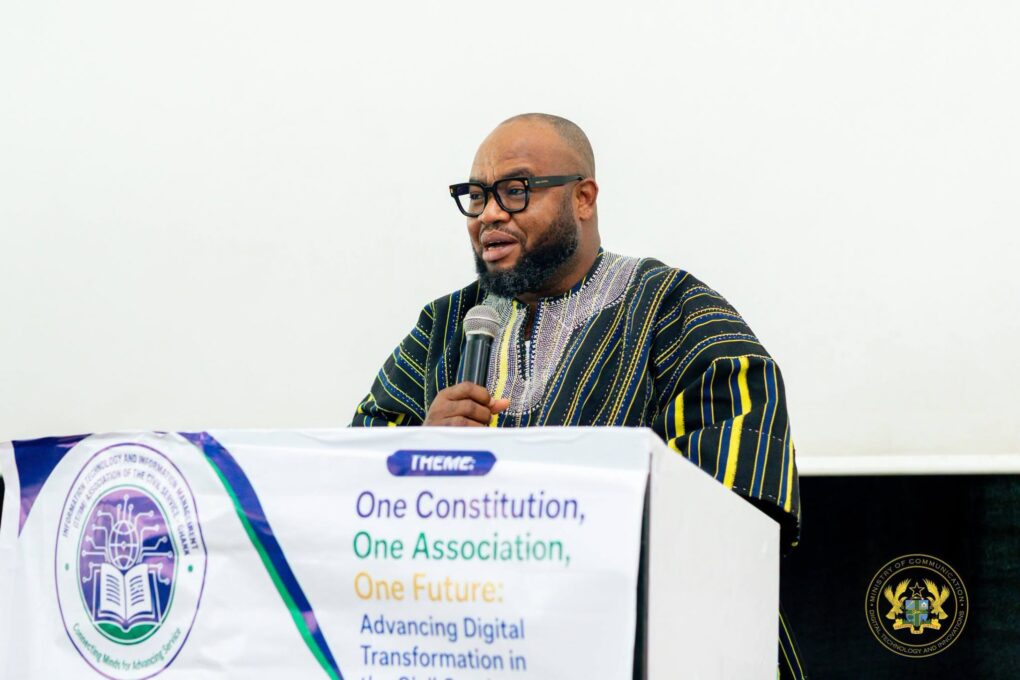
The Deputy Minister for Communication, Digital Technology and Innovations, Hon. Mohammed Adam Sukparu, has urged Information Technology (IT) and Information Management professionals within Ghana’s Civil Service to take on a more strategic role in advancing the country’s digital transformation and digital governance agenda.
Speaking on behalf of the Sector Minister, Hon. Samuel Nartey George, at the 7th General Meeting of the Information Technology and Information Management Association of Ghana’s Civil Service, Mr Sukparu said the growing importance of technology and data in public administration required IT professionals to move beyond traditional technical responsibilities.
He said information management specialists must become active drivers of digital government, innovation and improved public service delivery.
Effective Information Management Critical to Ghana’s Digital Government
The Deputy Minister said effective information management was essential to ensuring that government data is properly collected, stored, protected, shared and used to support evidence-based decision-making, transparency, accountability and efficient public services.
He noted that the increasing adoption of artificial intelligence (AI), data analytics and other emerging technologies in government operations has made the quality, security, accessibility and integrity of public-sector information more important than ever.
According to him, strong information management systems would help government institutions make better decisions while improving efficiency and strengthening public trust.
Ghana Expands Digital Transformation Initiatives
Mr Sukparu said Ghana is making significant progress in its digital transformation strategy through investments in digital public infrastructure, broadband connectivity, digital financial services, e-government platforms, cybersecurity and technology innovation.
He explained that these initiatives are being supported by national policies and laws covering areas such as the digital economy, data protection and electronic transactions.
The government is also undertaking reforms to ensure that Ghana’s digital legislation remains relevant and responsive to rapidly emerging technologies.

National AI Strategy and Digital Economy Reforms
The Deputy Minister disclosed that the government is advancing the implementation of Ghana’s National Artificial Intelligence Strategy while reviewing existing sector legislation and developing new legal frameworks to address emerging digital challenges.
He said the country’s digital transformation agenda goes beyond simply introducing new technologies.
According to Mr Sukparu, digital transformation is about changing how government institutions operate, improving collaboration and delivering efficient, transparent, responsive and citizen-centred public services.
“Digital transformation succeeds because of people,” he said, emphasising the important role played by professionals who design, operate, maintain and improve government digital platforms, information systems and technology infrastructure.
IT Professionals Urged to Become Architects of Ghana’s Digital Future
Mr Sukparu encouraged IT and Information Management professionals to view themselves as “architects of Ghana’s digital future” rather than simply technology officers.
He said their expertise has direct implications for critical sectors including healthcare, education, agriculture, justice, local government and public financial management.
The Deputy Minister also urged professionals to embrace continuous professional development, lifelong learning, research and innovation to remain competitive in a rapidly changing digital environment.
He encouraged stronger collaboration between IT professionals, universities, development partners and other professional organisations to build Ghana’s digital skills and technology ecosystem.
Strong Governance Needed for Digital Transformation
Addressing the governance agenda of the General Meeting, which included discussions on the Association’s constitution, election guidelines and election code of conduct, Mr Sukparu stressed the importance of good governance, accountability, transparency and shared values.
He commended the leadership of the Information Technology and Information Management Association for strengthening the organisation and creating opportunities for professionals to collaborate, exchange knowledge and mentor younger members.
He said stronger cooperation among IT and Information Management professionals across ministries, departments and agencies (MDAs) could help establish common technology standards, promote best practices and accelerate government-wide digital transformation.
Government Reaffirms Commitment to Digital Governance
The Deputy Minister reaffirmed the Ministry’s commitment to working with the Office of the Head of the Civil Service and the Association to strengthen digital governance across Ghana’s public sector.
He said the Ministry would continue supporting initiatives focused on technology innovation, cybersecurity, interoperability, artificial intelligence readiness, digital inclusion, digital skills development and resilient digital infrastructure.
Mr Sukparu also encouraged members of the Association to actively participate in its activities and help build an organisation founded on fairness, inclusiveness, transparency, professionalism and ethical leadership.
He said a coordinated and skilled community of IT and Information Management professionals would be critical to achieving Ghana’s long-term digital transformation, digital economy and e-government goals.
Source: newsthemegh.com