
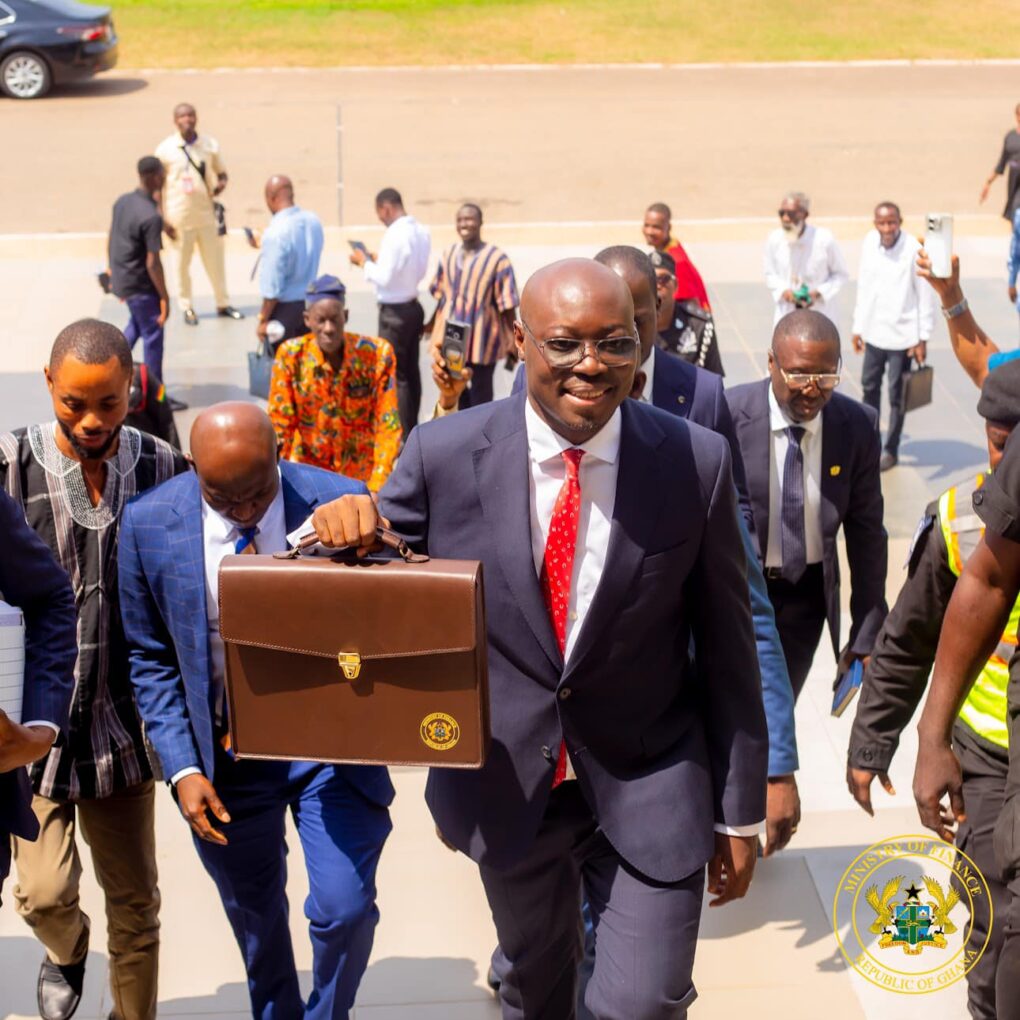
Government is facing significant fiscal challenges ahead of the presentation of the 2027 Budget, as rising public sector wage demands, infrastructure financing requirements and domestic revenue mobilisation compete for limited financial resources.
Although government spending remained below approved targets during the first seven months of 2026, capital expenditure also fell short of its programmed allocation. Meanwhile, compensation for public sector workers continued to consume a substantial portion of domestic revenue.
The financial pressure is expected to increase in 2027 following an agreement between government and organised labour for an 8% increase in base pay, alongside an additional one percentage point adjustment in conditions of service.
The latest fiscal figures highlight the difficult decisions government must make to maintain economic stability while financing infrastructure projects, supporting job creation and meeting its expenditure obligations.
Ghana Government Revenue and Expenditure Performance in 2026
Between January and July 2026, Ghana recorded total revenue and grants of GH¢144.57 billion, slightly below the projected target of GH¢144.95 billion.
Government expenditure, including net lending, reached GH¢147.08 billion against a programmed amount of GH¢175.93 billion. This represents a 16.4% underspending compared with the approved expenditure target.
While the lower expenditure reflects efforts to maintain fiscal discipline and consolidate public finances, it has also raised concerns about the government’s ability to deliver critical infrastructure projects and stimulate economic activity.
A major concern is whether the current fiscal consolidation programme can create sufficient financial room for development spending without compromising Ghana’s economic recovery.
Capital Expenditure and Infrastructure Investment Under Pressure
Capital expenditure remains one of the major areas requiring attention as government prepares the 2027 Budget.
Available figures show that government spent GH¢24.23 billion on capital projects between January and July 2026, approximately 25% below the programmed target.
Despite the shortfall, capital expenditure increased by 157.9% compared with the corresponding period in 2025.
The performance has renewed discussions about the pace of infrastructure development, public investment and the need to expand productive capacity to support long-term economic growth.
Director of the Institute of Statistical, Social and Economic Research (ISSER), Professor Robert Darko Osei, has emphasised that Ghana’s improving macroeconomic indicators must translate into meaningful improvements in the living conditions of ordinary citizens.
According to him, the quality of economic growth is just as important as the growth figures, particularly when it comes to creating employment opportunities and improving household welfare.
He stressed the need for government to direct investments towards productive sectors capable of generating jobs and ensuring that economic stability delivers tangible benefits to the population.
His remarks highlight the importance of balancing fiscal consolidation with strategic investments in infrastructure, industry and other job-creating sectors.
Ghana’s 2027 Budget Faces Rising Public Sector Wage Bill
The public sector wage bill is another major expenditure concern for government ahead of the 2027 fiscal year.
Government spent GH¢50.55 billion on employee compensation between January and July 2026, representing approximately 35.2% of domestic revenue collected during the period.
For 2027, the government has earmarked GH¢104.1 billion for compensation of employees, equivalent to 28.4% of total commitment expenditure.
The allocation comes ahead of the implementation of the latest agreement with organised labour, which provides for an 8% increase in public sector base salaries and an additional one percentage point adjustment in conditions of service.
Although the salary adjustment is expected to improve the earnings of public sector workers, it will also increase government’s recurrent expenditure obligations.
This creates additional pressure on the Ministry of Finance to manage public sector compensation without significantly reducing allocations for infrastructure, education, healthcare and other essential development programmes.
Tax Analyst Warns Against Rising Labour Agitations
Tax analyst Francis Timore Boi has cautioned that frequent labour disputes resulting in government concessions could undermine efforts to maintain fiscal discipline.
He acknowledged government’s response to organised labour but warned that repeated industrial actions could encourage workers to view strikes as the most effective means of securing improved employment conditions.
According to him, this situation could create additional financial obligations for government and make expenditure planning more difficult.
His concerns come as government seeks to control recurrent spending while implementing measures to improve public financial management and maintain economic stability.
Government Under Pressure to Increase Domestic Revenue Mobilisation
With government indicating its intention to reduce the tax burden on businesses and households, attention is increasingly shifting towards expanding the tax base, improving tax compliance and preventing revenue leakages.
Strengthening domestic revenue mobilisation will be critical to financing government programmes, meeting public sector salary obligations and supporting infrastructure development.
The challenge, however, is whether improved tax administration and revenue collection can generate sufficient resources to accommodate rising expenditure without placing additional pressure on businesses and ordinary Ghanaians.
Tax analyst Francis Timore Boi has also called on government to consider alternative financing arrangements, particularly greater private-sector participation in major infrastructure projects.
He suggested that private companies could be encouraged to take up selected road construction projects and other major infrastructure investments, reducing government’s dependence on direct public financing.
Private-sector investment could provide additional funding for critical infrastructure development and help ease pressure on the national budget.
However, such arrangements would require proper contractual agreements, effective risk management and transparency to ensure that they do not create unsustainable financial obligations for the state.
2027 Budget: Government Faces Tough Fiscal Decisions
The upcoming 2027 Budget is expected to outline government’s strategy for managing competing economic and financial priorities.
Key issues include controlling the public sector wage bill, increasing domestic revenue, financing major infrastructure projects and maintaining the fiscal consolidation gains recorded in 2026.
Government must also ensure that spending adjustments do not undermine job creation, private-sector growth and improvements in the living standards of Ghanaians.
As preparations continue, the central challenge will be finding a sustainable balance between economic stability, public sector compensation, infrastructure investment and revenue mobilisation.
The 2027 Budget will therefore be an important test of government’s ability to manage limited fiscal resources while delivering its economic development commitments.
Source: newsthemegh.com