

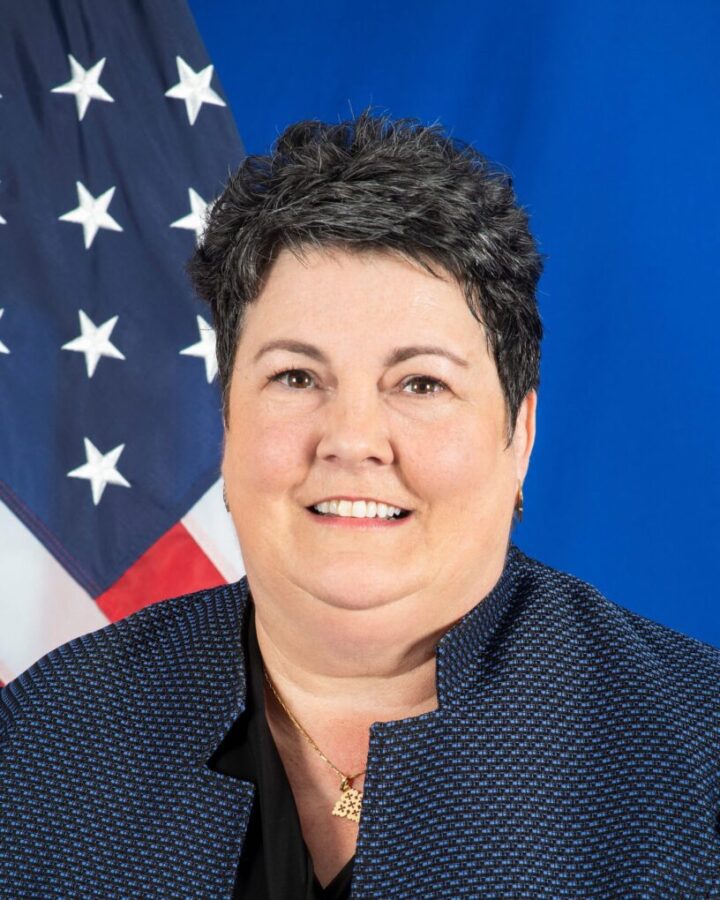
According to US Ambassador to Ghana Virginia E. Palmer, the US government will continue all life-saving programs run by the US Agency for International Development (USAID).
Maternal health, HIV/AIDS prevention and interventions, malaria eradication, infant and child mortality, and vital medications and immunizations are among the life-saving initiatives.
Ms. Palmer stated that while funding for those life-saving initiatives will remain in place, many of them have undergone revisions and reviews.
The Trump administration put numbers on its plans to cut off the majority of US development and humanitarian aid overseas when it announced shortly after taking office that it would eliminate over 90% of USAID’s foreign aid contracts and $60 billion in total US assistance worldwide.
Ambassador Palmer reiterated that Ghana’s lengthy relationship with America had guaranteed its position as an essential partner in her first media appearance since the political changes in the US and Ghana.
“No matter what the change in language, how we express it, or the change in focus, Ghana is a really important partner of the United States and will continue to be so.”
“The United States is behind Ghana’s economic recovery through institutions such as the World Bank and the International Monetary Fund (IMF), as well as American business interests,” she said.
The Ambassador went on to say that the United States and Ghana have a long-standing connection that is based on a number of factors, including historical and cultural links as well as bilateral trade, which now stands at around $3 billion.
“Your conflict resolution structures are stronger as a result of hard work, and this has enabled you to move to another phase of partnership with the United States,” Ms. Palmer said, highlighting Ghana’s progress over many other countries.
However, she noted that the United States has a lot of programs to boost agricultural growth and would be able to continue the cash transfer programs for those affected by the drought in the north, even though it had stopped many of its economic growth programs.
“But some of the programmes to stimulate more agricultural change, they’ve had to terminate, and I feel sad about that,” Ms. Palmer reiterated.
Ambassador Palmer emphasized that the US was not leaving a significant hole in Ghana’s budget because the government did not get the majority of the assistance, roughly 95% of it, from the US.
“The US and Ghana have a very warm, close relationship that is founded on four pillars: historical and cultural ties, trade and investment, goods and services, and gold and gas coming from here, and we have automobiles and pharmaceuticals coming from the United States and cooperation in key industries,” Ms. Palmer stated.
“So, it is something that builds prosperity in all the countries. It is all to say that no matter the changes in language and no matter the change in focus, Ghana remains an important part of the United States and will continue to be so,” she added.
As part of their ambitious and contentious set of tariffs on imports from around the world entering the US, Ms. Palmer batted down worries about the future of trade relations between the US and Ghana after imposing a baseline tax of 10% on imports from Ghana.
Speaking from the Rose Garden, President Trump justified the tariffs by claiming that they were required to safeguard domestic manufacturing and combat decades of what he called “unfair economic practices” and that they were a vital element of a national economic emergency.
Ambassador Palmer told Ghanaians that the US-Ghana trade partnership, which presently generates over $3 billion in bilateral trade and investment, is resilient despite mounting worries.
She said she was certain that changes in US policy would not have a major impact on Ghana’s principal exports, which include gas and gold, which are essential to international trade.
“So, it is something that builds prosperity in all the countries. It is all to say that no matter the changes in language and no matter the change in focus, Ghana remains an important part of the United States and will continue to be so,” Ms. Palmer added.
Source: newsthemegh.com