
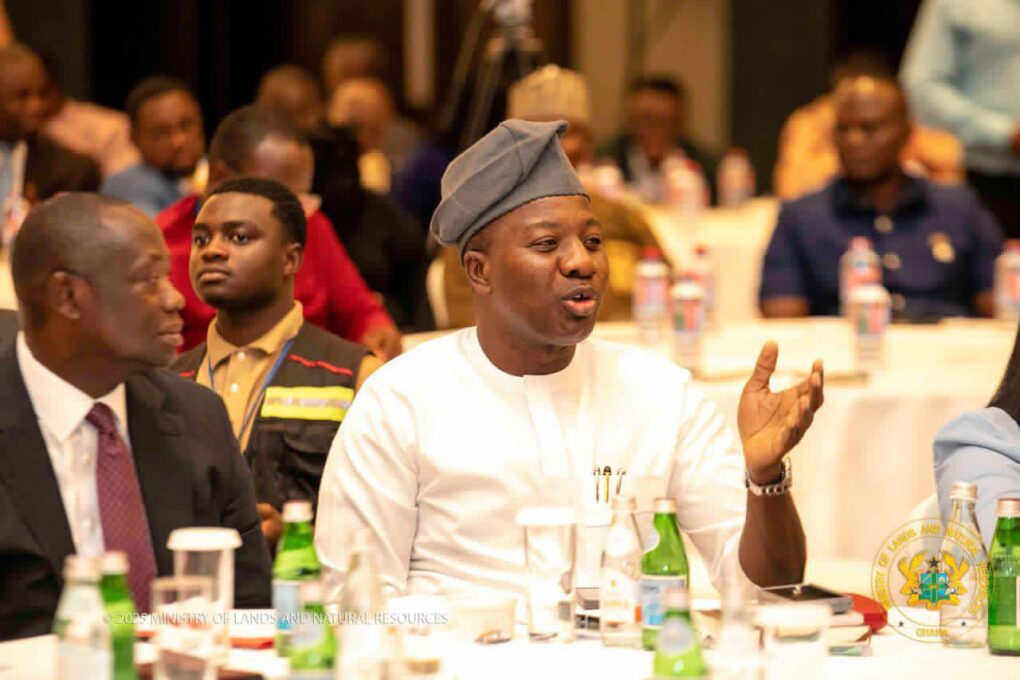
Majority Leader Mahama Ayariga vehemently defended the Public Utilities Regulatory Commission’s (PURC) recently approved 2.45% increase in electricity tariffs in Parliament on Friday, June 27, claiming that the hike was required to prevent the Electricity Company of Ghana (ECG) from going out of business.
On July 1, 2025, the new tariffs are scheduled to go into force.
Speaking on the floor of Parliament, Mr. Ayariga directly addressed the public’s worries and resistance to the rate adjustment, stating that it was an essential step to counteract the power industry’s growing debt.
“You all know that the whole of last year and before that, there was an effort to prevent the PURC from adjusting the tariffs. So that whole period, there was no adjustment, and you know very well that bills were accruing; payments have to be made,” Mr. Ayariga said.
He emphasized ECG’s vulnerable financial status as a state-owned electricity distributor that has been accruing large debts as a result of incorrect rates.
“ECG is accumulating huge [debt], and it has to be paid, so who is supposed to pay? Is it not the consumer?” He asked, highlighting the inevitable fact that electricity providers must eventually pay for their services.
He said, threatening dire repercussions. “And if you are not adjusting the tariffs to enable ECG to pay, ECG is going to collapse. They are no longer able to buy the input needed to keep the generators on, and we are going to have a power outage; the bills have to be paid.”
Arguments that a better macroeconomic climate should automatically eliminate the need for tariff revisions were rejected by the majority leader.
“The bill has to be paid. So if PURC is doing its work, I do not think there is a basis for saying that because we have improved the economy, it doesn’t mean that the debt at ECG will just be whisked away. The bill has to be paid partly by consumers,” he reiterated.
There have been conflicting responses nationwide to the PURC’s decision to apply the 2.45% increase as part of its regular quarterly review process.
Some consumer groups and the Minority Caucus have questioned the commission’s rationale in light of recent macroeconomic stability, despite the fact that it listed variables such as an increase in the weighted average cost of natural gas, an exchange rate of GH₵10.3052 to the US dollar, and predicted inflation of 20.67%.
In the past, ECG has experienced severe financial difficulties, including large debts to power generators and considerable technical and commercial losses.
According to reports, the government’s finances are heavily burdened, and the stability of the power supply is impacted by billions of Ghana Cedis in accumulated debt and earnings that were under-declared in prior years.
Additionally, GH₵488 million in unpaid revenues from prior quarters have been recognized by the Public Utilities Regulatory Commission (PURC), which this adjustment attempts to start settling.
Next week, the Minister of Energy and Green Transition is anticipated to address Parliament in order to shed further light on the tariff review procedure and its wider ramifications for Ghana’s energy industry.
For the time being, the Majority Leader’s attitude demonstrates the government’s belief that the tariff increase, despite its unpopularity, is an essential step in guaranteeing ECG’s financial sustainability and preserving a steady supply of electricity for customers across the country.
Source: newsthemegh.com