

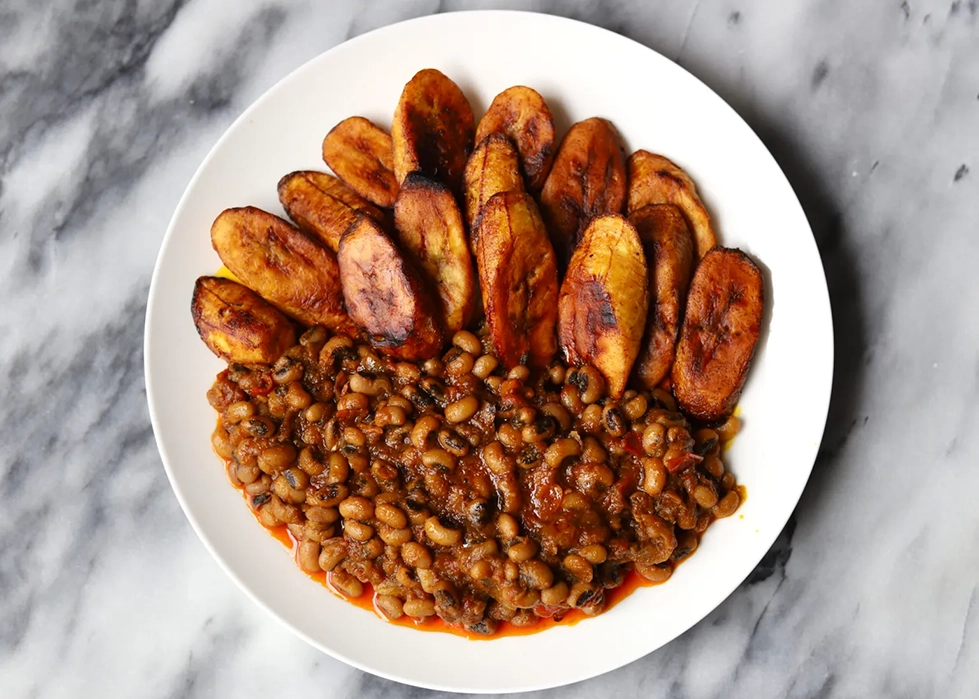
A Ghanaian meal called “gob3,” with gari and beans, is made with cooked beans, palm oil, and gari. It is typically eaten with fried, ripe plantains.
Previously, it was seen as a reasonably priced supper that was mostly consumed by people who were thought to be impoverished in society and who depended on its cost-effectiveness and energy-boosting qualities to get through the day.
Many people eat it because it is nourishing, and they can have a plate of gob3 by the side of the road.
This is especially true for artists, students, and those with limited incomes.
But in recent years, gari and beans have not only been given the trendy term “gob3” from the Ga language version of the words ‘yͻͻ kԑ gari’ but they have also changed to be consumed with double doses of protein from meat, avocado, eggs, sausage, and other accompaniments.
The dish, which has long been a mainstay in Ghanaian homes, particularly those with low incomes, has drawn notice from traditional media outlets, social networking sites, and culinary contests.
Beans, gari, palm oil, and ripe plantains—the items used to prepare the meal—were once widely accessible and reasonably priced.
It was the ideal option to satisfy the dietary and economic needs of its customers because beans supply protein, gari includes carbohydrates, and palm oil adds vital elements, making it a balanced meal for many.
Interest in gob3 was rekindled a few years ago when media outlets and social media influencers began showcasing the dish. Cooking competitions were arranged by radio and television stations to showcase the inventiveness of GOB3 preparation.
Social media users celebrated the dish by sharing their personal stories, images, and even amusing memes, turning what was formerly thought of as an everyday meal into a trendy one.
Gob3 gained popularity among young professionals, corporate workers, and even celebrities. Additionally, some local restaurants started serving unique variations of gob3 to further increase its appeal.
Prices went up as a result of the increased demand, and street sellers seized the chance to raise their prices to reflect the increasing interest in the market.
Slowly, the affordability that formerly characterized GOB3 started to wane.
As a result, the price of GOB3 has increased dramatically from GH₵7 to GH₵20 to GH₵40, depending on the accompaniment.
Some merchants use the growing prices of beans, palm oil, gari, and other ingredients as an excuse for their pricing increases.
“Beans and palm oil are very expensive now, so I have no choice but to increase the price. The increase in price is not deliberate; we must adjust the prices to suit the continuous increase of goods and services; otherwise, we will lose.” remarked Madam Abena, a gob3 vendor in Tema Community One.
She also mentioned that she occasionally traveled to villages to get goods at lower costs, but the high cost of transportation to Tema caused the meal’s price to rise.
“We used to eat gob3 because it was inexpensive and satisfying, but now I have to think twice before buying it because it is very expensive,” stated Mr. Kwame Koranteng, a fan of the dish. I used to be able to get gobe for less than GHC10, but now days I only buy beans for GHC12 or 15, and plantains for GHC10.
“We used to survive on gob3 because it was affordable; now, it is as expensive as other meals, so I buy the raw beans, cook it myself, and eat it whenever I feel like it,” said university student Ms. Ama Kwakye. It makes sense that costs have gone up given current GOB3 trends, but some of us will always find a substitute.
Source: newsthemegh.com