
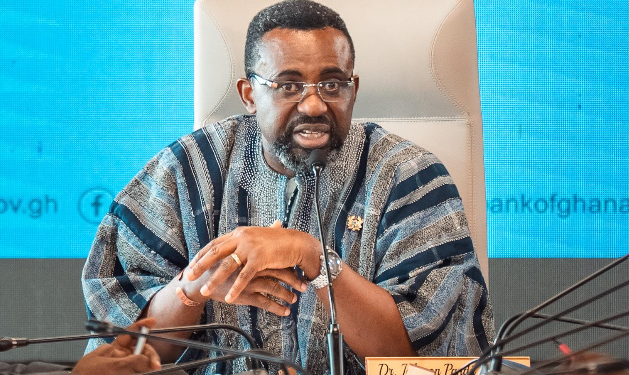
Bank of Ghana (BoG) Governor Dr Johnson Pandit Asiamah has urged Ghana to leverage its recent macroeconomic stability to drive higher productive investment, private-sector growth, exports and quality employment.
According to the BoG Governor, the progress made in restoring economic stability over the past two years has improved confidence and created a more predictable environment for businesses, investors and long-term economic planning.
Speaking at the Canada Ghana Chamber of Commerce CEO’s Connect Breakfast in Accra, held under the theme “Financing the Future: Capital Strategies for Cross-Border Business Expansion,” Dr Asiamah said Ghana’s next major challenge is to transform economic stability into tangible opportunities for businesses and citizens.
He noted that inflation remains low, the Ghana cedi has shown resilience and the banking sector has strengthened, with all 23 banks now fully capitalised.
BoG Highlights Stronger Economic Conditions
Dr Asiamah attributed the resilience of the local currency to improved foreign exchange reserve buffers, fiscal discipline and a well-calibrated monetary policy approach.
He added that stronger bank capital and liquidity positions have created a more stable foundation for financial intermediation and economic growth.
However, the Governor stressed that Ghana’s next phase of economic recovery must focus on ensuring that businesses can access affordable and appropriate financing to support expansion, innovation and entry into African and international markets.
Ghana Needs More Long-Term Business Financing
While traditional bank loans remain important, Dr Asiamah said companies seeking to expand across borders require a wider range of funding options.
These include long-term debt and equity financing, trade finance, syndicated loans, private equity, leasing, export finance, development finance, green finance and sustainability-linked financing.
He said deeper and more efficient capital markets in Ghana are necessary to provide businesses with patient, long-term capital and reduce excessive dependence on short-term bank lending.
The Bank of Ghana is collaborating with the Securities and Exchange Commission (SEC), Ghana Stock Exchange (GSE) and other stakeholders to strengthen Ghana’s financial architecture and mobilise more long-term funding for productive investment.
Dr Asiamah also encouraged banks to consider listing on the Ghana Stock Exchange, noting that greater participation by banks in the capital market could expand access to long-term funding while strengthening transparency and corporate governance.
Agriculture and SME Financing
The BoG Governor also highlighted the role of the Ghana Incentive-Based Risk Sharing System for Agricultural Lending (GIRSAL) in increasing access to finance for agriculture and agribusiness.
He said GIRSAL can help reduce perceived lending risks through credit guarantees and technical support, making it easier for financial institutions to provide funding to businesses in the agricultural sector.
The central bank is engaging GIRSAL on measures to strengthen the institution and unlock additional financing for agriculture.
Dr Asiamah further noted that guaranteed facilities from Ghana EXIM Bank and other credit-enhancement mechanisms could help small and medium-sized enterprises (SMEs) and export-focused companies attract more private-sector investment.
BoG Supports Digital Finance and Fintech Expansion
On digital finance, Dr Asiamah said the Bank of Ghana regulatory sandbox is giving financial technology innovators an opportunity to test new products and business models in a controlled environment.
The initiative also allows regulators to identify and manage emerging risks associated with fintech, digital payments and financial innovation.
He added that efforts are underway to establish a licensed passporting framework, including collaboration with the National Bank of Rwanda, to reduce regulatory duplication and make it easier for properly regulated fintech companies to expand into participating African markets.
Public and Private Sector Collaboration Needed
Dr Asiamah called for stronger collaboration among the government, banks, investors, development partners, technology companies and private-sector businesses to finance Ghana’s economic transformation.
He stressed that the country’s hard-earned macroeconomic stability should now serve as a foundation for increased investment, business expansion, higher exports and the creation of quality jobs.
The Canada Ghana Chamber of Commerce event brought together business executives and private-sector stakeholders to discuss cross-border business expansion, structured financing and blended capital solutions.
Participants also examined the role of venture capital, private equity, development finance institutions and institutional investors in supporting business growth and strengthening Ghana’s investment environment.
Source: newsthemegh.com