
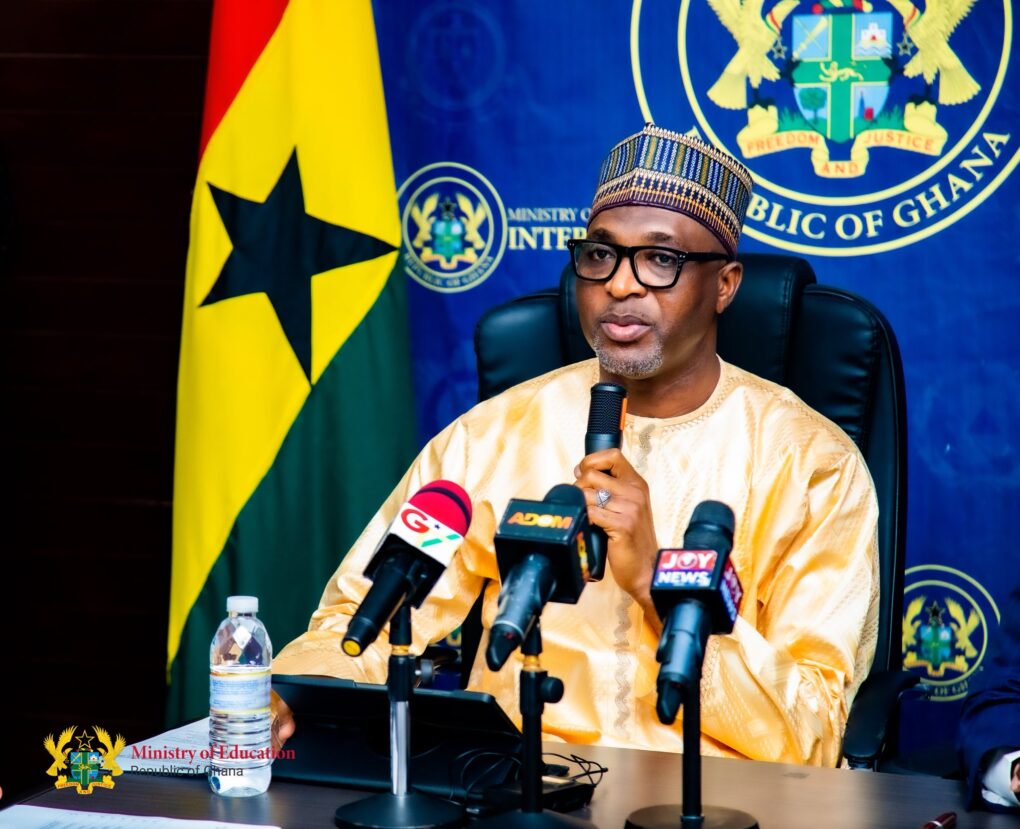
Ghana’s Minister of the Interior, Muntaka Mohammed-Mubarak, has announced plans to introduce polygraph testing for security personnel assigned to sensitive operations as part of efforts to combat drug trafficking and prevent the leakage of confidential intelligence.
The minister said the proposed measure would help security agencies assess the integrity of officers involved in critical operations while strengthening internal security, improving supervision and addressing suspected insider involvement in drug trafficking activities.
According to him, the government is also considering improvements in security equipment, working conditions and operational procedures to enhance the effectiveness of Ghana’s fight against illegal drugs.
“We are going to be doing polygraph of every person that will be part of an operation so that we can at least vouch their integrity in terms of what we are going to be doing,” Mr Mohammed-Mubarak stated.
Informants Demand Millions of Dollars for Drug Trafficking Information
The Interior Minister also expressed concern about the growing financial demands made by some informants who approach security agencies with intelligence about suspected drug trafficking operations.
Speaking in a radio interview on Joy FM on Monday, October 12, 2026, in an interview monitored by Graphic Online, he revealed that one informant allegedly approached the Director-General of the Narcotics Control Commission (NACOC) and demanded $20 million in exchange for information about a major drug consignment.
He described such demands as a significant challenge for the state, particularly when security agencies are operating with limited financial resources.
Mr Mohammed-Mubarak further disclosed that other individuals had approached authorities with potentially useful information but insisted on receiving payment before revealing the details.
He questioned how the government could afford such enormous rewards while continuing to fund essential security operations and anti-drug trafficking initiatives.
Suspected Security Leaks Threaten Ghana’s Anti-Drug Operations
The minister warned that suspected leaks of confidential operational information were undermining investigations into drug trafficking and raising serious concerns about the integrity of Ghana’s security services.
He explained that the alleged disclosure of sensitive intelligence could compromise ongoing investigations, expose security operations and weaken the confidence of international partners working with Ghanaian authorities.
According to him, concerns about possible insider involvement in drug trafficking networks could also affect the exchange of intelligence between Ghanaian security agencies and their foreign counterparts.
Mr Mohammed-Mubarak noted that international security officials often share intelligence through professional networks before governments proceed with formal cooperation under mutual legal assistance arrangements.
He cautioned that any suspicion that individuals with access to classified information were connected to criminal networks could damage the trust required for effective international security cooperation.
Ghana Strengthens International Cooperation on Drug Trafficking Cases
The Interior Minister confirmed that Ghana had engaged relevant foreign authorities over ongoing investigations and that international cooperation remained active.
He cited arrests connected to investigations involving France, Belgium, the Netherlands and Australia, highlighting the international dimension of efforts to dismantle drug trafficking networks.
The government, he said, remains committed to working with international partners to investigate suspected drug-related offences, improve intelligence sharing and strengthen the country’s response to organised crime.
Security Personnel to Undergo More Frequent Rotation
As part of measures to address suspected information leaks, Mr Mohammed-Mubarak said authorities were reviewing existing operational procedures and training additional personnel for sensitive assignments.
The plan is expected to allow security officers assigned to critical duties to be rotated more frequently, reducing the risks associated with prolonged access to confidential operational information.
The proposed reforms form part of broader efforts to improve accountability, strengthen internal security controls and enhance the capacity of agencies responsible for combating narcotics and organised crime in Ghana.
Interior Minister Clarifies Number of Suspects in Drug Cases
The minister also disclosed that approximately 84 individuals facing various narcotics-related cases in court had been remanded into custody.
However, he clarified that the figure covered multiple drug-related cases and should not be interpreted to mean that all 84 suspects were connected to the cocaine consignment seized in France.
His clarification underscores the need to distinguish between separate investigations as Ghanaian authorities continue to pursue suspected drug traffickers through the courts.
The planned polygraph testing, improved security supervision and enhanced international cooperation are expected to support efforts to tackle drug trafficking, protect confidential intelligence and strengthen Ghana’s national security framework.
Source: newsthemegh.com