

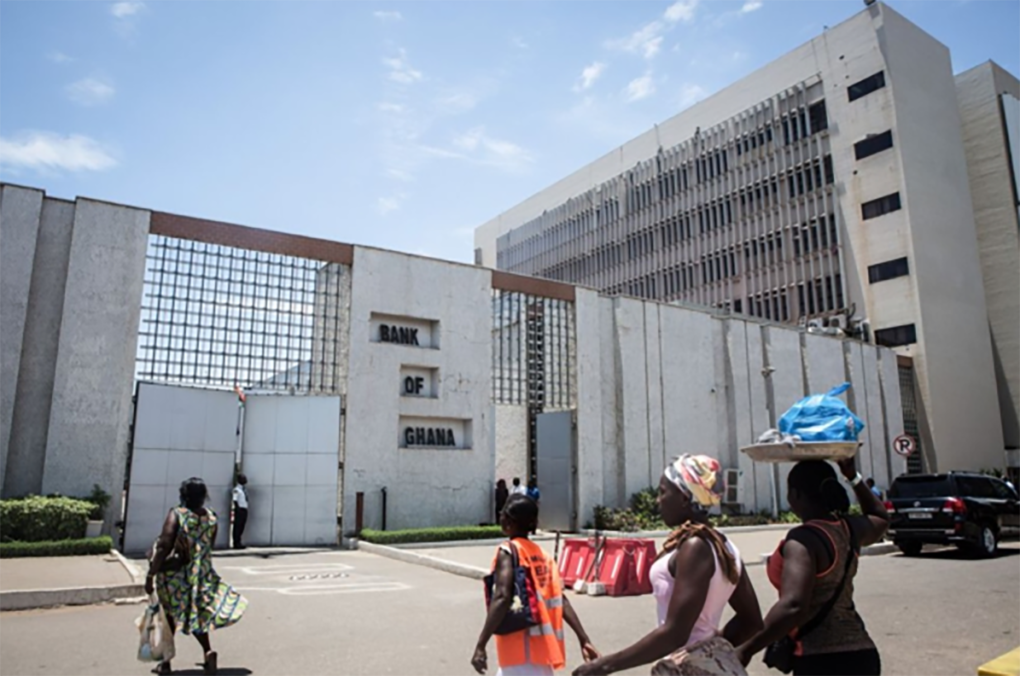
The Bank of Ghana reported a GH¢15.6 billion loss in 2025, highlighting the financial impact of its efforts to restore macroeconomic stability following years of crisis-driven policy tightening.
According to audited reports, the loss increased significantly from GH¢9.49 billion in 2024, and the negative equity increased from GH¢58.62 billion to GH¢93.82 billion.
The whole cost of sterilisation and liquidity management procedures appears to have substantially reduced the central bank’s balance sheet.
However, the situation is more complex in terms of policy.
By most accounts, the bank has fulfilled its primary mission of controlling inflation and re-anchoring expectations.
After a sharp decline from 23.8% in 2024 to 5.4% by the end of 2025, inflation eased even further to 3.2% in March 2026, falling below the bank’s medium-term goal band.
The rate of disinflation indicates a return to more stable pricing circumstances for both families and companies, marking a clear departure from the instability that followed Ghana’s post-pandemic economic shock.
The economy as a whole is starting to feel the impact. Reduced inflation has alleviated pressure on borrowing costs, stabilised the cedi, and decreased volatility in local money markets.
As a result, credit channels to the private sector have begun to reopen, and as confidence in the financial system progressively recovers, there are tentative indications of an increase in lending.
But such advancement has come at a great and obvious cost.
Due to the interest costs associated with using central bank bills and repo operations to absorb surplus liquidity, spending on open market operations almost doubled to GH¢16.73 billion.
These instruments have successfully transferred the burden of adjustment onto the bank’s own balance sheet, even though they are crucial for tightening monetary conditions.
The result is a well-known, although unsettling, central banking dynamic: financial strain coupled with policy success.
The bank reduced second-round inflationary pressures by taking a firm stance and aggressively removing cash.
However, doing so resulted in substantial quasi-fiscal expenses that have weakened its capital position.
Profitability is not the main goal of the central bank’s legislative mandate.
Therefore, the 2025 financial results highlight a traditional trade-off that central banks, especially in emerging nations, must make: reduced capital buffers in return for increased macroeconomic legitimacy and policy momentum.
In this way, the losses reflect the severity of the necessary policy response rather of being an indication of failure.
Now, durability is the question. Now that inflation is once again within or even below the target range, the focus is shifting to whether these gains can be maintained without resulting in further significant balance sheet expenses.
The speed at which liquidity conditions return to normal, the alignment of fiscal policy, and the strength of external buffers will all play a significant role.
How the Bank of Ghana rebuilds its capital position over the medium term without jeopardising the hard-won inflation achievements will be the problem.
This can entail holding onto future profits, reorganising some balance sheet components, or possibly providing recapitalisation assistance.
As of right now, the accounts clearly show that stability has returned, albeit at a high cost.
Source: newsthemegh.com