
The Government’s flagship 24-Hour Economy Programme is receiving tremendous investor interest, with over US$11.5 billion in potential investments and a goal of producing 1.7 million quality jobs by the conclusion of President John Dramani Mahama’s current term.
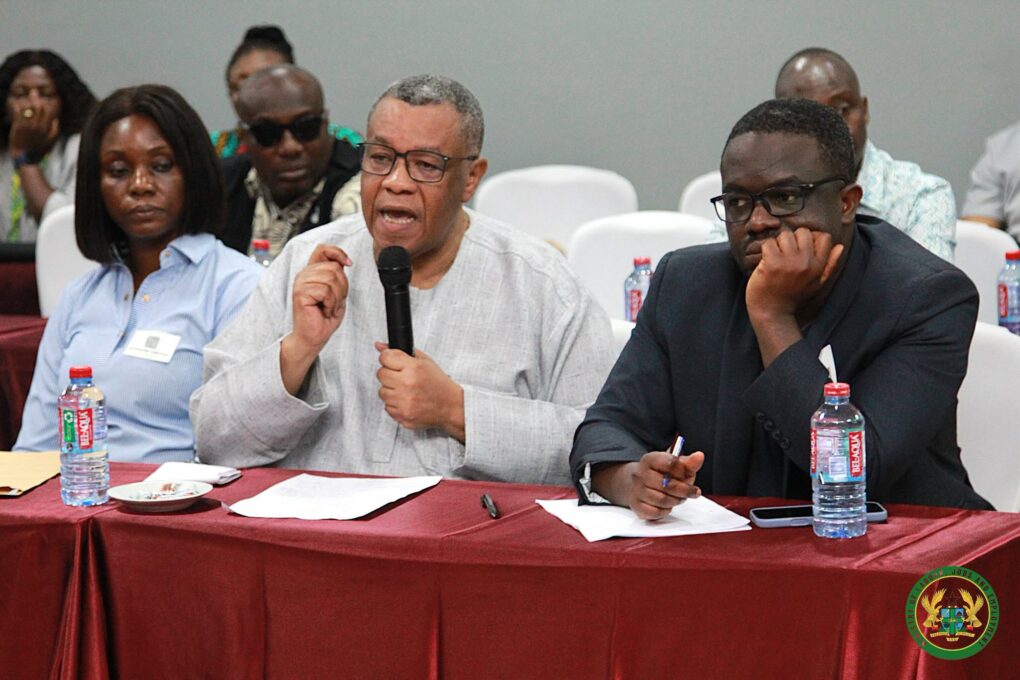
Presidential Advisor on the 24-Hour Economy and Accelerated Export Development Programme, Mr. Augustus Tanoh, stated that the program’s goal is to radically change Ghana’s productive sectors rather than implement small-scale changes during a National Labour Conference in Ho with organised labour and employers.
He found a number of systemic obstacles that still make Ghana less competitive.
These include a workforce whose skills do not yet meet the expectations of a modern industrial economy, challenges in obtaining safe land for investment, inadequate shared infrastructure, and high logistics expenses, which can account for up to 60% of the retail price of Ghanaian goods.

Mr. Tanoh asserts that extensive reforms are necessary to address these persistent issues.
“These do not yield marginal tweaks. They have to be entirely and completely re-engineered,” he emphasised.
He said that since the program’s inception in July 2025, the government has secured potential investments totalling US$11.5 billion, of which US$5.5 billion has already been pledged under legally binding cooperative development agreements.
He continued by saying that a participatory land access strategy that preserves community ownership while making land available for profitable investment has mobilised 605,000 hectares of land.
According to Mr. Tanoh, the initiative seeks to directly and indirectly create 1.7 million high-quality jobs.
He clarified that a quality job under the program must adhere to specific requirements, such as paying at least the national minimum wage, offering opportunities for skill development, guaranteeing statutory tax compliance, and providing work for a minimum of 12 months.
He underlined that the government cannot accomplish these lofty goals on its own.
“Government provides the catalytic instruments. Employers assume the investment risk.”
Organised labour has the responsibility of ensuring that modernization translates into decent work rather than greater exploitation of workers,” he said.
Mr. Tanoh called on labour unions to get ready for what would be the biggest increase in Ghana’s organised labour force in decades, pointing out that the program might bring in about 1.5 million new union members.

He cautioned that labour contractors and unofficial middlemen might control the workforce and deny workers their full advantages if labour organisations do not actively organise workers in developing industrial zones.
Additionally, Mr. Tanoh declared that he will continue to work with the German Agricultural Workers Union to increase employment in rural areas through cooperative businesses.
He disclosed that the government plans to increase collaborations with other labour unions and is updating Ghana’s cooperative laws.
In addition to creating jobs, he characterised the program as a chance to improve African economic integration by establishing regional supply chains, production systems, and trade networks that put workers at the center of growth.
In order to make Ghana’s economy competitive, industrialised, and inclusive, the government, employers, and organised labour must continue to work together.
Source: newsthemegh.com