
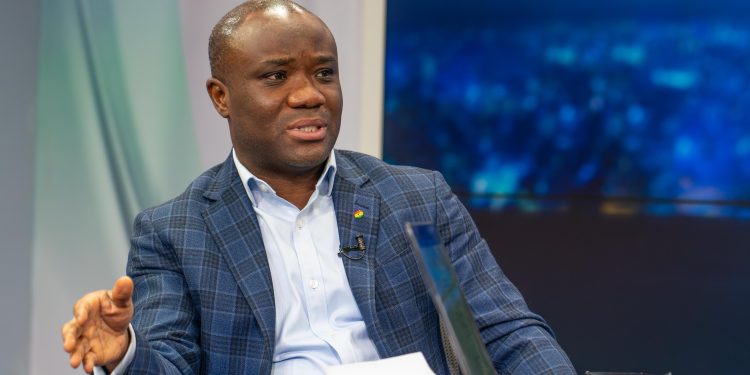
The Minister of State for Government Communications, Felix Kwakye Ofosu, has dismissed claims by the opposition New Patriotic Party (NPP) that the government’s GH¢2 per litre diesel price reduction will lead to a loss of government revenue.
According to the government spokesperson, the temporary diesel price relief is being financed through a reduction in regulatory margins retained by the National Petroleum Authority (NPA) and industry stakeholders—not through taxes or public funds.
Speaking on Channel One TV’s Face to Face programme on Wednesday, August 5, 2026, Mr. Kwakye Ofosu explained that the government has not diverted tax revenue or allocated state funds to support the fuel price reduction.
“The GH¢2 is not coming from government revenue. It is coming from the margin taken by the regulator and industry players,” he stated.
Government Clarifies Funding for Diesel Price Relief
The clarification follows demands by the NPP for the government to disclose how the GH¢2 per litre reduction in diesel prices is being financed.
The government announced the intervention on Monday, with implementation beginning on Tuesday, August 4, 2026. The measure applies exclusively to diesel prices in Ghana and is expected to remain in effect for one month, subject to review.
Officials say the temporary reduction is intended to cushion consumers from rising global fuel prices, prevent increases in public transport fares, and help ease the cost of living.
Mr. Kwakye Ofosu stressed that because the relief comes from regulatory margins rather than taxes, the intervention will have no impact on government revenue.
Diesel Relief Different from Electricity Tariff Adjustments
The Government Communications Minister also distinguished the diesel price intervention from the recent electricity tariff increases.
He explained that the tariff adjustment was influenced by an International Monetary Fund (IMF) requirement for the actual cost of fuel used in electricity generation to be reflected in electricity pricing.
According to him, the Cabinet approved the diesel relief after global crude oil prices surged due to supply disruptions linked to the closure of the Strait of Hormuz, which affected international petroleum markets.
Government Targets Transport Costs and Inflation
Mr. Kwakye Ofosu said the government prioritized diesel because it remains the primary fuel used by commercial transport operators across Ghana.
He noted that increases in diesel prices typically lead to higher transportation costs, which in turn contribute to inflation and rising prices of goods and services.
By lowering diesel prices, the government hopes to stabilize transport fares and reduce pressure on household budgets.
Tema Oil Refinery Expected to Reduce Fuel Prices
The minister expressed confidence that fuel prices could decline further in the coming weeks following the resumption of local crude oil refining at the Tema Oil Refinery (TOR).
He explained that refining petroleum products locally would lower freight and import costs, helping to improve fuel price stability in Ghana.
In addition, the government plans to strengthen Ghana’s strategic fuel reserves to better protect the country from future global oil price shocks.
According to Mr. Kwakye Ofosu, Ghana currently maintains strategic petroleum reserves capable of supplying the country for approximately six weeks.
NPP Demands More Transparency
The government’s explanation comes after leading members of the New Patriotic Party (NPP) questioned the source of funding for the diesel price intervention.
The Ranking Member of Parliament’s Energy Committee, George Kwame Aboagye, called on the government to identify which regulatory margins, levies, or charges had been adjusted to finance the relief and whether any revenue would be lost as a result.
Meanwhile, the Chairman of the NPP Policy Coordination Committee, Kojo Oppong Nkrumah, argued that the one-month reduction is only a temporary measure and does not offset the fuel price increases experienced over the past 18 months.
Government Maintains Revenue Will Be Protected
Despite the criticism, the government insists the GH¢2 per litre diesel price reduction is a targeted intervention designed to support businesses, transport operators, and consumers without affecting public finances.
Officials maintain that funding the relief through regulatory margin adjustments ensures the state does not lose tax revenue while providing temporary relief from rising fuel costs and inflationary pressures.
Source: newsthemegh.com