
Ghana and Türkiye are exploring new opportunities to strengthen their economic partnership, with fisheries and aquaculture emerging as a key area for increased bilateral cooperation.
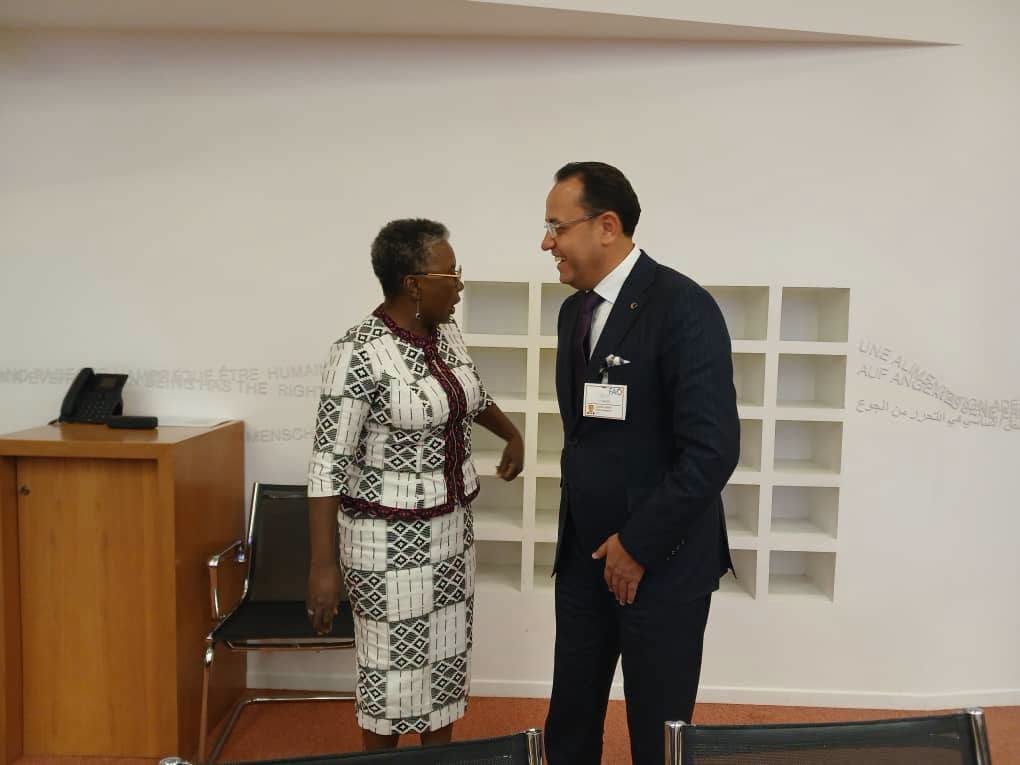
Ghana’s Minister for Fisheries and Aquaculture held a high-level bilateral meeting with H.E. Ebubekir Gizligider, Deputy Minister for Agriculture and Forestry of the Republic of Türkiye, to discuss ways of expanding collaboration between the two countries.
The meeting, held at the Food and Agriculture Organization (FAO) Headquarters in Rome, focused on making fisheries and aquaculture a major pillar of the growing Ghana-Türkiye economic relationship.
Diplomatic relations between Ghana and Türkiye date back to 1958 and have expanded over the years through high-level diplomatic engagements and growing bilateral trade. Trade between the two countries is projected to exceed US$1 billion by 2027.
However, cooperation in the fisheries and aquaculture sector remains relatively underdeveloped, creating significant opportunities for investment, technology transfer and technical collaboration.

Türkiye Offers Aquaculture Technology and Investment Opportunities
The latest discussions seek to leverage Türkiye’s growing expertise in sustainable aquaculture, fish health, marine technology and seafood production to support the development of Ghana’s fisheries sector.
Türkiye recently hosted its 11th Aquaculture Workshop and first Aquaculture Fair, highlighting the country’s capabilities in modern fish farming and sustainable aquaculture production.
For Ghana, stronger cooperation with Türkiye could help expand domestic aquaculture production, improve food security, create employment opportunities for young people and increase foreign exchange earnings through value-added seafood exports.
Key Areas of Ghana-Türkiye Fisheries Cooperation
The bilateral discussions identified several areas where both countries can develop practical and commercially viable partnerships.
Aquaculture Investment and Technology Transfer: Ghana is seeking to attract Turkish companies and financial institutions to invest in the country’s aquaculture value chain, including commercial cage farming, hatcheries, fish feed production and Recirculating Aquaculture Systems (RAS).
Research and Scientific Cooperation: Ghanaian and Turkish research institutions could establish partnerships to conduct research on fish stock assessment, disease prevention and climate-resilient aquaculture technologies.
Cold Chain and Market Access: Türkiye’s expertise in seafood processing and cold-chain infrastructure could help Ghana improve post-harvest handling and expand access for Ghanaian seafood products to the Turkish market. Turkish businesses could also explore opportunities in Ghana and other African markets through the African Continental Free Trade Area (AfCFTA).
Fisheries Management and IUU Fishing Prevention: The two countries are also expected to share technical expertise in vessel monitoring systems, fisheries data management and enforcement mechanisms to combat Illegal, Unreported and Unregulated (IUU) fishing.
Capacity Building and Technical Exchanges: Proposed training and exchange programmes could benefit Ghanaian scientists, fisheries extension officers and private-sector fish farmers by providing access to advanced technical knowledge and modern aquaculture practices.

Ghana-Türkiye Fisheries Cooperation Framework
Delegations from Ghana and Türkiye are expected to work towards an agreement in principle on establishing a Ghana-Türkiye Fisheries and Aquaculture Technical Cooperation Framework.
A joint working group is expected to identify priority areas for immediate action and prepare a formal Memorandum of Understanding (MoU) to guide future private-sector investments, technical partnerships and institutional exchanges.
The proposed cooperation could provide a new platform for Ghana to attract aquaculture investment, modern fish farming technology and technical expertise while strengthening bilateral trade between Ghana and Türkiye.
By combining Türkiye’s aquaculture technology and industrial expertise with Ghana’s aquatic resources and growing seafood market, the partnership could contribute to food security, job creation, sustainable fisheries management and the development of a more commercially driven aquaculture sector in Ghana.
Source: newsthemegh.com