
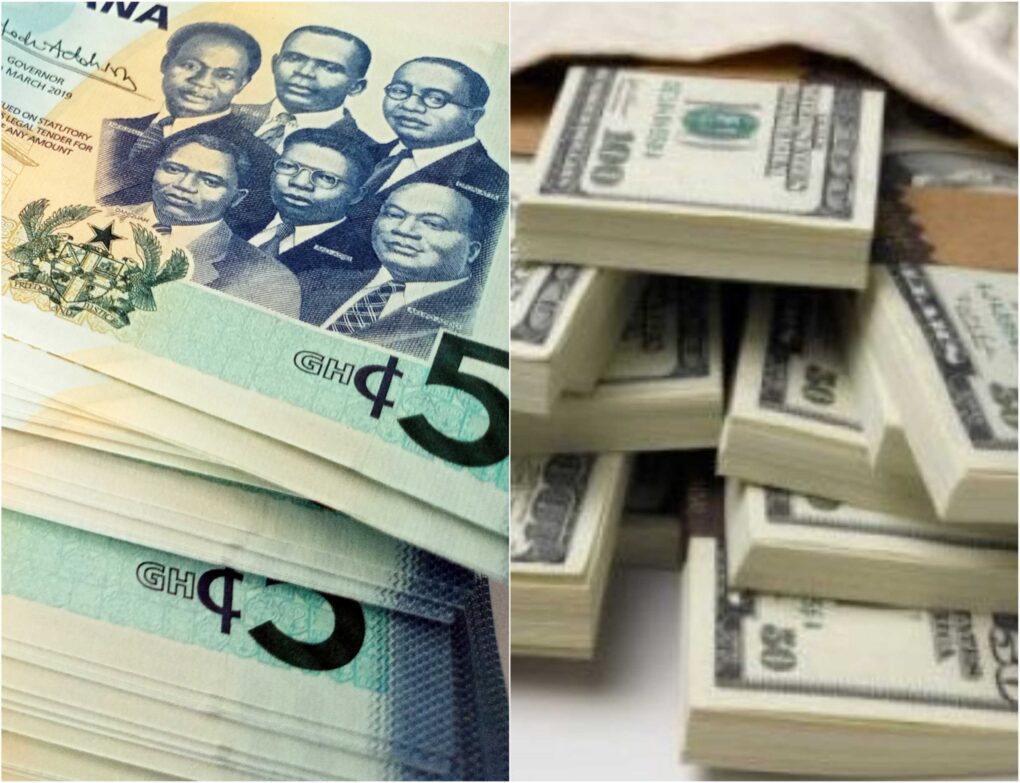
The Ghana cedi continued to lose value against the US dollar in both the interbank and retail foreign exchange markets over the past two weeks, while recording mixed performance against other major international currencies.
The latest exchange rate movements highlight ongoing fluctuations in Ghana’s foreign exchange market, with the local currency weakening against some major currencies but making gains against others.
In the interbank market, the cedi depreciated by 1.42% against the US dollar, trading at GH¢11.79 to one dollar. It also lost 1.29% against the British pound, with the exchange rate reaching GH¢15.60.
However, the local currency recorded a modest improvement against the euro, appreciating by 0.35% to trade at GH¢13.20.
Cedi Exchange Rate in Ghana’s Retail Forex Market
Developments in the retail foreign exchange market showed a similar depreciation trend against the US dollar, although the cedi strengthened against both the British pound and the euro.
The Ghana cedi weakened by 1.45% against the US dollar, averaging GH¢12.10 during the period under review.
In contrast, the local currency appreciated by 0.47% against the British pound, closing the period at GH¢15.80. It also gained 0.55% against the euro to finish at GH¢13.65.
The differences between interbank and retail exchange rates reflect the separate pricing conditions in the two markets.
Ghana Cedi Performance Against Major Foreign Currencies
The cedi’s performance over the two-week period was mixed, with depreciation against the US dollar in both markets and gains against the euro in both markets. Its performance against the pound differed between the interbank and retail markets.
Exchange rate movements remain important to businesses, importers, exporters and consumers because changes in the value of the cedi can influence the cost of imported goods, fuel, production materials and other internationally traded products.
A weaker cedi against the US dollar can increase the local currency cost of dollar-denominated imports, potentially putting pressure on business operating expenses and consumer prices.
Market participants will continue to monitor developments in the foreign exchange market as movements in major currencies affect Ghana’s trade, import costs and broader economic outlook.
Source: newsthemegh.com