
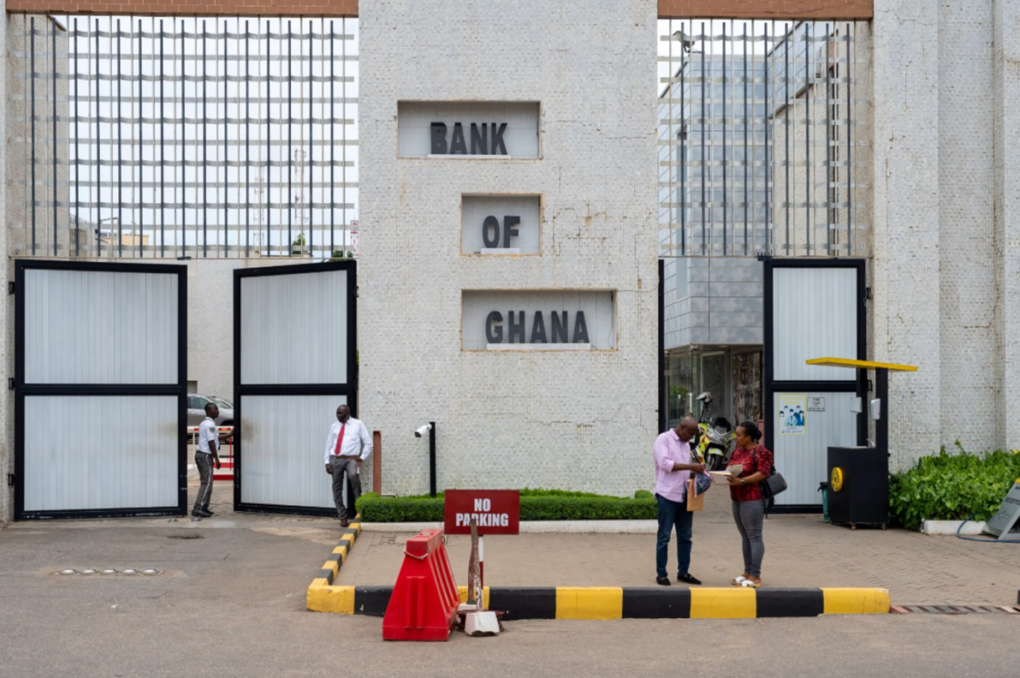
The Ghanaian government is targeting 2027 for the full implementation of the Virtual Asset Service Providers Act, 2025 (Act 1154) as regulators move to establish a comprehensive framework for the country’s growing cryptocurrency and digital finance industry.
The Bank of Ghana (BoG) and the Securities and Exchange Commission (SEC) are currently developing operational guidelines and policy sandboxes to support the effective implementation of the new virtual asset law.
Ghana Develops Virtual Asset Regulatory Framework
Governor of the Bank of Ghana, Dr Johnson Asiama, said the new legislation represents a major step towards bringing Ghana’s expanding virtual asset sector under formal supervision and regulation.
Speaking at the inauguration of the Virtual Assets Coordinating Committee (VACC), Dr Asiama explained that the BoG and SEC are working on detailed regulatory guidelines while preparing controlled policy-testing environments to support the implementation of Act 1154.
The policy sandboxes will allow regulators to assess emerging virtual asset products, digital financial services and business models in a controlled environment before broader regulatory measures are introduced.
Why Ghana Introduced the Virtual Asset Law
The Virtual Asset Service Providers Act was introduced following concerns identified in Ghana’s 2024 Anti-Money Laundering, Counter-Terrorist Financing and Proliferation Financing (AML-CFT-PF) national risk assessment.
The assessment found significant adoption and use of virtual assets in Ghana, as well as increasing connections between virtual asset activities and the formal financial system.
The findings highlighted the need for a clear legal and regulatory structure to manage the rapidly expanding cryptocurrency and virtual asset market.
Virtual Assets Coordinating Committee Established
The establishment of the Virtual Assets Coordinating Committee forms a key part of Ghana’s regulatory strategy.
The committee brings together representatives from the Bank of Ghana, Securities and Exchange Commission, Ministry of Finance, Cyber Security Authority and Financial Intelligence Centre. Other relevant institutions may also be included when necessary.
According to Dr Asiama, the VACC will provide a statutory platform for stronger regulatory coordination, supervision and information sharing among institutions responsible for overseeing Ghana’s virtual asset industry.
Focus on Cryptocurrency Regulation and Financial Security
The Bank of Ghana Governor said Ghana cannot afford to take a passive approach to the rapid development of digital finance and virtual assets.
He stressed that regulators must keep pace with technological developments while ensuring that innovation does not compromise financial stability, consumer protection or financial inclusion.
The VACC is expected to strengthen Ghana’s response to risks associated with virtual assets, including:
- Money laundering
- Terrorist financing
- Cybersecurity threats
- Consumer protection risks
- Emerging digital finance risks
The committee will also support the harmonised implementation of Act 1154 and related regulatory instruments while improving cooperation between government agencies.
Ghana Seeks Balance Between Regulation and Innovation
Dr Asiama said effective coordination and timely information sharing will be essential to creating a safe, transparent and well-regulated virtual asset ecosystem in Ghana.
At the same time, the regulatory framework is expected to provide room for responsible innovation and greater participation in the country’s emerging digital economy.
The inauguration of the VACC marks an important transition from the passage of the Virtual Asset Service Providers Act, 2025 to the development of a functioning regulatory system.
With full operationalisation targeted for 2027, Ghana is positioning its financial regulators to respond to the rapid growth of cryptocurrency, virtual assets and digital financial services while strengthening measures against financial crime and protecting consumers.
Source: newsthemegh.com