
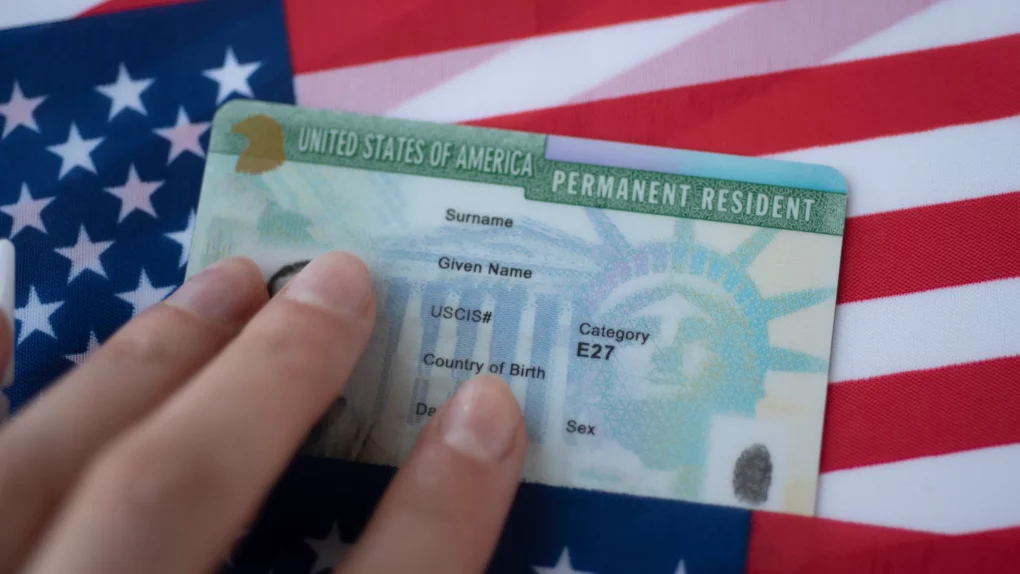
Ghanaians currently residing in the US on temporary visas and pursuing green cards may be greatly impacted by a substantial immigration policy change announced by the US administration.
The majority of immigrants seeking permanent residency will now need to depart the United States and finish their green card applications at a US embassy or consulate abroad, primarily in their home countries, in accordance with a recent instruction from US Citizenship and Immigration Services (USCIS).
With the exception of what the US government refers to as “extraordinary circumstances,” many Ghanaians in the US on student visas, visitor visas, or temporary work permits may no longer be allowed to apply for a green card while they are still in the country.
The strategy, which was unveiled on Friday, is a component of the administration of President Donald Trump’s stepped-up attempts to strengthen immigration laws and lower illegal immigration.
Many immigrants used to be able to apply for permanent residency through a procedure called “adjustment of status,” which permitted them to stay in the United States while their applications were being reviewed.
However, many applicants—including Ghanaians—are anticipated to be compelled by the new regulations to return home and go through the US Embassy in Accra or another American diplomatic post overseas.
According to USCIS, the action will lessen the number of people who stay in the country illegally after their petitions are rejected.
“When aliens apply from their home country, it reduces the need to find and remove those who decide to slip into the shadows and remain in the US illegally after being denied residency,” the agency stated.
The approach may cause uncertainty for a large number of Ghanaians, particularly for families that have already settled in the US while awaiting green card approvals.
Immigration experts caution that some applicants may experience delays, visa denials, or challenges returning to the United States if they leave the country for consular processing, especially if their temporary visas expire during the process.
Temporary visits to the US “should not function as the first step in the green card process,” according to USCIS spokeswoman Zach Kahler, who defended the policy.
“From now on, an alien who is in the US temporarily and wants a green card must return to their home country to apply, except in extraordinary circumstances,” he stated.
Whether Ghanaians and other immigrants with pending petitions for adjustment of status will be permitted to continue using the previous method is still up in the air.
Applicants whose cases are deemed to be in the national interest or economically advantageous to the US may still be allowed to proceed with their applications from within the nation, a USCIS representative told the BBC.
It may take months or even years to obtain a green card. Over a million legal immigrants are presently awaiting word on their applications for adjustment of status, according to the Cato Institute.
Opponents contend that families, employers, and students who depended on the prior system may be negatively impacted by the legislation.
Former USCIS official Michael Valverde called the action “largely unprecedented” and cautioned that immigrants who had followed current immigration procedures would face “tremendous uncertainty” as a result.
The most recent measure complements a number of immigration restrictions put in place by the Trump administration, such as restrictions on visas that impact nationals of dozens of nations.
People who overstay their visas run the possibility of deportation, future visa ineligibility, and re-entry prohibitions that can last up to ten years under US immigration law.
Source: newsthemegh.com