
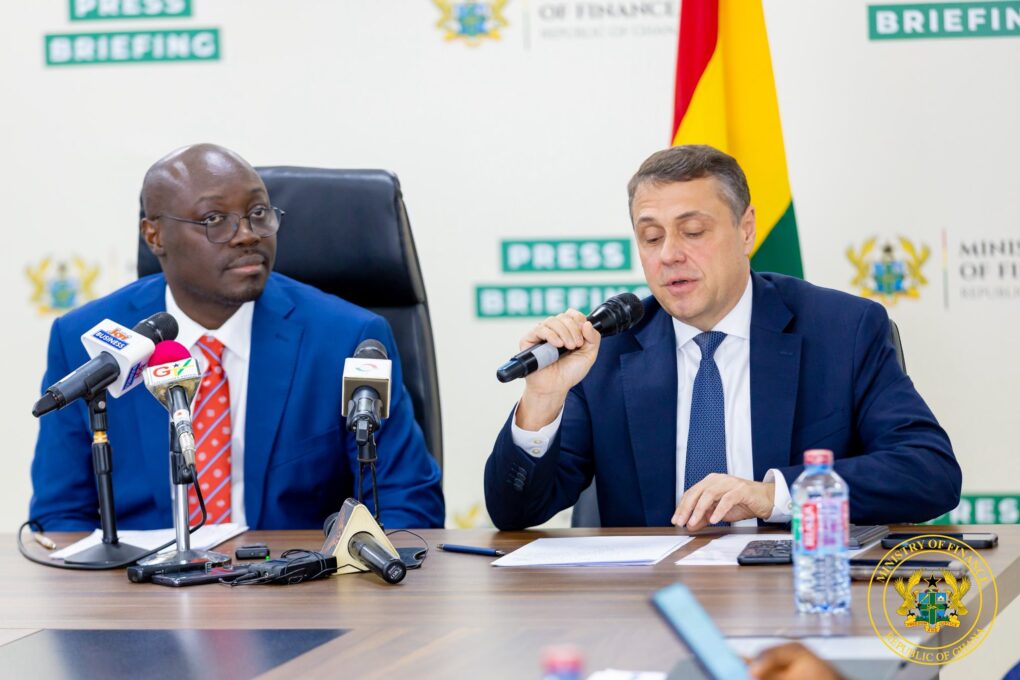
Ghana’s financial bailout program is expected to be successfully completed next week when the Executive Board of the International Monetary Fund (IMF) approves the final review of the country’s Extended Credit Facility (ECF) Program, according to Finance Minister Dr. Cassiel Ato Forson.
On Thursday, July 23, Dr. Forson presented the 2026 Mid-Year Budget Review to Parliament. After three years of economic changes, Dr. Forson said the expected approval will conclude Ghana’s IMF-supported program.
He said that a 36-month Policy Coordination Instrument (PCI), a non-financing solution intended for nations that no longer face or are not anticipated to encounter balance of payments issues, is also anticipated to be approved by the IMF Executive Board.
The Finance Minister states that the new PCI will act as the foundation for Ghana’s upcoming economic reforms, strengthening fiscal restraint, fostering broad-based economic growth, and bolstering macroeconomic resilience.
“The Executive Board is also expected to approve a 36-month Policy Coordination Instrument (PCI), a non-financing arrangement designed for countries that no longer have and are not expected to face balance of payment needs,” Dr. Forson informed Parliament.
According to him, the program will boost Ghana’s attempts to maintain economic stability after the IMF bailout and demonstrate the country’s steadfast dedication to sensible and disciplined macroeconomic policies.
According to the Minister, the PCI would back reforms in six key areas:
- To maintain growth-friendly fiscal consolidation
- To preserve debt sustainability
- To strengthen fiscal transparency and governance
- To enhance monetary and exchange rate policy framework
- To reinforce financial sector stability
- To promote economic diversity and inclusive growth
Ghana announced the complete completion of its Extended Credit Facility (ECF) agreement with the International Monetary Fund (IMF) on Friday, May 15, 2026.
This concludes the country’s financial bailout arrangement with the Fund.
According to the government, the outcome marks the early restoration of macroeconomic stability and debt sustainability as a result of a series of fiscal and structural reforms enacted by President John Dramani Mahama’s administration.
The government stated in a statement released on Friday, May 15, that strong fiscal austerity measures, expenditure rationalisation, and reforms targeted at stabilising the economy were used in 2025 to recalibrate the IMF program, which had allegedly gone off track by the end of 2024.
Ghana will now interact with the IMF under a Policy Coordination Instrument (PCI), which the government defined as a non-financing technical assistance mechanism, after the ECF program concludes.
Source: newsthemegh.com