

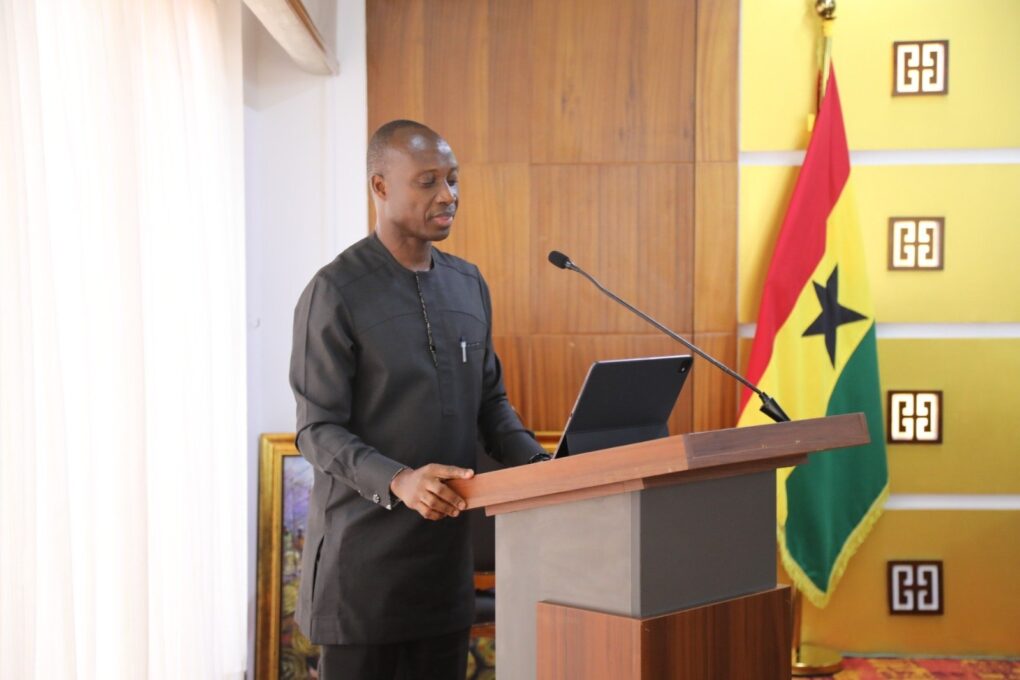
The Ghana Statistical Service (GSS) presented results from the Governance Series Wave 2 survey, which focusses on bribery, corruption, and public sector accountability, to the Presidency on Friday, December 12, 2025, at Jubilee House.
Senior officials from the presidency, accountability organisations, civil society organisations, and representatives of important state agencies dedicated to promoting transparency and evidence-based governance came together for the session, which took place at Jubilee House as part of celebrations for African Statistics Day.
Professor Francis Dodoo, Presidential Adviser for the National Anti-Corruption Program, welcomed participants and emphasised the importance of greater inter-sectoral cooperation in combating corruption.
He stated that holding such meetings demonstrated a goodwill commitment to furthering the interests of the country.

Hon. Nana Oye Bampoe Addo, Deputy Chief of Staff (Administration), presided over the event. In her keynote address, she emphasised the government’s increased efforts to combat corruption under President John Dramani Mahama.
The Public Accounts Committee’s actions, the implementation of the 2025 Code of Conduct for Government Officials, improved enforcement of the Auditor-General’s reports, and the Operation Recover All Loot (ORAL) platform were among the steps she mentioned.
Additionally, Hon. Bampoe Addo revealed that the Governance Advisory Council Bill, which was adopted by Cabinet in May 2025 following thorough consultations, has been presented to Parliament and is anticipated to further enhance integrity and good governance.
The final text of the second National Anti-Corruption Action Plan (NACAP II) is anticipated to be ready for validation by December 2025, she continued, adding that continuing consultations are almost finished.
Speaking on behalf of the Presidency, she emphasised that the current changes are methodically rebuilding trust in Ghana’s governance and anti-corruption architecture while acknowledging public calls for quicker and more deterrent action against corruption.
She praised the GSS for creating what she called a thorough second wave of the National Anti-Corruption Survey, pointing out that the results provide important insights into institutional performance, citizen experiences, and the structural factors influencing accountability across the country.
She claims that the data is a crucial tool for developing successful policy interventions because it reflects Ghanaians’ lived realities and goes beyond statistics.
Together with the GSS team, Government Statistician Dr. Alhassan Iddrissu presented data on citizen experiences and corruption hotspots, emphasising significant variations between the survey’s first and second waves.
The presentation highlighted a documented decrease in corruption in a number of sectors, indicating a decrease in bribes and an improvement in responsiveness and inclusivity in several areas of the public sector.
In conclusion, the GSS team emphasised that the Governance Series is an important platform for developing governance systems to improve residents’ living standards, identifying the overall trend as a sign that the country is on the right track.
The curriculum concluded with discussions about practical improvements, as well as requests for increased inter-agency collaboration, improved reporting systems, and a reinvigorated national commitment to evidence-based government.
The Presidency emphasised its commitment to converting Governance Series Wave 2 insights into tangible reforms to improve openness, protect the public purse, rebuild public trust, and drive long-term national development.
Source: newsthemegh.com