

By Mildred Siabi-Mensah | Edited by Justina Paaga/Christian Akorlie
The absence of public toilets coupled with poor sanitation in Nketsiakrom in the Sekondi-Takoradi Metropolitan Assembly is a pressing public health challenge requiring immediate attention.
With little household toilet facilities, residents are forced to travel to adjoining communities or resort to open defecation, contaminating the environment and posing severe health risks, especially to children under five.
The Western Regional Branch of the Media Coalition Against Open Defecation (M-CODe) visited the community and revealed that the practice of open defecation was contributing to the spread of diseases like diarrhea, cholera, and typhoid fever.
The M-CODe sensitisation visits formed part of its collaboration with the Ghana Coalition of NGOs in Water and Sanitation (CONIWAS) and other stakeholders to observe the 2025 Ghana Water, Sanitation, and Hygiene (WASH) Week with activities across the country.

The 2025 WASH week is on the general theme “WASH for a Healthy Ghana, Everyone, Everywhere,” highlighting the importance of equity, inclusion, accountability, and partnerships
in building sustainable WASH systems, while M-CODe has adopted the theme “Dignity for all, toilets for all: End Open Defecation Now.”
Scores of residents complained to the M-CODe team that the absence of proper sanitation infrastructure in Nketsiakrom not only affected health but also impeded progress towards national and global sanitation targets, including the Sustainable Development Goal (SDG) 6.2, which aimed to end open defecation by 2030.
Some of the residents noted that without adequate toilets, achieving open defecation-free status remained elusive, undermining efforts to improve public health, environmental sustainability, and overall quality of life.
Such failures intensify the sanitation crisis and demand renewed investment, community engagement, and government commitment.
Atta Mame, a resident, told the M-CODe team that special attention should be given to vulnerable populations to ensure equitable access.
She noted that improving toilet access in Nketsiakrom was critical for reducing disease incidence, protecting vulnerable groups, enhancing dignity and security, and meeting broader sanitation goals that sustain healthy and resilient communities.
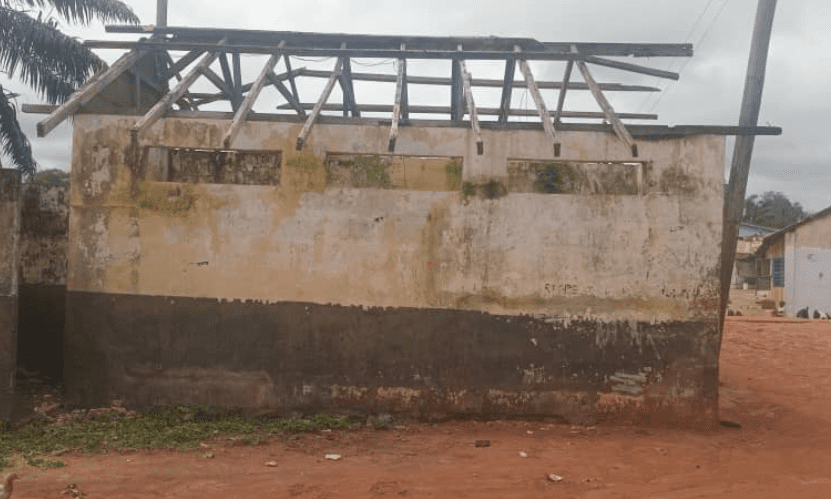
The M-CODe team noticed that eight years since the old toilet facility was abandoned, nothing seemed to be working anytime soon for the residents, who mostly did not have such household facilities.
Nana Atobam said residents were tired of parceling fecal matter and dirtying the community and the bushes with it. “In the rainy season, we are unable to go to the bushes, so we have to turn attention to the beachfront.”
Meanwhile, stakeholders have suggested building and maintaining household and public toilets in the community, which they described as crucial to providing residents with accessible sanitation facilities.
Others also called for complementing sanitation facilities with reliable water supply infrastructure to help maintain hygiene and reduce health risks.
Others called on M-CODe to intensify awareness campaigns to promote behavioral change and emphasise the importance of sanitation to encourage residents to adopt healthier practices.
The annual WASH Week aims to promote public awareness of WASH issues and advocate for greater investment in resilient sanitation systems, equitable access to WASH, and sustained partnerships to achieve national and global WASH goals.
As part of the 2025 WASH week activities, M-CODe, through its Regional offices in Upper East, Northern, Bono, Western, and Volta, had rolled out a series of events from Monday, August 11th, to Friday, August 15th.
The various M-CODe regional teams, as part of the activities, would visit markets, beaches, and schools; hold radio and television discussions; and visit other notorious communities to shine media light on these places and to encourage an attitudinal change.
Source: gna.org.gh