
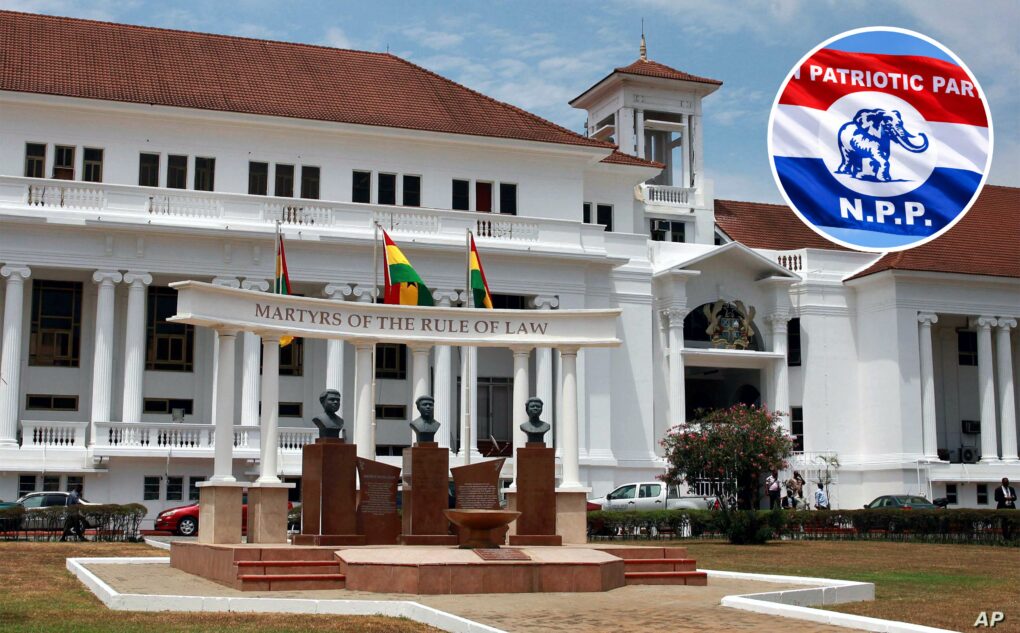
The New Patriotic Party (NPP) has petitioned Ghana’s Supreme Court to interpret the constitutional provisions governing presidential term limits and determine whether a person can serve more than eight years as President, regardless of whether the terms are consecutive.
In a suit against the Attorney-General, the NPP is seeking clarification of Articles 58(2) and 66(1), (2) and (3)(a) of Ghana’s 1992 Constitution. The party wants the court to establish whether the presidential two-term limit applies to an individual’s total time in office.
The NPP argues that no person should be elected President more than twice or serve more than two four-year terms, even when the terms are separated by another president’s tenure.
The party is also asking the Supreme Court to clarify the eligibility of a Vice-President who assumes the presidency for more than half of a predecessor’s remaining term. According to the NPP’s position, such a person should be eligible to contest a presidential election for only one additional term.
In its legal arguments, the party warns that interpreting the constitutional limit as applying only to consecutive terms could allow a former president to return to office and serve two more terms after an earlier presidency.
The NPP maintains that the Constitution does not expressly use the word “consecutive” and that adding such a condition through judicial interpretation could effectively alter the existing constitutional provisions.
The party has cited international examples, including the United States’ 22nd Amendment, as well as recommendations from Ghana’s Constitution Review Commission’s 2011 report, which proposed clarifying the restrictions on presidential re-election.
The writ, dated July 29, 2026, was filed on behalf of the NPP by its solicitor, Godfred Yeboah Dame of Dame & Partners.
The Supreme Court’s interpretation could provide important legal clarity on Ghana’s presidential eligibility requirements, constitutional term limits and the rules governing future presidential elections.
The case presents the NPP’s legal position; the final interpretation rests with the Supreme Court.
Source: newsthemegh.com