
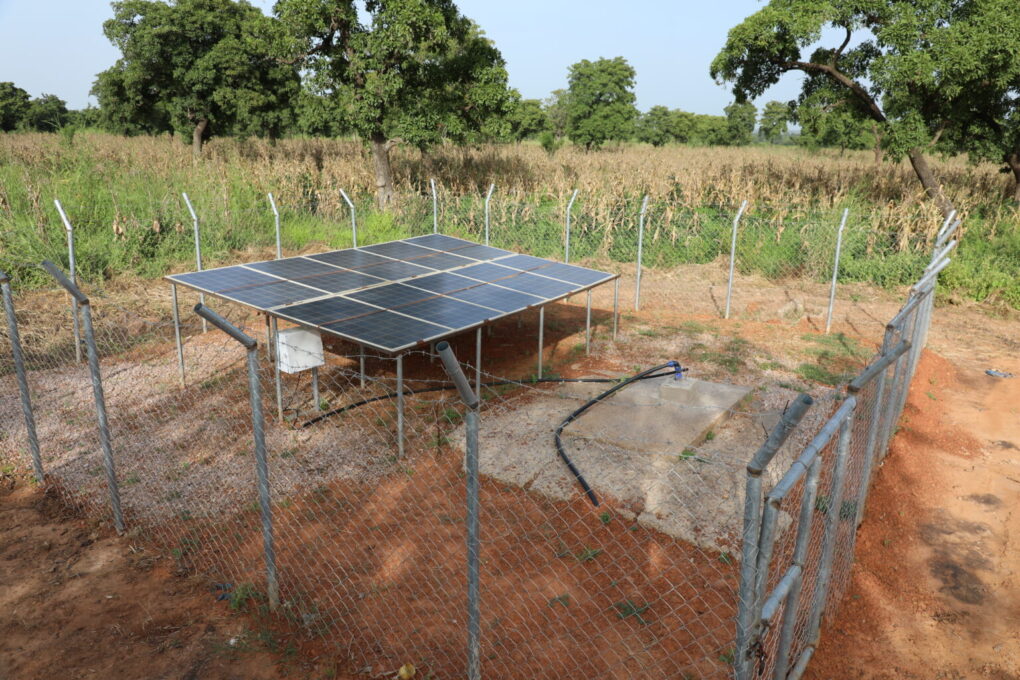
The North-East Regional Coordinating Council is promoting solar-powered water systems and dry-season farming to help communities combat climate change, improve food production and secure reliable water supplies in Ghana’s North-East Region.
The initiative aims to reduce dependence on rivers and rainfall by using solar energy to pump groundwater for household consumption, public institutions and agricultural irrigation.
According to the North-East Regional Minister, Ibrahim Tia, changing rainfall patterns and drying water bodies are making traditional farming methods increasingly unreliable, forcing communities to explore sustainable alternatives.
Speaking to the Ghana News Agency (GNA), Mr. Tia stressed the need to develop alternative water sources to support livelihoods and agricultural activities as climate change continues to affect the region.
Solar-Powered Water Systems to Improve Access to Water
The North-East Regional Coordinating Council is collaborating with district assemblies and development partners to expand access to water for households, schools and other public facilities.
The regional minister explained that solar-powered water systems provide a sustainable solution because they use sunlight to pump groundwater, reducing dependence on fuel-powered equipment and lowering recurring operational expenses.
Under the initiative, communities will mainly be responsible for the relatively low maintenance costs of the systems, helping to support their long-term sustainability.
The programme is expected to improve water access in rural communities while promoting the use of renewable energy to address water shortages and climate-related challenges.
North-East Region Expands Dry-Season Farming
The Council is also planning to increase dry-season farming by drilling boreholes on suitable farmland and installing solar-powered water pumps to support irrigation throughout the year.
The initiative will enable farmers to cultivate land during periods when rainfall is limited and rivers are drying up. It is also expected to reduce the amount of fertile farmland left unused during the dry season.
By improving access to irrigation water, the programme could help farmers increase crop production, strengthen household incomes and improve food security across the region.
Mr. Tia said preparatory work was underway to establish facilities in each district to support the programme, with some infrastructure expected to be completed by the end of November.
Climate Change Threatens Agriculture and Food Security
The North-East Region depends heavily on rain-fed subsistence farming, leaving many households vulnerable to irregular rainfall, prolonged dry seasons and rising temperatures.
Shorter rainy seasons, delayed rainfall and extended dry spells can reduce crop yields, contribute to crop failures and increase post-harvest losses. Drying rivers and declining groundwater levels also place additional pressure on water supplies and agricultural production.
These challenges can worsen seasonal food shortages, particularly during lean periods such as May and June, when some households struggle to produce or store enough food to meet their needs.
Declining agricultural incomes may also limit economic opportunities for rural communities, encouraging some young people to migrate to southern Ghana in search of employment. Competition over scarce natural resources can further contribute to tensions between farmers and livestock herders.
Renewable Energy and Climate-Smart Agriculture
The solar-powered irrigation initiative forms part of broader efforts to strengthen climate resilience through investments in water infrastructure, renewable energy and climate-smart agriculture.
Combining solar energy with groundwater extraction and irrigation could help farmers adapt to changing weather conditions while reducing reliance on conventional fuel-powered pumps.
If successfully implemented and maintained, the programme could contribute to improved agricultural productivity, rural livelihoods and food security in the North-East Region.
The initiative highlights the growing importance of sustainable water management and climate adaptation strategies in protecting Ghana’s agricultural sector against the effects of climate change.
Source: newsthemegh.com