
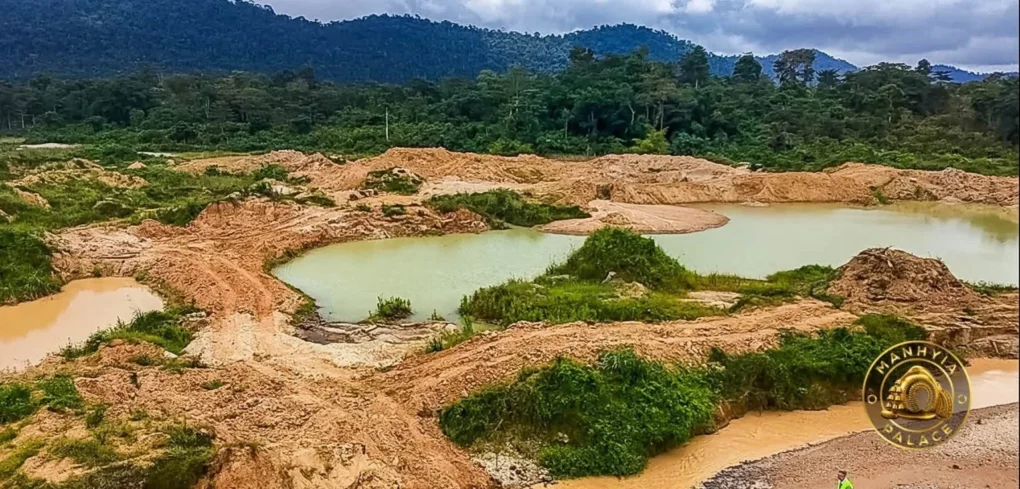
The Asantehene, Otumfuo Osei Tutu II, has warned that illegal mining, popularly known as galamsey, poses serious threats to public health, clean drinking water, and the future of Ghana’s younger generation.
The Asantehene issued the warning on Wednesday, October 14, 2026, during a royal visit to the Jimi Land Reclamation and River Watercourse Rehabilitation Project near AngloGold Ashanti in Obuasi.
During the visit, Otumfuo highlighted the dangers of destroying rivers and other water bodies through illegal small-scale mining, stressing that environmental degradation could have devastating consequences for communities and future generations.
He acknowledged the unemployment challenges confronting many Ghanaian youth and recognised that some young people had resorted to galamsey as a source of income. However, he emphasised that the search for employment and economic opportunities must not come at the expense of environmental protection and human health.
According to the Asantehene, access to clean water remains fundamental to human survival and public health. He cautioned that allowing illegal mining activities to destroy vital water resources could expose communities, particularly children, to long-term health and developmental risks.
Otumfuo therefore called for responsible environmental management and the creation of alternative livelihood opportunities to discourage young people from engaging in illegal mining.

Jimi River Reclamation Project Targets Water Pollution and Galamsey
The Asantehene’s visit formed part of efforts to restore lands damaged by unregulated small-scale mining and protect the Jimi Dam, an important source of drinking water for communities across the Adanse Traditional Area.
During the engagement, the operator of the Jimi Dam briefed Otumfuo on the challenges affecting water production and distribution, including rising water treatment costs and increasing pressure on available water supplies.
The operator explained that the difficulties had forced some communities to adopt water rationing schedules, leaving residents with access to water only during designated periods.
Mining-related pollution, toxic runoff, and the accumulation of sediment along the Jimi River have raised concerns about the long-term sustainability of the dam and its ability to supply safe drinking water to surrounding communities.
The situation has reinforced calls for urgent river rehabilitation, improved water quality management, and sustained measures to protect Ghana’s natural water resources from illegal mining activities.
Otumfuo Joins Ministers in Tree-Planting Exercise
As part of the visit, Otumfuo Osei Tutu II participated in a tree-planting exercise along the Jimi River to support environmental restoration and promote sustainable land management.
The exercise was attended by the Minister for Lands and Natural Resources, Emmanuel Armah-Kofi Buah; the Minister for Local Government, Chieftaincy and Religious Affairs, Mahama Ayariga; and representatives of AngloGold Ashanti.
The tree-planting initiative forms part of broader efforts to restore degraded mining lands, improve vegetation cover, control erosion, and safeguard water bodies threatened by illegal mining.
Environmental restoration is expected to play an important role in rebuilding damaged ecosystems and improving the long-term health of affected communities.
Ashanti Green Initiative Promotes Kenaf for Land Rehabilitation
Oheneba Nana Kwaku Duah, Chief Executive Officer of the Ashanti Green Initiative (AGI) and son of the Asantehene, also outlined the role of kenaf in the Jimi land reclamation programme.
He explained that restoring soil health before cultivating food crops was essential, particularly in areas where mining activities may have left harmful heavy metals in the soil.
The project will use kenaf, a fast-growing fibre crop, as part of its land rehabilitation strategy while exploring opportunities for sustainable packaging and other commercial products.
Kenaf can be processed into products such as sacks, ropes, and eco-composites, potentially creating new income opportunities for local farmers and communities.
Using the crop during the rehabilitation process could help support economic activities while reducing the immediate need to cultivate food crops on land that requires further assessment for contamination.

Jimi Land Reclamation Project Targets 153 Hectares
The Jimi Land Reclamation and River Watercourse Rehabilitation Project aims to restore approximately 153 hectares of degraded land across three designated lots in the Obuasi East Municipality, Adansi Akrofuom District, and Adansi Asokwa District.
The project focuses on severely damaged mining sites around Gyimisokakraba, Ayease, and Akwesi Ankromakrom, where unregulated small-scale mining has destroyed vegetation, degraded soil quality, and left dangerous open pits.
The rehabilitation programme includes several environmental restoration measures, such as:
- Backfilling abandoned mining pits and gullies.
- Reshaping degraded land to improve stability.
- Assessing and managing soil contamination.
- Installing drainage systems and erosion-control structures.
- Restoring topsoil quality and supporting vegetation growth.
- Planting kenaf as part of the land reclamation process.
These interventions are intended to rehabilitate damaged landscapes, reduce environmental hazards, and support the long-term recovery of affected ecosystems.
AngloGold Ashanti and Manhyia Palace Support Environmental Restoration
The Ashanti Green Initiative is leading the Jimi reclamation project under the strategic direction and royal patronage of Manhyia Palace, with technical and operational support from AngloGold Ashanti.
The initiative follows Otumfuo Osei Tutu II’s advocacy against illegal mining at the Mining in Motion forum, which contributed to the establishment of AGI.
The project also plans to implement long-term monitoring programmes covering river water quality, soil conditions, vegetation recovery, biodiversity, and community health outcomes.
These measures are expected to help assess the effectiveness of rehabilitation efforts and identify additional interventions needed to protect the environment.
Sustainable Solutions Needed to Combat Galamsey in Ghana
Otumfuo’s warning highlights the growing importance of tackling illegal mining through a combination of environmental protection, responsible mining practices, land reclamation, and sustainable employment opportunities.
Protecting rivers and dams from mining pollution is essential to maintaining access to clean drinking water, reducing water treatment costs, and safeguarding public health.
The Jimi reclamation project represents an effort to restore damaged mining sites while promoting alternative economic opportunities for local communities.
As Ghana continues to confront the effects of galamsey, sustained cooperation among traditional authorities, government agencies, mining companies, environmental organisations, and local communities will remain important in protecting the country’s water bodies and natural resources for future generations.
Source: newsthemegh.com