

GNA | Edited by Kenneth Sackey
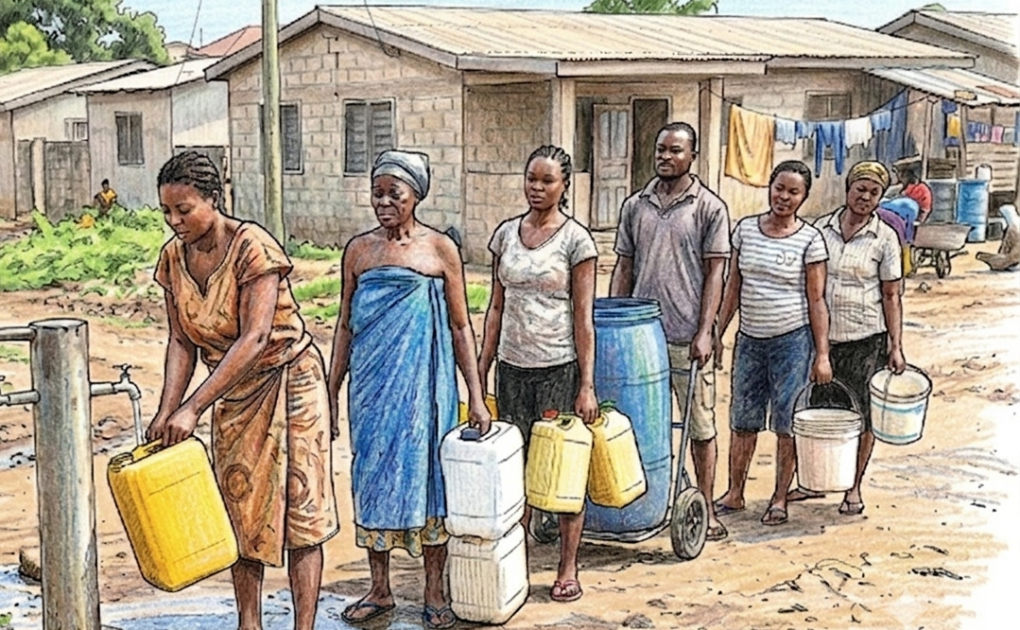
Nearly six in 10 low-income households in some peri-urban communities in Accra face varying levels of water insecurity, a study has revealed.
The study found that irregular piped water supply and rising water costs had driven many households to depend on sachet water as their main source of drinking water.
Researchers from the University of Ghana and the University of North Carolina reported that about 60 per cent of households experienced water insecurity ranging from low to severe levels.
The study, titled “Factors Influencing Water and Sweet Beverage Purchasing Decisions and Behaviours Among Low-Income Households in Four Peri-Urban Communities in Accra,” examined purchasing patterns in Oyarifa, Teiman, Kweiman and Danfa in the Ga East Municipality.
Conducted among 43 household primary shoppers and 36 focus group participants, the research found that sachet water, popularly known as “pure water”, remained the dominant source of drinking water, with about 77 per cent of households relying on it exclusively.
More than half of the households purchased at least three bags of sachet water each week, while some spent more than GH¢50 weekly to meet their drinking water needs.
The study identified safety and health considerations as the main factors influencing drinking water choices, with participants citing cleanliness, taste, trust in vendors and previous experiences as key determinants in selecting sachet water brands.
Some respondents said they avoided unfamiliar brands after experiencing stomach discomfort, diarrhoea or other illnesses they associated with unsafe water.
While many participants regarded bottled water as cleaner and of higher quality, they considered it too expensive for regular household consumption, the study said.
The researchers cautioned that Ghana’s beverage taxation policy, which applies the same tax rate to bottled water and sugar-sweetened beverages, could have unintended consequences for low-income households.
According to the study, the policy could reduce access to healthier drinking alternatives by increasing the cost of bottled water alongside sugary drinks.
The researchers recommended that efforts to curb the consumption of sugar-sweetened beverages through taxation should be accompanied by measures to improve access to safe and affordable drinking water.
They also called for increased investment in potable water infrastructure and suggested that revenue generated from sweetened beverage taxes could be channelled into improving water services, particularly in underserved communities.
The study said expanding access to safe and affordable drinking water was critical to achieving the intended public health benefits of the beverage taxation policy and reducing health inequalities among vulnerable populations.
The research was led by Dr. Christopher Delali Amegah, Dr. Gloria Adobea Odei Obeng-Amoako, and Prof. Seth Adu-Afarwuah of the Department of Nutrition and Food Science, University of Ghana; Prof. Monica Lambon-Quayefio of the School of Economics, University of Ghana; and Prof. Shu Wen Ng of the University of North Carolina, United States.
Source: gna.org.gh