
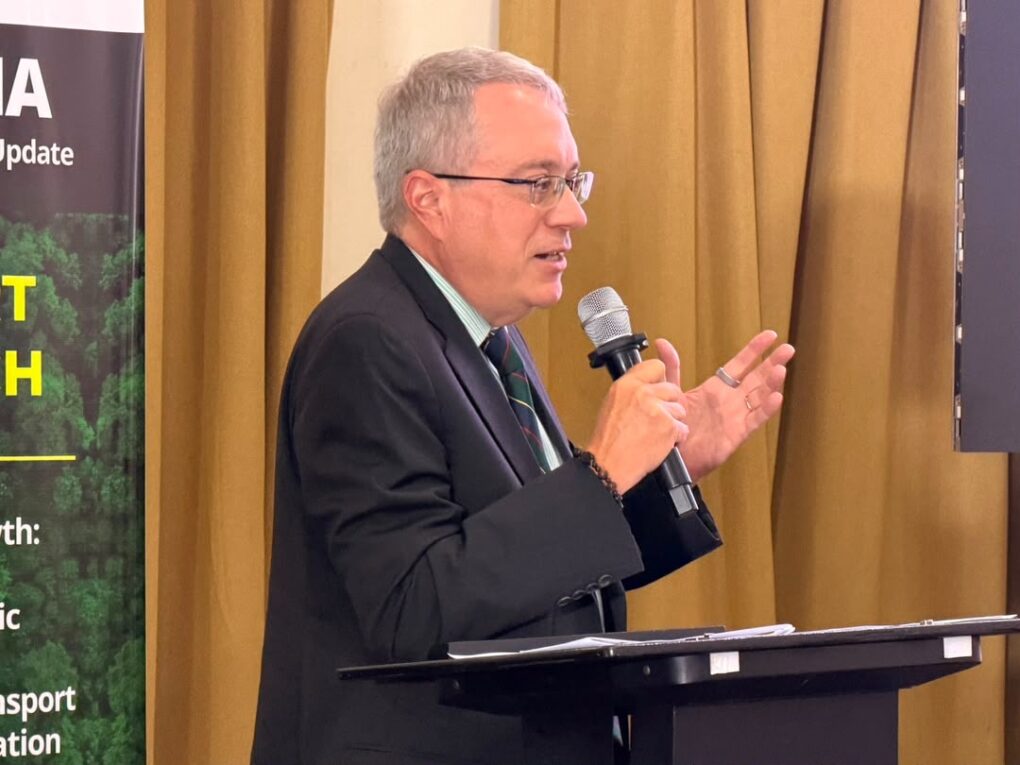
The World Bank has urged Ghana to accelerate and complete key structural economic reforms to sustain its ongoing economic recovery and ensure that economic growth translates into more jobs and improved living standards.
The global financial institution welcomed Ghana’s recent economic growth and declining inflation, but warned that unresolved structural challenges and fiscal vulnerabilities could threaten the country’s long-term economic stability.
The World Bank made the assessment in its 10th Ghana Economic Update, launched in Accra on Wednesday, August 26, 2026, under the theme: “Reset for Growth: Sustaining Macroeconomic Recovery and Unlocking Transport for Transformation.”
Ghana Economic Recovery: World Bank Calls for More Reforms
According to the World Bank, Ghana recorded six per cent economic growth, while inflation declined significantly from 23.2 per cent in 2023 to 3.2 per cent in March 2026.
Dr Robert Taliercio O’Brien, World Bank Division Director for Ghana, Liberia and Sierra Leone, said Ghana had entered 2026 at an important turning point.
He explained that the immediate challenge was to transform the country’s macroeconomic recovery into sustainable employment, stronger public finances and improved economic opportunities for citizens.
Dr O’Brien acknowledged that government policy decisions had contributed to Ghana’s improved economic performance. However, he cautioned that the country was “not out of the woods yet”, stressing the need for stronger domestic revenue mobilisation and continued fiscal consolidation.
He said decisions taken in the short term would determine whether Ghana’s economic gains resulted in lasting transformation or remained exposed to external economic shocks.
Gold and Services Growth Not Enough to Create Jobs
The World Bank official noted that Ghana’s recent economic growth had been driven largely by gold and services.
However, he warned that these sectors had limited capacity to absorb the growing labour force compared with the country’s rapidly expanding population.
Dr O’Brien therefore called for a broader structural transformation of Ghana’s economy, particularly through sectors capable of creating large numbers of jobs.
He identified agriculture, agro-processing and manufacturing as critical areas where Ghana could improve productivity, expand employment and increase value addition.
The World Bank also revealed that 36.4 per cent of Ghanaians remained outside the formal tax system, limiting government’s ability to raise sufficient revenue to finance public infrastructure and essential services.
The Bank said strengthening the tax system and expanding the formal economy would be important for Ghana’s long-term economic development and fiscal stability.
Ghana Needs Job-Rich Economic Growth
Dr O’Brien stressed that economic transformation must focus on job-rich growth, particularly in industries that can employ Ghana’s growing working-age population.
He said the World Bank would continue supporting Ghana’s efforts to promote economic transformation, job creation and sustainable development.
However, he noted that financial support alone would not solve the country’s economic challenges without strong political commitment, effective institutions and the capacity to implement reforms.

Finance Minister Says Economic Growth Must Benefit More Ghanaians
Finance Minister Dr Cassiel Ato Baah Forson said Ghana’s strong economic growth had not yet translated into meaningful improvements for a significant proportion of the population.
In a speech read on his behalf, the Finance Minister said the government was therefore prioritising infrastructure development, poverty reduction and economic recovery.
He said investment in transport infrastructure would be particularly important in supporting economic activity, improving connectivity and creating employment opportunities.
Dr Forson explained that the government did not intend to maintain cuts in capital expenditure indefinitely.
Instead, he said public investment would be gradually restored as fiscal conditions improved while maintaining fiscal discipline and economic stability.
He said Ghana was working to consolidate its economic recovery through disciplined policy implementation, strategic transport infrastructure investment and partnerships aimed at converting macroeconomic stability into jobs, food security and broader prosperity.
The Finance Minister reaffirmed the government’s commitment to working with institutions such as the World Bank to improve Ghana’s economic resilience and address critical infrastructure deficits.
Africa Needs New Financing for Energy Infrastructure
Dr Cassiel Ato Forson has also called for innovative financing mechanisms to help Africa address its growing energy infrastructure financing gap.
Speaking at the 2026 Future of Energy Conference (FEC) organised by the Africa Centre for Energy Policy (ACEP) in Accra, Dr Forson said African countries could not depend solely on public budgets to finance the continent’s energy needs.
The conference was held under the theme: “Powering Africa’s Industrial Transformation: Energy Systems for Value Addition and Competitiveness.”
According to the Finance Minister, Africa needs to mobilise more private capital to expand energy infrastructure, increase productive capacity and accelerate industrial development.
“Public budgets cannot carry this investment alone. We need guarantees, blended finance, local currency funding, deeper capital markets, and credible public-private partnerships,” he said.
Nearly 600 Million Africans Lack Electricity
Dr Forson noted that nearly 600 million Africans lack access to electricity, while the continent attracts only about two per cent of global clean energy investment.
He said the financing gap was making it difficult for African countries to achieve rapid industrialisation and expand productive sectors.
The Minister called for policies that would create a more attractive investment environment for long-term private capital in energy infrastructure.
He said such investments should not only provide electricity but also create jobs, support local manufacturing, promote value addition and strengthen productive industries.
Africa Must Stop Exporting Raw Materials
Dr Forson stressed the need for African countries to break away from the traditional economic model of exporting raw materials while importing finished products.
“Across Africa, we export cocoa and import chocolate. We export bauxite and import aluminium products. Now we risk exporting critical minerals only to import batteries. This must change,” he said.
He argued that Africa must develop stronger local processing and manufacturing capacity to retain a greater share of the economic value generated from its natural resources.
According to him, expanding value addition, local production and industrial capacity would help African economies create jobs and become more competitive in global markets.
Macroeconomic Stability Key to Attracting Investment
The Finance Minister also emphasised the importance of macroeconomic stability in attracting private investment and sustaining industrial growth.
He identified inflation, exchange-rate volatility, high interest rates, unsustainable public debt and fiscal indiscipline as factors that increase the cost of doing business.
Referring to Ghana’s significant reduction in inflation over the past two years, Dr Forson said the country’s economic progress demonstrated the importance of restoring macroeconomic stability as the foundation for the next stage of industrial development.
He urged policymakers to use the improved economic environment to attract investment, expand domestic production and create sustainable employment.
“Stability is obviously not the destination. It is the launchpad for transformation,” he said.
UNECA Calls for Development-Focused Investment in Africa
Dr Marit Kitaw, Economic Affairs Officer at the United Nations Economic Commission for Africa (UNECA), said African countries must rethink where investments in critical minerals and energy infrastructure are located.
She argued that investment decisions should ensure that a greater share of economic value remains on the African continent.
Dr Kitaw introduced the concept of “development shoring”, which focuses on directing investment towards locations capable of generating the greatest development impact rather than considering production costs alone.
“For Africa, development shoring means locating more processing, component production and green manufacturing closer to the minerals and renewable energy resources, while building local suppliers, technical skills, research capacity and regional markets,” she said.
According to Dr Kitaw, the approach could help African countries capture greater value from their mineral resources while developing resilient regional industrial ecosystems.
She explained that development shoring does not reject economic efficiency but expands its meaning to include resilience, long-term stability and development impact.
Africa Needs Partnerships That Promote Value Addition
Dr Kitaw called for stronger international partnerships that go beyond the extraction and purchase of Africa’s raw minerals.
She advocated for joint ventures, co-investment in processing and manufacturing, technology transfer, regional centres of excellence and long-term offtake agreements linked to value addition.
She said such partnerships should focus on building lasting productive capacity within Africa.
“The central question for every partnership should be: what productive capability and what lasting development benefits will remain in Africa after the extraction of the minerals?” she asked.
Ghana’s Economic Transformation Depends on Reforms and Investment
The World Bank’s latest assessment highlights the importance of sustaining Ghana’s economic recovery, fiscal consolidation and structural reforms.
While declining inflation and strong economic growth provide a positive foundation, Ghana faces the challenge of ensuring that economic gains translate into job creation, poverty reduction, infrastructure development and improved living standards.
At the continental level, increased investment in energy infrastructure, manufacturing, agro-processing and critical mineral value chains could help Africa accelerate industrialisation and reduce its dependence on raw-material exports.
For Ghana and other African economies, policymakers face the dual task of maintaining macroeconomic stability while creating an investment environment capable of supporting productive industries, sustainable jobs and long-term economic transformation.
Source: newsthemegh.com