
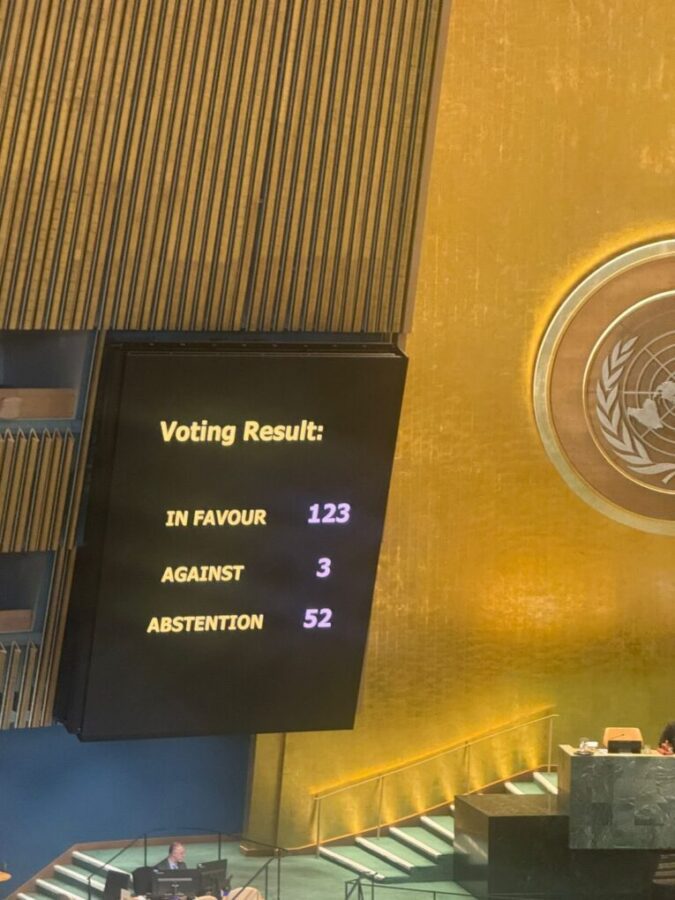
Amnesty International has hailed the United Nations General Assembly’s approval of a resolution recognising chattel enslavement of Africans as a crime against humanity, calling it a watershed moment for legal recognition and reparative justice.
The international human rights group commended Ghana’s resolution on behalf of the African continent and persons of African origin in a statement released after the voting. 123 member states supported the bill, 3 opposed it, and 53 abstained.
“Amnesty International welcomes the recognition of chattel enslavement of Africans as a crime against humanity at the U.N General Assembly, following a resolution tabled by Ghana on behalf of the African continent and people of African descent,” the organization stated.
More than a century after the transatlantic slave trade was officially outlawed, the statement stressed how the legacy of colonialism and slavery still harms people around the world.
“Across the world, people are still suffering the long-lasting effects of slavery and colonialism, manifesting in today’s racism and global inequality, while States and private actors profited from these historical injustices,” stated Amnesty International.
The group praised the resolution as a significant advancement in the decades-long fight for reparatory justice, claiming that it lays out a precise framework for responsibility and compensation.
“Today’s resolution is a momentous step forward for legal recognition and reparations for those who have suffered the enduring harms of chattel enslavement around the world,” Amnesty said.
Slavery and the transatlantic slave trade are officially declared to be among the worst injustices against humanity in the resolution, which was led by Samuel Okudzeto Ablakwa, the foreign minister of Ghana.
It urges former slave-trading countries to hold discussions with African states and the African Union in order to rectify historical wrongs through tangible actions, such as monetary reparations, debt forgiveness, development support, and the restitution of stolen cultural artefacts.
The resolution gains substantial weight from Amnesty International’s support, which reflects the increasing agreement among human rights organisations that reparatory justice is a crucial part of resolving historical and current racial inequalities.
The organization’s statement also subtly highlights the part played by nations and commercial organisations that benefited from slavery, implying that firms and institutions whose wealth was derived from the exploitation of Africans in slavery may be held accountable in addition to governments.
Although the resolution is not legally binding, it is anticipated that its approval with a resounding majority and strong support from prominent human rights organisations will increase pressure on former colonial and slave-trading nations to actively address reparations claims.
Source: newsthemegh.com