
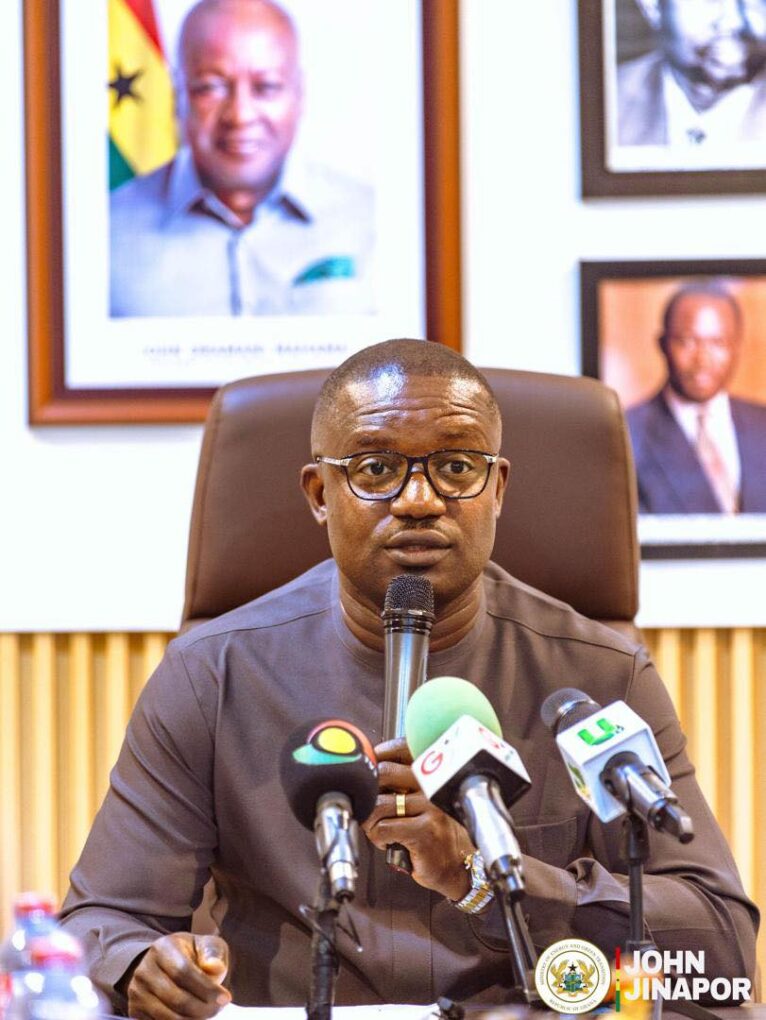
Ghana’s electrical system has entered a time of continuous reliability, according to Minister for Energy and Green Transition Hon. John Abdulai Jinapor.
This indicates that the national grid has effectively maintained a solid performance.
According to Hon. Jinapor, extensive stabilisation of domestic electricity distribution is taking place, giving local families and industrial markets a much-needed break.
This trend indicates that current operating techniques are successfully protecting the nation’s grid against unpredictable outages and represents a considerable divergence from historical distribution constraints.
“I also highlighted that power supply across the country has remained largely stable, reflecting ongoing efforts to strengthen and modernise the energy sector. In the upstream petroleum industry, we are actively addressing the several years’ decline in production through strategic reforms, renewed partnerships, and targeted investments aimed at restoring growth and long-term sustainability.” Hon. John Abdulai Jinapor assured
While discussing this structural milestone, Hon. Jinapor pointed out that a strict modernisation plan intended to maximise transmission capacity and ingrained capital reforms are directly responsible for the current grid durability.
The ministry has effectively protected public power access from unforeseen generation shortfalls by modernising outdated infrastructure and putting preventive maintenance mechanisms in place.
In order to ensure that the entire national energy network progresses toward long-term operational sustainability, this transmission success is also being combined with comprehensive modifications to structural programs across the renewable and upstream petroleum landscapes.
For many years, Ghana’s socioeconomic structure was severely impacted by the unstable nature of the country’s power supply, which severely hindered small businesses and forced significant operational reductions in industrial areas.
Due to a heavy reliance on pricey backup fuel, this historic grid vulnerability, which is commonly characterised by extended blackouts, increased overhead costs, threatened the financial sustainability of manufacturing setups, and interfered with the provision of vital services in public healthcare facilities and cold-chain logistics.
Deep structural weaknesses in the legacy infrastructure were revealed by the ongoing instability, which greatly reduced local economic productivity and infuriated the populace.
The significant benefits of deliberate grid expansions and focused technical interventions are demonstrated by the recent noticeable improvements throughout the distribution lines.
The state has greatly reduced unexpected outages by implementing contemporary transformers, enforcing automated voltage regulators, and resolving financial liquidity concerns throughout the energy value chain.
This current efficiency demonstrates that when administrative resolve is combined with technically competent investment methods, a well-structured energy framework is inevitable.
As a result, uninterrupted power is starting to stabilise the country’s economy and create the stable conditions necessary for business expansion.
The Ministry for Energy and Green Transition is actively addressing a long-term decline in raw hydrocarbon extraction to ensure that this domestic power stability is sustained.
The state must methodically implement significant regulatory overhauls and solicit foreign capital in order to address the “several years’ decline in production.”
The administration anticipates reversing the extraction shortfall through new business partnerships and capital injections into unexplored deposits.
Stabilising raw fuel supply directly feeds and sustains the thermal plants that keep the national grid operational, making these strategic actions in the upstream petroleum industry essential.
Source: newsthemegh.com