
Vicky Wong, Matt Spiveyand, Tabby Wilson
The US and Iran have traded strikes for a second night, as observers report a “dramatic” drop in the number of ships travelling through the Strait of Hormuz.
The US says it hit 90 military targets, some near the Strait. Iran says 14 people have been killed in the past two days.
State media also reported that targets near the Bushehr nuclear power plant were hit, citing the deputy governor of the province. The US has not commented on the latest strikes.
Iran said it targeted US assets in Kuwait, Bahrain and Qatar in response. Later on Thursday, Tehran launched more strikes on sites in Kuwait, Jordan and Iraq, state-linked media reported.
Separately, huge crowds have gathered for the burial of Iran’s late supreme leader, Ayatollah Ali Khamenei, after six days of funeral events.
Crowds massed on the streets of Mashhad in north-eastern Iran waving Iranian flags, while some were pictured holding signs carrying deaths threats directed at US President Donald Trump.
Khamenei was killed on 28 February during the first hours of US and Israeli strikes against Iran.
Iran’s foreign ministry denounced the latest US strikes as a “grave war crime”, describing the US administration as “evil and psychopathic”
Bridges and a railway route connecting Tehran to the city of Mashhad, where the late supreme leader’s funeral is being held, were also damaged, the foreign ministry said.
Iran’s health ministry says 14 people have been killed during this latest round of fighting.
Hossein Kermanpour, head of public relations at the ministry, said US attacks targeting five provinces in Iran over 8 and 9 July have also injured 78 people, of whom 47 remain in hospital.
Gulf nations reported Iranian attacks following the US strikes, with explosions in Bahrain’s capital Manama, Kuwait intercepting missiles and drones, and Qatar issuing a security alert.

The Islamic Revolutionary Guard Corps (IRGC) has confirmed that it launched retaliatory strikes on US military bases in Kuwait and Bahrain overnight, and called them the “first phase of the punitive response against the American treaty-breakers”.
Iran’s parliamentary speaker Mohammad Bagher Ghalibaf, who is also the country’s chief negotiator with the US, said on X that America “still hasn’t learned that bullying and breaking promises are no longer cost-free”.
“Let me put it plainly: if you strike, you’ll get hit,” he wrote, adding that the Strait of Hormuz will only open under Iranian arrangements – not “American threats”.
US Central Command (Centcom) said themost recent round of strikes was carried out to “further degrade Iran’s ability to attack commercial shipping and innocent civilian mariners” in the vital waterway.
In a statement, it said it had struck 90 Iranian military targets, which included air defense systems and military logistics infrastructure along Iran’s coastline.
“The latest strikes follow successful execution of offensive strikes in Iran the night before,” Centcom added.
Phil Belcher, marine director at Intertanko, an international organisation for independent tanker owners, said the number of ships travelling through the Strait via the southern route was now in “single figures” following the step up in hostilities.
Belcher the daily figure of about 30 ships was down from about 70 a week ago and well below the normal number of 130 ships that was seen before the Iran war began earlier this year.
He told BBC Radio 4’s Today programme that there had been an “exuberance of optimism” around shipping in the region following the signing of the memorandum of understanding between Iran and the US last month, but now the mood has changed.
“This cycle of violence, this cycle of up-and-down, positive-negative news, it’s having an enormous impact both on business [and] on the seafarers themselves,” he said.
On Wednesday night, several explosions were reportedly heard on other parts of the Iranian coast, including the cities of Konarak and Chabahar.
Iranian state TV reported eight explosions in Bandar Abbas, and said two missiles had hit the ports of both Sirik and Jask – also in southern Iran.
It added that two projectiles had hit the island of Abu Musa, which has been the subject of a longstanding ownership dispute between Iran and the United Arab Emirates.
Air defence systems were activated in Bandar Abbas, according to reports in Iranian state media.
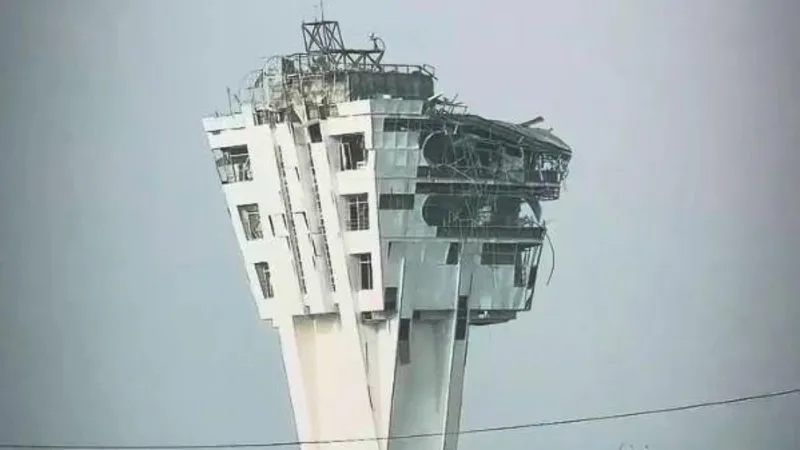
The extent of damage from the US strikes is not yet known, but Iranian media have reported power cuts in Chabahar and a fire at an Islamic Revolutionary Guard Corps (IRGC) barracks in Bushehr.
Two of three power lines cut off in Chabahar had been restored quickly and a third would be operational soon, the Iranian Students’ News Agency said.
Earlier on Wednesday, Centcom wrote in a statement that it held Iran accountable for “recent unjustified aggression against commercial shipping and civilian crews freely navigating a vital international waterway.”
President Trump said late on Wednesday that Iran had “called a little while ago” and wanted to make a deal “so badly”.
Trump added: “I just don’t know if they’re worthy of making a deal – I don’t know that they’re going to honour the deal, that’s the problem.”

On Tuesday, the US military said it had launched “powerful” strikes in response to attacks on three tankers in the strait.
The current flare up has been the worst exchange of strikes between the US and Iran since the deal – known as a memorandum of understanding (MoU) – was signed on 17 June.
Trump said the ceasefire agreement signed last month with Iran was now “over”.
He told reporters: “I don’t want to deal with them anymore, they’re scum. You know what scum is? They’re scum. They’re sick people.”
In response, Iran’s Foreign Minister Abbas Araghchi said in a post on X: “We do not answer vulgarity with vulgarity, but with action: fearlessly and with great valour.”
The deal between the US and Iran included 14 points, among them a 60-day period for a ceasefire during which negotiations should continue, the safe passage of vessels through the Strait of Hormuz and the US lifting sanctions on Iran.
The 60-day period for negotiations is not yet up, but Trump said he saw further talks as “a waste of time”.
Source: bbc.com