

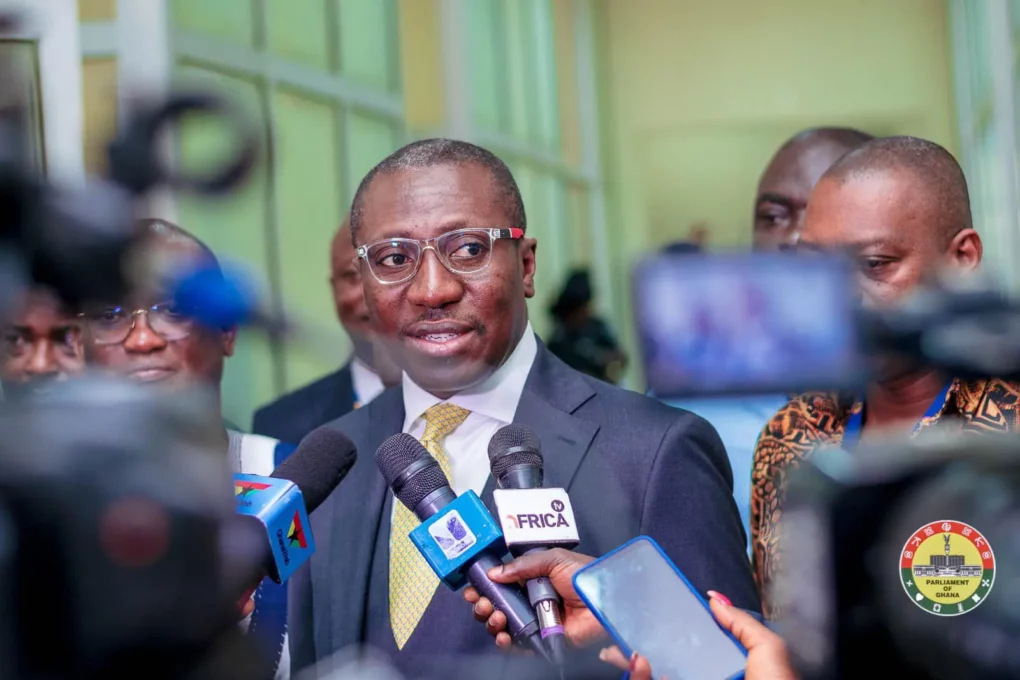
The Minority Caucus in Parliament has announced plans to file a motion seeking a comprehensive investigation into the reported financial losses linked to Ghana’s Domestic Gold Purchase Programme.
Minority Leader Osahen Alexander Afenyo-Markin said the motion is ready and will be presented before Parliament resumes following its recall. The move follows concerns over reported losses of approximately GH¢22 billion, equivalent to US$1.7 billion, associated with the domestic gold purchasing programme.
According to Afenyo-Markin, the Minority expects the Majority Caucus to support the call for parliamentary scrutiny, stressing that the issue concerns significant public funds and should not be reduced to partisan politics.
“Our motion is ready. We will file it before we get back next week, and we pray that you, the Majority in Parliament, will fully cooperate with us, the Minority. Something must be done.”
Minority Demands Answers on GoldBod Losses
Afenyo-Markin said Parliament has a constitutional responsibility to investigate how public funds are managed and to demand accountability when substantial financial losses are reported.
He said the Minority’s concerns have intensified following what he described as findings by the International Monetary Fund (IMF) regarding the financial implications of the Domestic Gold Purchase Programme.
The Minority wants Parliament to establish the circumstances that led to the reported GoldBod losses, identify the institutions involved and examine the decision-making processes and financial safeguards used in implementing the programme.
The Caucus also wants Parliament to assess the relationship between GoldBod and the Bank of Ghana (BoG) and determine whether the operational structure adequately identified and managed the risks arising from their collaboration.
GoldBod and Bank of Ghana Relationship Under Scrutiny
Afenyo-Markin argued that the proposed parliamentary investigation is necessary to determine whether Ghana received sufficient value from the transactions and whether the financial risks associated with the gold purchasing programme were properly managed.
He said the reported GH¢22 billion loss represents resources that could otherwise have been invested in critical sectors such as healthcare, education, roads, water infrastructure and other national development projects.
“Let us be honest about what 1.7 billion dollars actually means. It is hospitals that will not be built. It is schools that will not be built. It is poor roads that claim lives every week. It is water treatment facilities that will not be constructed.”
Minority Says GoldBod Investigation Is About Accountability
The Minority Leader rejected suggestions that the move is intended to frustrate GoldBod or undermine the government’s gold policy.
He maintained that the objective is to ensure that public institutions entrusted with state resources are held accountable for major financial decisions.
Afenyo-Markin also recalled that the Minority had previously raised concerns about fees associated with the domestic gold purchasing arrangement. He said the fees were subsequently reviewed, which, in his view, further demonstrates the need for Parliament to examine the programme in detail.
The proposed investigation is expected to consider several aspects of the GoldBod operations, including reported financial losses, transaction pricing, fees, financing arrangements, risk-sharing mechanisms, off-taker agreements and safeguards designed to protect public funds.
Parliament Expected to Examine GoldBod Financial Risks
The Minority Leader said the Caucus will continue demanding answers when Parliament resumes and expects the government and relevant state institutions to provide information required for the investigation.
He warned that the Minority would maintain pressure for accountability and ensure that the issue remains in the public domain.
“A day of reckoning will come. They should remember that post-regime accountability awaits them.”
The proposed parliamentary scrutiny could therefore become a major test of financial accountability, public funds management and Ghana’s domestic gold purchasing policy, with Parliament expected to examine how the reported losses occurred and whether adequate measures were implemented to protect the country’s financial interests.
Source: newsthemegh.com