
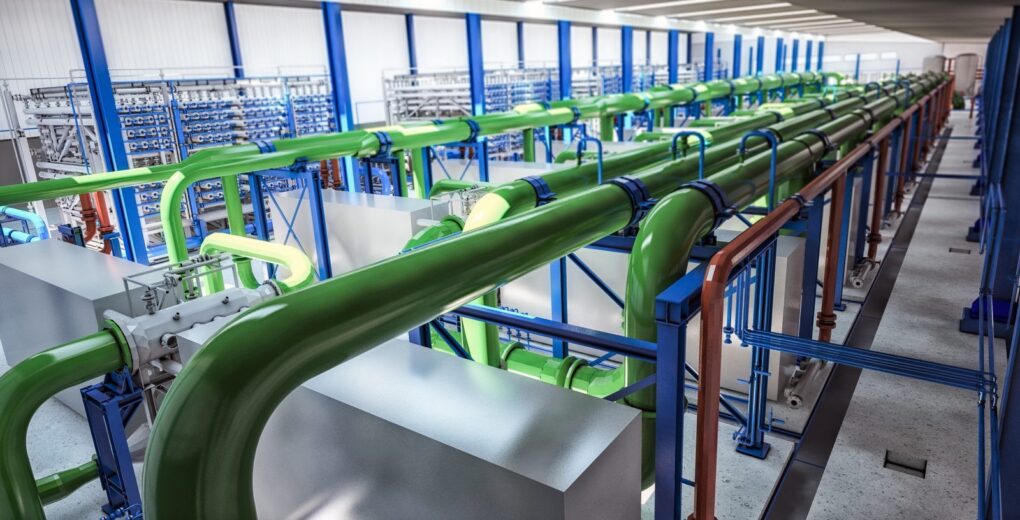
What was originally designed to address persistent water shortages in Teshie, Nungua and surrounding communities has now become a major financial challenge for Ghana, with the state facing a potential US$235 million liability arising from the Teshie-Nungua Desalination Plant project.
The desalination facility, constructed at an estimated cost of about US$125 million, has become the centre of a long-running contractual dispute between the Ghana Water Company Limited (GWCL) and Befesa Desalination Developments Ghana Limited (BDDG), the company behind the project.
Two final arbitration awards issued on September 17, 2026, have ordered GWCL to make payments totalling approximately US$235 million to BDDG in connection with the termination of the Water Purchase Agreement (WPA).
The Republic of Ghana is also exposed under the sovereign guarantee attached to the project. Interest on the award has been accruing since April 1, 2026, and will continue until the obligations are settled.
The development has renewed questions about the financial structure of the project, the decision to terminate the agreement, the risks associated with the state guarantee and unsuccessful efforts to renegotiate the arrangement.
How the Teshie-Nungua Desalination Project Started
The origins of the project date back more than a decade, when residents of Teshie, Nungua and nearby communities were experiencing persistent water supply challenges.
On April 29, 2010, Befesa Ghana Limited submitted an unsolicited proposal to GWCL for the construction of a desalination plant capable of producing 60,000 cubic metres of water per day.
The proposal was subsequently approved, leading to the signing of a Water Purchase Agreement under a build-own-operate-transfer arrangement.
Under the model, a private company would finance, construct and operate the facility, while GWCL would purchase the water produced by the plant. Ownership was expected to transfer to the state after 25 years.
However, the agreement included a significant financial obligation for GWCL: the utility was required to pay a fixed capacity charge for the plant regardless of whether the facility produced its full contracted volume.
The government backed the arrangement through a sovereign guarantee.
Parliament Approved US$110 Million Water Purchase Agreement
Parliament approved the government guarantee in 2012 alongside a US$110 million Water Purchase Agreement.
The project also received substantial tax and duty incentives estimated at approximately US$72.8 million over the life of the arrangement.
These incentives included exemptions and concessions covering equipment duties, VAT, NHIL, corporate tax and withholding tax.
Consequently, the desalination project was supported through a combination of a government guarantee and significant fiscal incentives.
Early Concerns Over Water Price
Concerns were raised about the financial viability of the arrangement even before the desalination plant became operational.
During consideration of the agreement, questions were raised about the capacity of the Ghanaian project company and the involvement of its foreign sponsors.
The Public Utilities Regulatory Commission (PURC) also expressed concerns about the proposed cost of the desalinated water.
Befesa initially proposed a bulk water tariff of US$1.716 per cubic metre. PURC considered the proposed price uncompetitive and indicated a lower figure of approximately US$1.37 per cubic metre, subject to verification of the project’s actual costs.
These early disagreements highlighted concerns over whether GWCL could sustainably afford the water it had committed to purchasing.
Ghana Government Paid Millions to Support the Project
Ghana’s 2024 Annual Report on Public-Private Partnership Projects provides insight into the financial pressure associated with the desalination facility.
In 2024, Befesa reportedly invoiced approximately US$16.93 million. About US$14.94 million of that amount represented capacity charges, while approximately US$1.54 million was attributed to variable water charges.
During the same year, the plant produced an average of about 43,009 cubic metres of water per day, compared with its contracted capacity of 60,000 cubic metres.
This meant production averaged roughly 72 percent of the contracted capacity, while the capacity charge remained payable.
The financial burden was also increasingly being supported by the state.
In 2024, GWCL reportedly paid approximately US$800,000, while the Ministry of Finance contributed about US$16.12 million.
Government support to GWCL for the project was reported at approximately:
- US$13.92 million in 2020
- US$9.54 million in 2021
- US$8.22 million in 2022
- US$9.58 million in 2023
- US$16.12 million in 2024
This represents approximately US$57.38 million in government support over five years.
Despite these payments, about US$9.77 million remained outstanding to Befesa at the end of 2024.
Operational Problems Added to Financial Pressure
The financial difficulties were accompanied by operational challenges at the desalination facility.
The government’s 2024 PPP report documented frequent power outages affecting the plant. Electricity costs alone were approximately US$6.98 million in 2024.
There were also disagreements over the physical condition of the facility.
In May 2024, Befesa reported the plant as inoperable following heavy rainfall. A subsequent survey identified structural defects and inadequate bracing.
Ghana Water reportedly attributed some of the problems to inadequate maintenance and neglect.
The dispute consequently expanded beyond the cost of water to include questions about plant performance, maintenance responsibilities, financial obligations and accountability.
Government Attempted to Renegotiate the Water Purchase Agreement
The government’s 2024 PPP report recommended an expedited renegotiation of the Water Purchase Agreement rather than immediate termination.
The report also recommended that the government consider acquiring equity in the desalination plant.
The recommendations reflected concerns about the financial pressure the existing contractual structure was placing on GWCL.
However, the renegotiation process failed to produce a lasting agreement.
The government eventually terminated the Water Purchase Agreement, triggering the arbitration proceedings that have now resulted in the final awards.
Arbitration Awards Create US$235 Million Liability
According to the latest disclosure by Cox Infrastructure Group, which controls 95 percent of BDDG, the arbitration tribunal ordered payments totalling approximately US$235 million, net of taxes, in termination payments under the Water Purchase Agreement.
Interest has been accruing since April 1, 2026, while BDDG was also awarded part of its legal costs.
Ghana’s counterclaims, including a claim valued at approximately US$144.5 million, were substantially dismissed.
The awards have been described as final and binding, subject to any challenge mechanisms available under the applicable arbitration laws.
Because of the sovereign guarantee attached to the project, the Republic of Ghana is exposed to the obligations recognised under the arbitration award, subject to the terms of the guarantee and provisions against double recovery.
Why Is a US$125 Million Project Creating a US$235 Million Award?
One of the central issues surrounding the case is the difference between the reported construction value of the project and the size of the arbitration award.
The government’s 2024 PPP report valued the desalination project at approximately US$125 million.
The arbitration award of approximately US$235 million is therefore significantly higher than the reported construction cost.
However, the award is not simply a reimbursement of the plant’s construction cost. It relates to termination payments and other contractual obligations under the Water Purchase Agreement.
Cox has also indicated that the US$235 million represents gross amounts recognised within the project’s financial structure and should not automatically be interpreted as US$235 million in net cash that will ultimately go to Cox.
The final financial impact will depend on factors including recovery, financing arrangements, third-party rights and accounting treatment.
Water Shortages Continue Despite Desalination Project
The financial dispute has also created a difficult situation for communities that were expected to benefit from the desalination plant.
The facility was shut down in October 2025 amid unresolved contractual and financial issues.
Since then, communities including Teshie, Nungua, Baatsona, Spintex, Sakumono and parts of La have experienced water shortages and rationing.
Emergency measures, including water tankers and mechanised boreholes, have been deployed in some affected areas.
Residents have also reported additional expenses associated with purchasing water privately.
The situation has therefore created a difficult contrast: Ghana is facing a substantial financial liability connected to a desalination facility while some of the communities it was intended to serve continue to experience water supply challenges.
Government Had Earlier Indicated a Possible Resolution
In March 2026, the Minister for Works and Housing, Kenneth Gilbert Adjei, said the government was close to resolving the dispute.
He indicated that President John Dramani Mahama had directed the Works and Housing Minister, Finance Minister and Attorney General to work towards a resolution.
At the time, negotiations with the owners of the plant were reportedly ongoing.
However, the subsequent arbitration awards have now changed the situation significantly, although the parties have indicated that discussions towards an amicable settlement are continuing.
Questions Over Ghana’s Public-Private Partnerships
The Teshie-Nungua desalination dispute has raised broader questions about Ghana’s approach to long-term public-private partnerships (PPPs).
Government guarantees can help attract private investment into major infrastructure projects, but they can also create significant contingent liabilities for taxpayers when projects encounter financial or contractual problems.
In this case, Parliament approved the sovereign guarantee, government agencies negotiated and implemented the agreement, GWCL became the purchaser of the water, and the Ministry of Finance subsequently provided substantial financial support.
The Republic of Ghana is now exposed to the consequences of the arbitration awards.
This has prompted questions about whether the institutional safeguards designed to protect public finances were sufficient.
Key Questions Surrounding the Desalination Project
The US$235 million arbitration award is likely to intensify calls for greater scrutiny of the transaction.
Some of the key questions include:
- Who negotiated the final Water Purchase Agreement and what financial assumptions were used?
- Why was the sovereign guarantee considered necessary, and what risk assessment was conducted before Parliament approved it?
- Why did PURC raise concerns about the proposed water tariff?
- How much has Ghana paid towards the project since its inception, including capacity charges, water charges, government support and tax incentives?
- What was the total amount outstanding when the Water Purchase Agreement was terminated?
- Why did the 2024 recommendation to renegotiate the agreement fail?
- What legal advice did the government receive before terminating the agreement?
- What caused the deterioration of the facility, and which party was contractually responsible for maintenance?
- Why was the plant producing an average of approximately 43,000 cubic metres per day against a contracted capacity of 60,000 cubic metres?
- What did Ghana’s US$144.5 million counterclaim seek to recover, and why was it substantially dismissed?
- What are the precise terms of the sovereign guarantee approved by Parliament?
- What will be the final cost to Ghana after interest, legal costs and other obligations are taken into account?
A Major Lesson for Ghana’s Infrastructure Policy
The Teshie-Nungua Desalination Plant dispute extends beyond a disagreement between GWCL and a private company. It highlights the financial and contractual risks associated with major infrastructure projects backed by sovereign guarantees.
A project may be privately financed while still creating substantial exposure for the taxpayer. Similarly, a project may address an important public need while its contractual structure creates significant long-term financial obligations.
The US$235 million arbitration award is therefore only one part of the broader story.
The circumstances surrounding the project raise questions about the original agreement, financial assumptions, government guarantees, plant performance, renegotiation efforts and the decision to terminate the Water Purchase Agreement.
For Ghana, the immediate challenge is not only addressing the financial implications of the arbitration awards but also determining what lessons can be applied to future public-private partnership projects, water infrastructure investments and sovereign guarantees.
The case could become an important reference point in discussions about how Ghana structures, evaluates and manages long-term infrastructure agreements involving public funds and private-sector financing.
Source: newsthemegh.com