
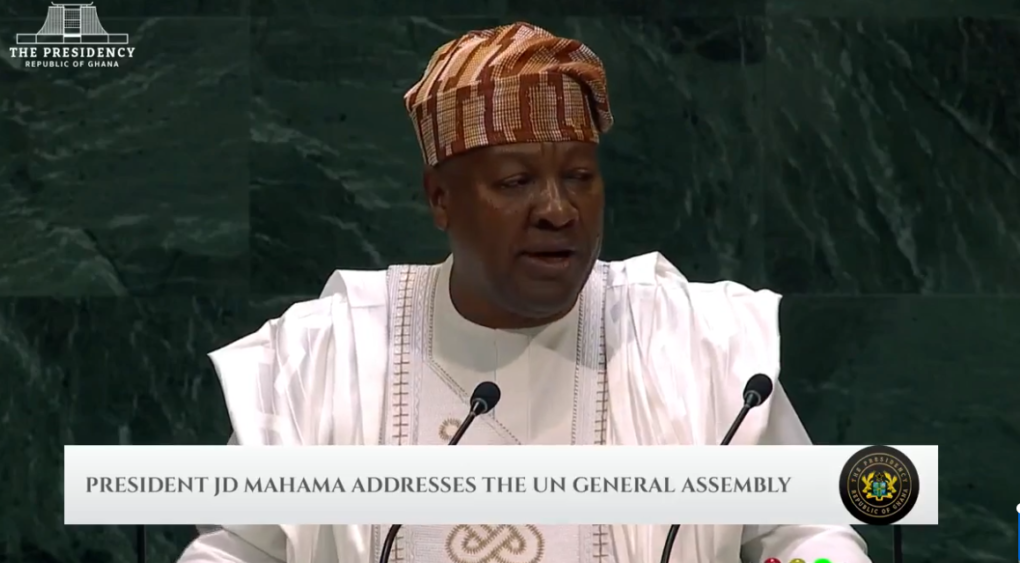
President John Dramani Mahama has renewed his call for Africa to secure permanent representation on the United Nations Security Council, saying the continent’s exclusion from the council’s permanent membership highlights persistent inequalities in the global governance system.
Speaking at the 81st United Nations General Assembly in New York on Thursday, September 24, 2026, President Mahama said comprehensive UN reform must address historical inequalities that continue to influence the international political system.
The Ghanaian president argued that Africa’s growing demographic, economic and political importance makes its continued exclusion from the permanent membership of the UN Security Council increasingly difficult to justify.
According to President Mahama, Africa is home to approximately 1.5 billion people, representing more than 18 percent of the global population. He also noted that African countries collectively form the largest regional voting bloc within the United Nations General Assembly.
Mahama therefore called for meaningful changes to the structure of the Security Council to reflect the realities of the 21st century and provide Africa with a permanent voice in key international decisions.
He said Africa’s lack of permanent representation amounts to a continuation of historical inequalities within the global governance framework.
“The injustices of the past remain embedded in today’s power structures. Africa is home to 1.5 billion people, over 18% of humanity, and constitutes the largest regional voting bloc in this General Assembly, and yet Africa remains without a single permanent seat on the United Nations Security Council.”
President Mahama added that Africa should be granted permanent representation on the UN Security Council, including the full rights and responsibilities associated with permanent membership.
The call forms part of Ghana’s broader position on United Nations reform, African representation and global governance, as African leaders continue to push for greater participation in international decision-making institutions.
Source: newsthemegh.com