
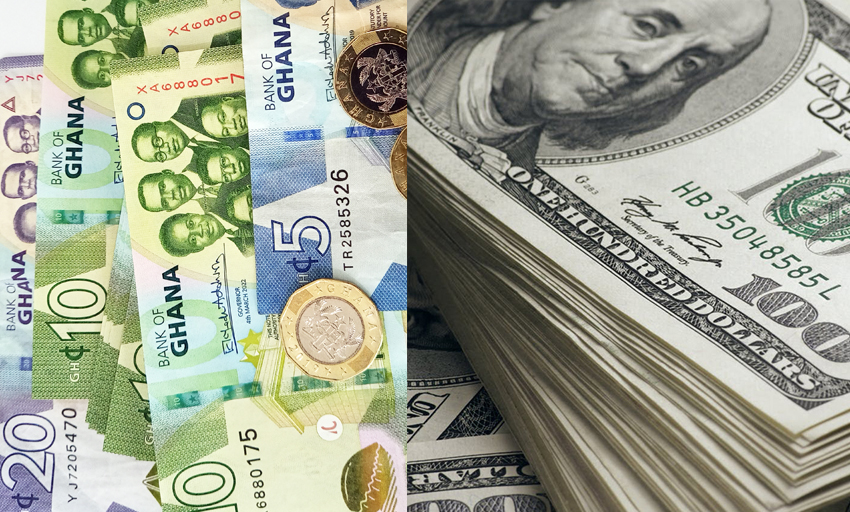
The Ghana cedi is coming under renewed pressure against major international currencies, with its depreciation against the US dollar reaching 9.5%, according to the latest economic and financial data from the Bank of Ghana (BoG).
The latest development has renewed attention on the Ghana cedi to US dollar exchange rate, foreign exchange market conditions and the outlook for Ghana’s economy.
Cedi Falls to GH¢11.55 Against US Dollar
The Ghana cedi is currently trading at approximately GH¢11.55 to US$1, after ending August on a weaker note.
The local currency had briefly strengthened earlier in August, when the US dollar traded at around GH¢10.95, before the cedi came under renewed pressure.
The latest depreciation reflects continued movements in Ghana’s foreign exchange market, with demand for US dollars and other major currencies influencing the value of the cedi.
Ghana Cedi Also Weakens Against Pound and Euro
The depreciation of the Ghana cedi has not been limited to the US dollar.
The cedi has lost approximately 9.0% against the British pound, with the pound trading at about GH¢15.45.
Against the euro, the Ghanaian currency has depreciated by approximately 7.3%, with the euro currently trading at around GH¢13.24.
The movements highlight the broader pressure facing the local currency against major international currencies.
Cedi Reverses Strong 2025 Performance
The latest depreciation represents a reversal from the Ghana cedi’s strong performance in 2025.
Between January and December 2025, the cedi appreciated by approximately 29% against the US dollar. However, the currency subsequently depreciated by 8.1% during the first half of 2026.
The recent movement has therefore renewed focus on the sustainability of the cedi’s exchange-rate performance and the factors influencing Ghana’s foreign exchange market.
World Bank Identifies Sources of Forex Pressure
The World Bank, in its 10th Economic Update, attributed part of the recent pressure on the Ghana cedi to increased demand for foreign exchange from the energy sector, as well as dividend payments by some private companies.
The pressure has occurred despite continued foreign-exchange inflows supported by Ghana’s trade surplus.
This demonstrates the sensitivity of the cedi to changes in foreign currency demand, particularly when large corporate payments and other external obligations increase demand for US dollars and other major currencies.
Bank of Ghana Explains Exchange Rate Movements
The Bank of Ghana has described recent movements in the cedi as part of normal exchange-rate volatility under Ghana’s managed floating exchange-rate regime.
The central bank has also introduced a new foreign exchange operations framework aimed at bringing greater structure and predictability to its interventions in the forex market.
According to the latest assessments, conditions in Ghana’s parallel foreign exchange market have also improved, suggesting that the market has become more orderly.
Outlook for the Ghana Cedi
The recent depreciation nevertheless highlights the continued vulnerability of the Ghana cedi to seasonal foreign-exchange demand, corporate dollar payments and other external financial pressures.
Market developments involving the US dollar exchange rate, foreign exchange reserves, trade balance, corporate outflows and Bank of Ghana interventions are likely to remain important factors influencing the cedi’s performance in the coming months.
For businesses, investors and consumers, movements in the cedi exchange rate remain significant because changes in the value of the local currency can affect import costs, business operations, investment decisions and broader economic conditions in Ghana.
Source: newsthemegh.com