
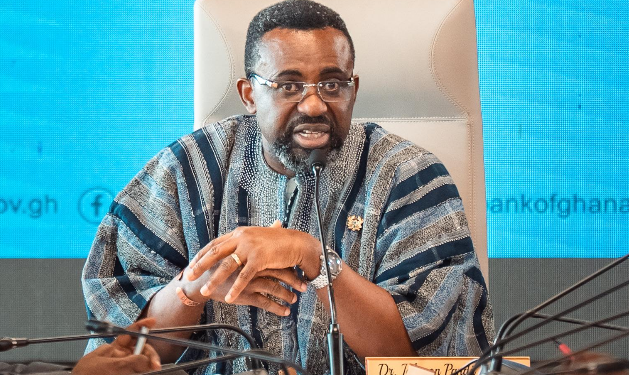
Governor of the Bank of Ghana (BoG), Dr Johnson Asiama, has announced that significant gold shipments from Ghana have resumed, providing additional support for the country’s efforts to increase its foreign exchange reserves.
Dr Asiama said the Ghana Gold Board (GoldBod) had not completely stopped exporting gold, although shipments had become less frequent in recent months compared with the previous two quarters.
Speaking at a press briefing following the 132nd Monetary Policy Committee (MPC) meeting, the Bank of Ghana Governor said newly received data showed that GoldBod had shipped a substantial quantity of gold during the previous week.
According to Dr Asiama, the renewed Ghana gold exports are contributing to the accumulation of the country’s international reserves and strengthening Ghana’s external financial position.
He explained that new information received by the central bank had changed the assessment of gold shipments and their contribution to reserve accumulation.
“The story has changed between yesterday morning and right now this morning, based on the new data that just came in,” Dr Asiama said.
Gold Prices Remain a Key Risk
While the increase in gold shipments is supporting Ghana’s foreign exchange reserve accumulation, Dr Asiama identified fluctuations in international gold prices as a major risk to the process.
He noted that global gold prices are largely influenced by international economic developments beyond Ghana’s control, including monetary policy decisions by major central banks.
The Governor explained that changes in interest rates in the United States can affect the price of gold on international markets.
“When the US increases its policy rate, you notice what happens these days. Gold prices tend to be depressed,” he said.
Dr Asiama said sustained favourable gold prices would be important in supporting continued gold exports and strengthening Ghana’s international reserve position.
Ghana Targets Higher International Reserves
The latest development comes as the Bank of Ghana continues efforts to strengthen the country’s external buffers through the Ghana Accelerated Reserve Accumulation Program (GANRAP).
The central bank currently estimates Ghana’s gross international reserves at approximately 4.5 months of import cover, exceeding the commonly referenced three-month benchmark.
Dr Asiama said Ghana remains on track to achieve its medium-term foreign exchange reserve accumulation target.
However, he stressed that the strategy would not rely entirely on gold exports. Ghana is also expected to generate additional foreign exchange through other export sectors, including non-traditional exports.
The strengthening of international reserves remains an important part of efforts to improve Ghana’s economic stability, foreign exchange liquidity and external sector position.
Bank of Ghana Maintains Monetary Policy Rate at 14%
The update on gold exports and international reserves followed the 132nd Monetary Policy Committee meeting, where the Bank of Ghana maintained the Monetary Policy Rate at 14%.
The decision marks the third consecutive meeting at which the MPC has kept the policy rate unchanged, as the central bank continues to monitor inflation, economic activity, exchange rate developments and Ghana’s external sector performance.
Source: newsthemegh.com