
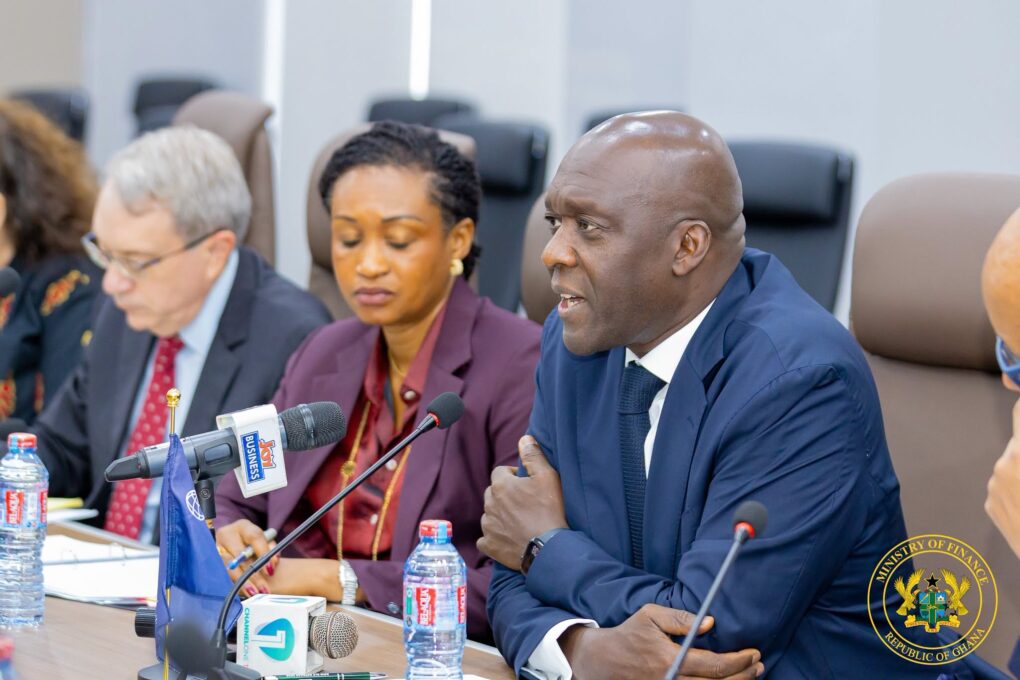
The Managing Director of the International Finance Corporation (IFC), Makhtar Diop, has described Ghana’s economy as being on an upward post-recovery trajectory, citing improvements in key macroeconomic indicators and growing investor confidence.
According to Mr Diop, Ghana has made considerable progress in stabilising its economy after several years of economic challenges, including high public debt, low foreign exchange reserves, elevated inflation and a significant fiscal deficit.
Speaking to Bernard Avle on Channel One TV’s The Point of View on Wednesday, September 23, 2026, the IFC Managing Director said the improved economic environment was encouraging greater private-sector confidence and foreign direct investment (FDI).
Ghana Economy Records Improved Investor Confidence
Mr Diop said the current economic conditions have created a more favourable environment for businesses and investors, with increasing interest from foreign companies seeking opportunities in Ghana.
He noted that Ghana recorded 6% economic growth in 2025, while economic growth for 2026 is projected at approximately 4.8%.
The IFC chief also highlighted improvements in Ghana’s foreign exchange reserves and inflation rate. According to him, the country’s reserves have increased to more than four months of import cover, while inflation has fallen below 10%.
These developments, he said, represent a significant improvement compared with the economic conditions Ghana faced during its recent period of financial instability.
IFC Sees Greater Investment Opportunities in Ghana
The improved macroeconomic environment has also created opportunities for the International Finance Corporation to increase its financing and investment activities in Ghana.
Mr Diop said the IFC now has greater scope to significantly expand its lending to businesses and projects in the country.
The potential increase in IFC financing could support private-sector development, infrastructure, job creation and investment across key sectors of the Ghanaian economy.
Exchange Rate Stability Supports Investment
Mr Diop identified improvements in Ghana’s foreign exchange market as one of the factors contributing to the improved investment environment.
He pointed to a more aligned exchange rate, the removal of a dual exchange rate system and increased certainty for investors as positive developments for the Ghanaian economy.
Greater exchange rate stability can provide businesses and foreign investors with improved visibility when making long-term investment decisions.
IMF Programme Supports Economic Confidence
The IFC Managing Director also referenced Ghana’s Policy Coordination Instrument (PCI) with the International Monetary Fund (IMF).
He described the arrangement as an indication of the government’s commitment to maintaining sound macroeconomic policies and economic reforms.
According to Mr Diop, the IMF framework could help provide greater confidence to financial markets and investors by demonstrating that Ghana’s economic reforms are being implemented domestically.
He compared Ghana’s current approach to an experience in Senegal, where he previously served as Minister of Finance, involving a similar IMF programme without direct financial disbursement.
Ghana Must Sustain Economic Growth
Despite the positive economic developments, Mr Diop stressed that Ghana must continue implementing reforms to achieve its broader ambition of becoming a strong middle-income economy capable of creating sustainable jobs and maintaining long-term economic growth.
He said Ghana needs to continue attracting foreign direct investment, channeling domestic savings into productive investments and improving economic productivity.
These measures, he explained, would help Ghana sustain economic growth while reducing its dependence on external borrowing and financing from development finance institutions (DFIs).
The IFC’s assessment comes as Ghana continues efforts to strengthen its macroeconomic stability, attract private investment, improve productivity and restore investor confidence following recent economic challenges.
Source: newsthemegh.com