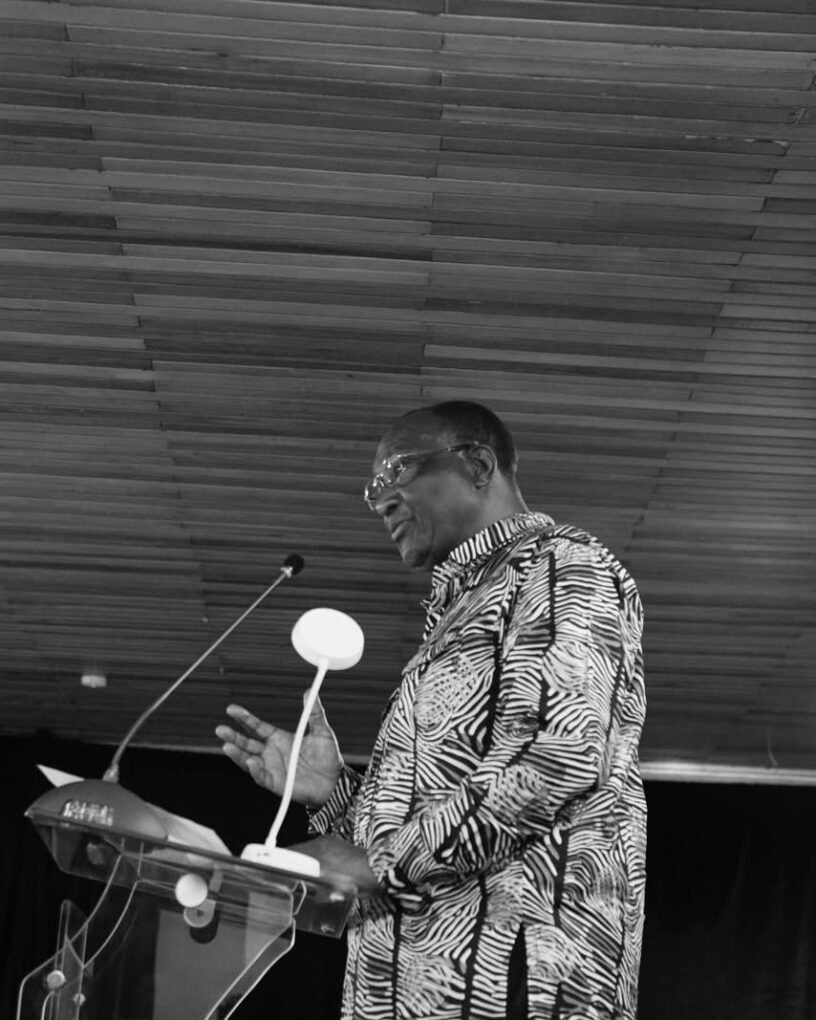
Founder and Leader of the United Party (UP), Alan Kwadwo Kyerematen, has challenged the view that the Russia-Ukraine war was the main factor behind Ghana’s economic difficulties after 2020.
Speaking at a public lecture at the British Council on September 24, 2026, Mr Kyerematen attributed a significant part of Ghana’s economic crisis to what he described as excessive government borrowing and domestic fiscal decisions between 2021 and 2023.
Alan Kyerematen on Ghana’s Public Debt Crisis
Mr Kyerematen said Ghana’s economic challenges during the period should be assessed in the context of the country’s borrowing, government spending and fiscal deficits.
He argued that continued borrowing contributed to a sharp deterioration in Ghana’s public debt position, eventually leading to a debt crisis and the implementation of the Domestic Debt Exchange Programme (DDEP).
He said the country moved from a period of strong economic growth into a period of significant fiscal and debt pressures as government borrowing increased.
Russia-Ukraine War and Ghana’s Economy
While questioning the extent to which the Russia-Ukraine conflict was responsible for Ghana’s economic crisis, Mr Kyerematen acknowledged that the war disrupted global supply chains and contributed to economic difficulties.
However, he maintained that domestic fiscal conditions and the scale of Ghana’s budget deficits were also important factors in the deterioration of the country’s public finances.
His comments come amid continued debate over the various factors that contributed to Ghana’s economic crisis, including the effects of the COVID-19 pandemic, global supply-chain disruptions, rising inflation, increased borrowing costs and domestic fiscal pressures.
Ghana’s Debt Sustainability Challenges
Ghana experienced severe debt sustainability challenges in 2022. IMF assessments show that public debt had risen significantly from its pre-crisis level, with the IMF reporting public debt at 88.1% of GDP at the end of 2022 in its 2023 country report. The IMF also assessed Ghana as being in debt distress at the time.
The increase in public debt was accompanied by substantial financing pressures. According to the IMF, large fiscal deficits and the economic slowdown following the pandemic contributed to the increase in Ghana’s debt burden.
Domestic Debt Exchange Programme
In response to the debt crisis, Ghana launched its Domestic Debt Exchange Programme in December 2022 as part of a broader debt restructuring strategy.
The IMF said the domestic debt exchange was designed to support the restoration of public debt sustainability and formed part of the measures associated with Ghana’s negotiations for an IMF-supported programme.
The government launched the domestic debt exchange on December 5, 2022, covering medium- and long-term local-currency debt issued by the Government of Ghana, Daakye and ESLA, while Treasury bills were initially excluded.
Ghana’s IMF Programme and Economic Recovery
Ghana subsequently secured an IMF-supported programme aimed at restoring macroeconomic stability and debt sustainability while supporting economic recovery.
The IMF’s December 2022 staff-level agreement provided for an approximately US$3 billion Extended Credit Facility, alongside fiscal consolidation, debt restructuring and other economic reforms.
The debate over the causes of Ghana’s economic crisis continues to involve multiple factors, including public debt accumulation, fiscal deficits, the COVID-19 economic shock, global supply-chain disruptions and the Russia-Ukraine war.
Mr Kyerematen’s latest comments place particular emphasis on Ghana’s domestic borrowing and fiscal policy decisions as key factors behind the country’s debt and economic challenges after 2020.
Source: newsthemegh.com